
About Joseph Brodsky
Lived 1940 – 1996 (aged 55). Joseph Brodsky was a Russian and American poet, translator, essayist, playwright, dramaturge and lecturer.
Early years
Brodsky was born into a Russian Jewish family in Leningrad (now Saint Petersburg). A descendant of a prominent and ancient rabbinic family, Schorr (Shor) his direct male-line ancestor was Joseph ben Isaac Bekhor Shor. His father, Aleksandr Brodsky, was a professional photographer in the Soviet Navy, and his mother, Maria Volpert Brodskaya, a professional interpreter whose work often helped to support the family. They lived in communal apartments, in poverty, marginalized by their Jewish status. In early childhood, Brodsky survived the Siege of Leningrad where he and his parents nearly died of starvation; one aunt did die of hunger.
As a young student, Brodsky was "an unruly child" known for his misbehavior during classes. At fifteen, Brodsky left school and tried to enter the School of Submariners without success. He went on to work as a milling machine operator. Later, having decided to become a physician, he worked at the morgue at the Kresty Prison, cutting and sewing bodies. He subsequently held a variety of jobs in hospitals, in a ship's boiler room, and on geological expeditions. At the same time, Brodsky engaged in a program of self-education. He learned Polish so he could translate the works of Polish poets such as Czesław Miłosz, and English so that he could translate John Donne. On the way, he acquired a deep interest in classical philosophy, religion, mythology, and English and American poetry. by the Soviet authorities in a trial in 1964, finding that his series of odd jobs and role as a poet were not a sufficient contribution to society. They called him "a pseudo-poet in velveteen trousers" who failed to fulfill his "constitutional duty to work honestly for the good of the motherland".
For his "parasitism" Brodsky was sentenced to five years hard labor and served 18 months on a farm in the village of Norenskaya, in the Arkhangelsk region, 350 miles from Leningrad. He rented his own small cottage, and although it was without plumbing or central heating, having one's own, private space was taken to be a great luxury at the time.
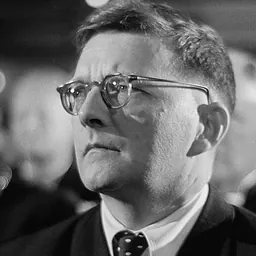
Brodsky's sentence was commuted in 1965 after protests by prominent Soviet and foreign cultural figures, including Evgeny Evtushenko, Dmitri Shostakovich, and Jean-Paul Sartre as well as Akhmatova. Brodsky became a cause célèbre in the West also, when a secret transcription of trial minutes was smuggled out of the country, making him a symbol of artistic resistance in a totalitarian society, much like his mentor, Akhmatova.
His son, Andrei, was born on 8 October 1967, and Basmanova broke off the relationship. Andrei was registered under Basmanova's surname because Brodsky did not want his son to suffer from the political attacks that he endured. Marina Basmanova was threatened by the Soviet authorities, which prevented her from marrying Brodsky or joining him when he was exiled from the country. After the birth of their son, Brodsky continued to dedicate love poetry to Basmanova.
Brodsky returned to Leningrad in December 1965 and continued to write over the next seven years, many of his works being translated into German, French, and English and published abroad. Verses and Poems was published by Inter-Language Literary Associates in Washington in 1965, Elegy to John Donne and Other Poems was published in London in 1967 by Longmans Green, and A Stop in the Desert was issued in 1970 by Chekhov Publishing in New York. Only four of his poems were published in Leningrad anthologies in 1966 and 1967, most of his work appearing outside the Soviet Union or circulated in secret (samizdat) until 1987. Persecuted for his poetry and his Jewish heritage, he was denied permission to travel. In 1972, while Brodsky was being considered for exile, the authorities consulted mental health expert Andrei Snezhnevsky, a key proponent of the notorious pseudo-medical diagnosis of "paranoid reformist delusion". This political tool allowed the state to lock up dissenters in psychiatric institutions indefinitely. Without examining him personally, Snezhnevsky diagnosed Brodsky as having "sluggishly progressing schizophrenia", concluding that he was "not a valuable person at all and may be let go". In 1971, Brodsky was invited twice to emigrate to Israel. When called to the Ministry of the Interior in 1972 and asked why he had not accepted, he stated that he wished to stay in the country. Within ten days officials broke into his apartment, took his papers, and on 4 June 1972, put him on a plane for Vienna, Austria.
In Austria, he met Carl Ray Proffer and Auden, who facilitated Brodsky's transit to the United States and proved influential to Brodsky's career. Proffer, of the University of Michigan and one of the co-founders of Ardis Publishers, became Brodsky's Russian publisher from this point on. Recalling his landing in Vienna, Brodsky commented:
Although the poet was invited back after the fall of the Soviet Union, Brodsky never returned to his country.
United States
After a short stay in Vienna, Brodsky settled in Ann Arbor, with the help of poets Auden and Proffer, and became poet-in-residence at the University of Michigan for a year. Brodsky went on to become a visiting professor at Queens College (1973–74), Smith College, Columbia University, and Cambridge University, later returning to the University of Michigan (1974–80). He was the Andrew Mellon Professor of Literature and Five College Professor of Literature at Mount Holyoke College, brought there by poet and historian Peter Viereck. In 1978, Brodsky was awarded an honorary degree of Doctor of Letters at Yale University, and on 23 May 1979, he was inducted as a member of the American Academy and Institute of Arts and Letters. He moved to New York's Greenwich Village in 1980 and in 1981 received the John D. and Catherine T. MacArthur Foundation "genius" award. He was also a recipient of The International Center in New York Award of Excellence. In 1986, his collection of essays, Less Than One, won the National Book Critics Award for Criticism and he was given an honorary doctorate of literature from Oxford University. In an interview he was asked: "You are an American citizen who is receiving the Prize for Russian-language poetry. Who are you, an American or a Russian?" "I'm Jewish; a Russian poet, an English essayist – and, of course, an American citizen", he responded. The academy stated that they had awarded the prize for his "all-embracing authorship, imbued with clarity of thought and poetic intensity". It also called his writing "rich and intensely vital", characterized by "great breadth in time and space". It was "a big step for me, a small step for mankind", he joked.
Brodsky died of a heart attack aged 55, at his apartment in Brooklyn Heights, a neighborhood of Brooklyn, a borough of New York City, on 28 January 1996.
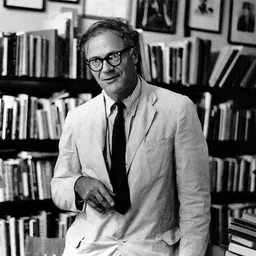
Brodsky also was deeply influenced by the English metaphysical poets from John Donne to Auden. Many works were dedicated to other writers such as Tomas Venclova, Octavio Paz, Robert Lowell, Derek Walcott, and Benedetta Craveri. The Estate of Joseph Brodsky was subsequently prosecuting some websites publishing the poem, demanding its removal.
Awards and honors 1978 – Honorary degree of Doctor of Letters, Yale University 1979 – Fellowship of American Academy and Institute of Arts and Letters 1981 – John D. and Catherine T. MacArthur Foundation award 1986 – Honorary doctorate of literature from Oxford University The International Center in New York's Award of Excellence 1986 – National Book Critics Award for Criticism, for Less Than One (essay collection) 1987 – Nobel Prize 1989 – Honorary doctorate from the University of Essex 1989 – Honorary degree from Dartmouth College 1991 – honorary doctorate from the Faculty of Humanities at Uppsala University, Sweden 1991 – United States Poet Laureate 1991 – Struga Poetry Evenings Golden Wreath Award 1993 – Honorary degree from the University of Silesia in Poland Honorary member of the International Academy of Science, Munich
Works
Poetry collections 1967: Elegy for John Donne and Other Poems, selected, translated, and introduced by Nicholas William Bethell, London: Longman 1968: Velka elegie, Paris: Edice Svedectvi 1972: Poems, Ann Arbor, Michigan: Ardis 1973: Selected Poems, translated from the Russian by George L. Kline. New York: Harper & Row 1977: A Part of Speech shortly before Brodsky's emigration and Brodsky plays an important role.
In music The 2011 contemporary classical album Troika includes Eskender Bekmambetov's critically acclaimed, song cycle "there ...", set to five of Joseph's Brodsky's Russian-language poems and his own translations of the poems into English. Victoria Poleva wrote Summer music (2008), a chamber cantata based on the verses by Brodsky for violin solo, children choir and Strings and Ars moriendi (1983–2012), 22 monologues about death for soprano and piano (two monologues based on the verses by Brodsky ("Song" and "Empty circle").
Collections in Russian 1965: Stikhotvoreniia i poemy, Washington, D.C.: Inter-Language Literary Associates 1970: Ostanovka v pustyne, New York: Izdatel'stvo imeni Chekhova (Rev. ed. Ann Arbor, Mich.: Ardis, 1989) 1977: Chast' rechi: Stikhotvoreniia 1972–76, Ann Arbor, Mich.: Ardis 1977: Konets prekrasnoi epokhi : stikhotvoreniia 1964–71, Ann Arbor, Mich.: Ardis 1977: V Anglii, Ann Arbor, Mich.: Ardis 1982: Rimskie elegii, New York: Russica 1983: Novye stansy k Avguste : stikhi k M.B., 1962–1982, Ann Arbor, Mich.: Ardis 1984: Mramor, Ann Arbor, Mich.: Ardis 1984: Uraniia : Novaia kniga stikhov, Ann Arbor, Mich.: Ardis 1989: Ostanovka v pustyne, revised edition, Ann Arbor, Mich.: Ardis, 1989 (original edition: New York: Izdatel'stvo imeni Chekhova, 1970) 1990: Nazidanie : stikhi 1962–1989, Leningrad: Smart 1990: Chast' rechi : Izbrannye stikhi 1962–1989, Moscow: Khudozhestvennaia literatura 1990: Osennii krik iastreba : Stikhotvoreniia 1962–1989, Leningrad: KTP LO IMA Press 1990: Primechaniia paporotnika, Bromma, Sweden : Hylaea 1991: Ballada o malen'kom buksire, Leningrad: Detskaia literatura 1991: Kholmy : Bol'shie stikhotvoreniia i poemy, Saint Petersburg: LP VTPO "Kinotsentr" 1991: Stikhotvoreniia, Tallinn: Eesti Raamat 1992: Naberezhnaia neistselimykh: Trinadtsat' essei, Moscow: Slovo 1992: Rozhdestvenskie stikhi, Moscow: Nezavisimaia gazeta (revised edition in 1996) 1992–1995: Sochineniia, Saint Petersburg: Pushkinskii fond, 1992–1995, four volumes 1992: Vspominaia Akhmatovu / Joseph Brodsky, Solomon Volkov, Moscow: Nezavisimaia gazeta 1992: Forma vremeni : stikhotvoreniia, esse, p'esy, Minsk: Eridan, two volumes 1993: Kappadokiia.–Saint Petersburg 1994: Persian Arrow/Persidskaia strela, with etchings by Edik Steinberg.–Verona: * Edizione d'Arte Gibralfaro & ECM 1995: Peresechennaia mestnost ': Puteshestviia s kommentariiami, Moscow: Nezavisimaia gazeta 1995: V okrestnostiakh Atlantidy : Novye stikhotvoreniia, Saint Petersburg: Pushkinskii fond 1996: Peizazh s navodneniem, compiled by Aleksandr Sumerkin. Dana Point, Cal.: Ardis 1996: Rozhdestvenskie stikhi, Moscow: Nezavisimaia gazeta, revised edition of a work originally published in 1992 1997: Brodskii o Tsvetaevoi, Moscow: Nezavisimaia gazeta 1998: Pis'mo Goratsiiu, Moscow: Nash dom 1996 and after: Sochineniia, Saint Petersburg: Pushkinskii fond, eight volumes 1999: Gorbunov i Gorchakov, Saint Petersburg: Pushkinskii fond 1999: Predstavlenie : novoe literaturnoe obozrenie, Moscow 2000: Ostanovka v pustyne, Saint Petersburg: Pushkinskii fond 2000: Chast' rechi, Saint Petersburg: Pushkinskii fond 2000: Konets prekrasnoi epokhi, Saint Petersburg: Pushkinskii fond 2000: Novye stansy k Avguste, Saint Petersburg: Pushkinskii fond 2000: Uraniia, Saint Petersburg: Pushkinskii fond 2000: Peizazh s navodneniem, Saint Petersburg: Pushkinskii fond 2000: Bol'shaia kniga interv'iu, Moscow: Zakharov 2001: Novaia Odisseia : Pamiati Iosifa Brodskogo, Moscow: Staroe literaturnoe obozrenie 2001: Peremena imperii : Stikhotvoreniia 1960–1996, Moscow: Nezavisimaia gazeta 2001: Vtoroi vek posle nashei ery : dramaturgija Iosifa Brodskogo, Saint Petersburg: Zvezda
Don’t just read it —
keep it.
Full-length biographies made to live with: read them, listen on the way to work, watch them tonight.
- E-book
- Audio
- Video
Instant download · yours to keep · every purchase keeps this site free
Important facts
People in Joseph Brodsky's life
Named in this biography and alive at the same time




Related people
Same field, nearest in time

Contemporaries
People whose lives overlapped Joseph Brodsky's



Frequently asked questions
Who was Joseph Brodsky?
Russian-American poet (1940-1996)
When was Joseph Brodsky born?
Joseph Brodsky was born on 24 May 1940 in Saint Petersburg.
When did Joseph Brodsky die?
Joseph Brodsky died on 28 January 1996 in Brooklyn.
What was Joseph Brodsky's occupation?
Joseph Brodsky was a poet, translator, essayist, playwright, dramaturge and lecturer.
What nationality was Joseph Brodsky?
Joseph Brodsky was Russian and American.
Sources & further reading
Cite this page
APA: Biography.guide. (2026). Joseph Brodsky. https://biography.guide/joseph-brodsky/
MLA: "Joseph Brodsky." Biography.guide, https://biography.guide/joseph-brodsky/.
Chicago: "Joseph Brodsky." Biography.guide. https://biography.guide/joseph-brodsky/.
Data last updated: 2026-09-20 · Spot an error? Report a correction.
Page generated 2026-09-27 05:33 UTC