
About Shafiq al-Hout
Lived 1932 – 2009 (aged 77). Shafiq al-Hout was a diplomat, journalist, politician, writer, palestine Liberation Front and palestine Liberation Organization Executive Committee.
Shafiq al-Hout, also spelled Shafik al-Hut (; 13 January 1932 – 2 August 2009), was a Palestinian politician and writer. Born in Jaffa, he and his family fled to Beirut at the onset of the 1948 Arab-Israeli War. There, al-Hout became a journalist at Al Hawadeth magazine. Using it as a platform, he founded the Palestine Liberation Front in 1961 and later became a founder of the Palestine Liberation Organization (PLO) in 1964. He remained a senior member of the organization, representing it in Lebanon and the United Nations General Assembly. Initially a close aide to Yasser Arafat, al-Hout resigned from his position on the PLO Executive Committee, in protest of Arafat's signing of the Oslo Accords.
Early life Life in Jaffa Al-Hout was born in Jaffa in 1932 to the mayor of Jaffa at the time, known as the "Beiruti Mayor." He belonged to the al-Hout family which had its roots in Lebanon; Shafiq's grandfather, Salim Youssef al-Hout, was originally from Beirut and immigrated to Jaffa in the late 19th century, settling in the Manshiyyah quarter. While Shafiq's five siblings were born at his grandfather's house, he was born in his parents' home. According to Shafiq, at their grandfather's home, he and his siblings "played [in] for hours on end... Not very far from my house was a sandy playground where we played football with our neighbors."
Al-Hout received his schooling up to high school at the al-Ameriyyah Public School in the same class of Ibrahim Abu-Lughod and Farouk Qaddoumi. While at the university, he said many people attempted to influence his political beliefs, including George Habash of the Arab Nationalist Movement and Communists who favored an alliance with Soviet Union. Al-Hout and his colleagues decided to establish a Palestinian club in Lebanon, but this was met by opposition from Hajj Amin al-Husayni's followers who at one time "severely beat" them in an ambush at a Palestinian refugee camp. al-Hout obtained Lebanese citizenship, despite reservations by his father. He soon gained a reputation of being a Nasserist—a supporter of Egyptian president at the time, Gamal Abdel Nasser—journalist. Because of internal and external struggles in the PLO, he abdicated his position in the PLO-EC and his post as head of the PLF in the summer of 1968, leaving the latter group leaderless. That same year al-Hout became a founding member of the Union of Palestinian Writers. A number of other posts were also held by him, including membership in the Executive Committee of the International Organization of Journalists from 1964 to 1976. They killed two journalists, but failed in assassinating al-Hout who wrote satirical columns for the daily al-Moharrer ("the Editor") at the time.
During the Lebanese Civil War, beginning in 1976, the 1982 Lebanon War, and the Sabra and Shatila massacre, al-Hout survived ten Israeli assassination attempts. He remained in Lebanon when Arafat and most of the PLO leadership were exiled from the country. On 19 December 1984, he stated "The establishment of a Palestinian state over part of the Palestinian soil does not amount to the renunciation of the strategic aim. It is a pity that Israel realizes that... and knows that the establishment of such a state constitutes the reassertion of Palestinian national identity and the beginning of the end for Israel."
Oslo and later life In 1991, Arafat—wanting his admired, but loud-spoken, friend inside the leading circle—reappointed al-Hout to the PLO-EC. He remained critical of the PLO leadership's stance and helped in the coordination of the Damascus-based Palestinian groups. Since 1996 he had been a member of the National Islamic Conference and became a founder of Mu'tamar al-Awda ("the Return Conference") since 2002. After a funeral service at al-Imam Ali mosque in Tariq al-Jdeideh, Lebanon, al-Hout's body was carried to the Martyrs of the Palestinian Revolution cemetery in the Shatila refugee camp.
List of literary works Al-Hout authored several books in Arabic on the Palestinian issue. The Left and Arab Nationalism. (1959) Cairo. The Palestinian between Diaspora and State (1977) Beirut. Moments of History (1986) Jeddah Twenty Years with the PLO: Memoirs (1986) Beirut. Gaza-Jericho Agreement First: The Inadmissible Agreement (1994) Beirut.
His autobiography was translated and published in English in 2011:
Don’t just read it —
keep it.
Full-length biographies made to live with: read them, listen on the way to work, watch them tonight.
- E-book
- Audio
- Video
Instant download · yours to keep · every purchase keeps this site free
Important facts
People in Shafiq al-Hout's life
Named in this biography and alive at the same time

Related people
Same field, nearest in time

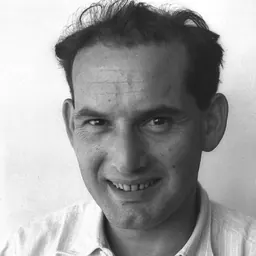
Contemporaries
People whose lives overlapped Shafiq al-Hout's
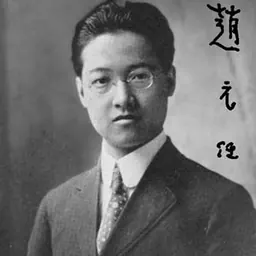


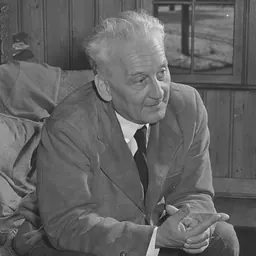
Frequently asked questions
Who was Shafiq al-Hout?
Palestinian politician (1932-2009)
When was Shafiq al-Hout born?
Shafiq al-Hout was born on 13 January 1932 in Jaffa.
When did Shafiq al-Hout die?
Shafiq al-Hout died on 2 August 2009 in Beirut.
What was Shafiq al-Hout's occupation?
Shafiq al-Hout was a diplomat, journalist, politician, writer, palestine Liberation Front and palestine Liberation Organization Executive Committee.
What nationality was Shafiq al-Hout?
Shafiq al-Hout's recorded nationality: Mandatory Palestine, Palestinian people.
Sources & further reading
Cite this page
APA: Biography.guide. (2026). Shafiq al-Hout. https://biography.guide/shafiq-al-hout/
MLA: "Shafiq al-Hout." Biography.guide, https://biography.guide/shafiq-al-hout/.
Chicago: "Shafiq al-Hout." Biography.guide. https://biography.guide/shafiq-al-hout/.
Data last updated: 2026-09-20 · Spot an error? Report a correction.
Page generated 2026-09-27 05:16 UTC