
About Sevasti Qiriazi
Lived 1871 – 1949 (aged 77–78). Sevasti Qiriazi was an Albanian and Turkish suffragette and journalist.
Sevasti Qiriazi-Dako (Sevasti D. Kyrias) (ca. 1871–1949) was an Albanian patriot, educator, Protestant missionary, author, pioneer of Albanian female education, and activist of the Albanian National Awakening.
Life and early career Early life Sevasti was born ca. 1870 to the patriotic Qiriazi family of Tërnovë, Monastir, in today's North Macedonia, then Ottoman Empire. She was the sixth of ten children. Her family's religious background was Orthodox, and she began attending a Greek-language primary school at age four.
Education Sevasti attended the American College for Girls at Constantinople from 1888–1891. Her brother Rev. Gjerasim Qiriazi arranged her enrollment. becoming the first Albanian female to complete a college education. In Korçë she led Bible studies and prayer meetings for women. She was a "Bible Woman" and was financed by the ABCFM's Woman's Board of Missions and the Bible Lands Missions' Aid Society. She referred to herself as a missionary when traveling to the USA to visit Ellen Stone and John Henry House in 1904.
The Korça Girls School (1891–1914) Founding and operations After her graduation from college, Sevasti returned to Monastir and then to Korçë, where she joined her brother Gjerasim in opening an Albanian-language school for girls. Sevasti was its director. The school operated under difficult conditions including poverty, prejudice against female education, difficulty in obtaining books, political opposition from local Ottoman authorities, and political and ecclesiastical opposition from the Greek Orthodox Church. Despite these unfavorable circumstances, the school maintained an average yearly enrollment of 47 students during 1891–1913. The school received significant visitors such as Edith Durham in 1901 and Henry Brailsford in 1904. Its founders were Evangelicals, it was supported by Protestant organizations, its educational curriculum included religious subjects with biblical texts, and its premises were used for Evangelical Sunday School and worship services. However, the school welcomed students of all religions and its teachers did not require conversion to Protestantism. It was praised by Albanians of all religions and classes as being a "national nest" (fole kombëtare).
Leadership Staff of the Girls School and Evangelical Work in Kortcha Albania in 1894When Gjerasim Qiriazi died in 1894, Sevasti Qiriazi (at approximately 23 years old) assumed full responsibility for the Girls School. A delegation from the Congress visited the Girls School in Korçë after the conclusion of the Congress, including Luigj Gurakuqi, Fehim Zavalani and Nyzhet Vrioni. In 1909 Sevasti was invited in her role as director of the school to take part in the Congress of Elbasan which aimed to address national education in Albania. She attended with her brother Gjergj Qiriazi. The ceremony was performed by Protestant missionary Rev. Charles Telford Erickson. They had two children, Aleksandër "Skënder" Dako (1910–1995) and Gjergj Dako (1913–1949). The full English rendering of their names was Alexander Gerasim Dako and George Charles Dako (namesakes for her two deceased brothers Gjerasim and Gjergj). Both boys studied for eight years at Robert College.
Friendship with Charles Crane In 1911, Sevasti and her husband Kristo Dako were visited in Monastir by American businessman Charles Richard Crane, who was on the board of the American College for Girls at Constantinople and sought to learn more about Albania and the Near East. Crane had learned about Sevasti and Kristo through Edward I. Bosworth, dean of Oberlin Seminary and formerly K. Dako's professor at Oberlin. later spending several summer holidays at Mr. and Mrs. Crane's summer home at Woods Hole, Massachusetts.
In 1933, with the nationalization of private education, the Kyrias Institute was forced to close and did not reopen despite repeated requests by the Qiriazi sisters to the government. Sevasti refused to allow the premises of the school to be rented by the Red Cross for humanitarian work or to be used for anything other than its original purpose for the education of women. and the school property was repurposed by the Italian military as a weapons depot.
Postwar years under communism In late 1944, after a bombardment of the concentration camp by the Allied forces, Sevasti and her family were released and returned to Albania. They found their home had been ransacked, so began rebuilding. A variety of factors—such as Kristo Dako's affiliation with King Zog and his serving as minister in one of his cabinets, and the Qiriazis' and Dakos' affiliation with American schools, political figures and Protestant missionaries viewed by the government as spies —left them out of favor with the emerging communist regime in Albania. In 1946 they were evicted them from their home, and the school facilities were transformed into a communist party school. Kristo Dako's bones were exhumed, desecrated, and lost.
In 1946 Sevasti's sons Aleksandër and Gjergj were arrested and imprisoned, being accused of sedition, spying, and anti-state activities. In February 1949 Gjergj died in prison, during several days of intense interrogation and torture. In August 1949, after unsuccessful attempts to locate Gjergj's body and with Aleksandër still in prison, Sevasti died in poverty and with a broken heart. Sevasti Qiriazi and her family began to regain recognition in Albania for their contributions to Albanian education and the emancipation of women, being decorated posthumously with the Order of Freedom (1960), the Medal for Patriotic Activity (1962) and the "Teacher of the People" (1987) and published in 2016, Tirana, ISSHP). Translated into Albanian and published as Jeta ime (Skopje: Instituti i Trashëgimisë Shpirtërore e Kulturore të Shqiptarëve, 2016).
Legacy Cinema and literature The Korça School for Girls was immortalized in Albanian cinema by the beloved film Mësonjëtorja (The School) (1979). The name of the main character, Sevasti Qiriazi, was changed to Dafina (played by Roza Anagnosti). Consistent with the official atheistic and censorial policies of the People's Socialist Republic of Albania, all religion was portrayed as anti-Albanian and the school was identified as completely non-religious (laike). A drama entitled Foleja Kombëtare (The National Nest) about the Girls School and Sevasti Qiriazi was written by staff and students of Instituti Kyrias in ca. 1931. with an introduction by Ismail Kadare, but the authorship was incorrectly attributed to Lumo Skendo.
Commemorative items In 2017 Sevati Qiriazi's image was among those featured on a postage stamp by the Post of Kosovo in honor of the 500th anniversary of the Protestant Reformation and its Albanian counterpart. In 2023 the Bank of Albania minted a 100 lekë commemorative coin bearing Sevasti Qiriazi-Dako's image. In 2023 Sevati Qiriazi and her sister Parashqevi were featured on a 36 denar postage stamp by the Post of North Macedonia.
In academia On 26 October 2016 the University of Korça hosted an academic conference honoring Sevasti Qiriazi and the Girls School on the 125th anniversary of its founding. On 7–11 November 2016 the National Library of Albania and the Institute for Albanian and Protestant Studies co-sponsored a symposium and exhibition entitled "Sevasti Qiriazi: the 125th Anniversary of the Education of Albanian Women". On 21 May 2021 the Academy of Sciences of Albania hosted a commemorative event about Sevasti's life and work on 150th anniversary of her birth. On 25 November 2022 the Qiriazi College (Kolegji Universitar Qiriazi) hosted a historical symposium upon the 100th anniversary of the founding of the Kyrias Institute in Kamëz.
In the Evangelical Protestant community For her role as a Christian missionary worker and "Bible Woman" in Korça, the Albanian Protestant community honors Sevasti Qiriazi as one of the early members of the Albanian Evangelical community founded by her brother Gjerasim Qiriazi.
Namesake schools, institutions, etc. Shkolla 9-vjeçare "Sevasti Qiriazi" in Korça. Shkolla Fillore e Mesme e Ulët "Motrat Qiriazi” in Klina. The "Sevasti Qiriazi" high school in Tiranë. In 1990 the “Motrat Qiriazi” Association was founded in Prishtina. In Tirana there is a small road named "Rr. Sevasti Qirjazi" [sic]. In 2023 the government of North Macedonia approved the establishment of a regional department of the Institute of Spiritual and Cultural Heritage of the Albanians in Monastir, which will be named after the Qiriazi family.
Miscellaneous Sevasti Qiriazi and her sister Parashqevi Qiriazi are known colloquially in Albania as "the Qiriazi sisters" . They are considered "the mothers of Albanian education".
Myths, inaccuracies and inconsistencies The precise year and date of Sevasti's birth is disputed. The year 1870 is indicated on her gravestone in Sharrë. Dhimitër Dishnica reported February 1870, but did not substantiate this date with a source. Robert Elsie cited 24 February 1871 as her date of birth, but cited no source. Whereas, a United States immigration manifest dated August 1904 contains Sevasti's declaration that she was 32 years old, suggesting she was born in 1872. It is frequently reported without citation that Naim Frashëri gave Sevasti Qiriazi the opportunity to attend college in Istanbul, but it was her brother Gjerasim who arranged her education with the aid of Protestant missionaries such as Alexander Thomson. This college merged with Robert College in 1971, 80 years after her graduation. It has been alleged that Sevasti was not Albanian, but rather Vlach, but her autobiography refutes this plainly ("I am an Albanian" It is commonly reported that Sevasti organized and attended the first Congress of Manastir in 1908. In fact, her brother Gjergj was a primary organizer of the Congress; she could not attend due to her responsibilities in Korçë, so her sister Parashqevi went as the representative of the Korça Girls School. It is stated at the monument by her grave (Sharrë, Tirana, Albania) that she, together with her sister Parashqevi, participated in the Paris Peace Conference (1919). There is no record that Sevasti participated.
Don’t just read it —
keep it.
Full-length biographies made to live with: read them, listen on the way to work, watch them tonight.
- E-book
- Audio
- Video
Instant download · yours to keep · every purchase keeps this site free
Important facts
People in Sevasti Qiriazi's life
Named in this biography and alive at the same time
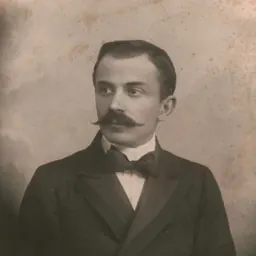





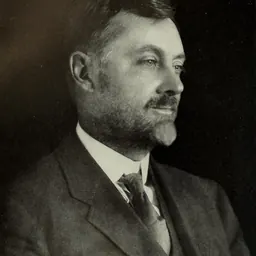

Related people
Same field, nearest in time

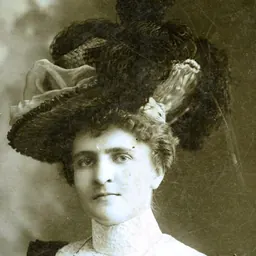
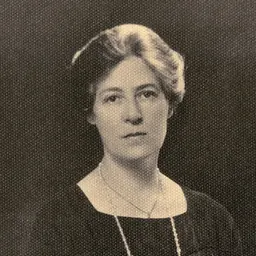
Contemporaries
People whose lives overlapped Sevasti Qiriazi's




Frequently asked questions
Who was Sevasti Qiriazi?
Albanian activist and educator (ca. 1870–1949)
When was Sevasti Qiriazi born?
Sevasti Qiriazi was born in 1871 in Bitola.
When did Sevasti Qiriazi die?
Sevasti Qiriazi died on 30 August 1949 in Tirana.
What was Sevasti Qiriazi's occupation?
Sevasti Qiriazi was a suffragette and journalist.
What nationality was Sevasti Qiriazi?
Sevasti Qiriazi was Albanian and Turkish.
Sources & further reading
Cite this page
APA: Biography.guide. (2026). Sevasti Qiriazi. https://biography.guide/sevasti-qiriazi/
MLA: "Sevasti Qiriazi." Biography.guide, https://biography.guide/sevasti-qiriazi/.
Chicago: "Sevasti Qiriazi." Biography.guide. https://biography.guide/sevasti-qiriazi/.
Data last updated: 2026-09-20 · Spot an error? Report a correction.
Page generated 2026-09-27 05:19 UTC