
Margaret Haig Thomas, 2nd Viscountess Rhondda
Essayist, autobiographer, suffragette
About Margaret Haig Thomas, 2nd Viscountess Rhondda
Lived 1883 – 1958 (aged 75). Margaret Haig Thomas, 2nd Viscountess Rhondda was a British suffragette, politician, entrepreneur, journalist, feminist and businessperson, known for Suffragette.
Margaret Haig Mackworth, 2nd Viscountess Rhondda ( Thomas; 12 June 1883 – 20 July 1958) was a Welsh peeress, businesswoman, magazine proprietor, and suffragette.
Women's suffrage
In 1908, aged 25, Thomas joined the Women's Social and Political Union (WSPU) and became secretary of its Newport branch. Between 1908 and 1914, she took the campaign for women's suffrage across South Wales. This activity saw her attend protest marches with the Pankhurst family, address the Liberal Club in Merthyr Tydfil with Annie Kenney, she was arrested and sentenced to a period of imprisonment, ended by her going on hunger strike.
Despite her imprisonment, Thomas remained committed to the women's suffrage movement, considering it a draught of fresh air in what she described as her "padded, stifled life." She was awarded a Hunger Strike Medal 'for Valour' by the WSPU. When Emmeline Pankhurst died in June 1928, Thomas, Kitty Marshall, and Rosamund Massy arranged her memorials. They raised money for her gravestone in Brompton Cemetery and a statue of her outside the House of Commons, which she had frequently been prevented from entering. Money was also raised to buy the painting that had been made by the fellow suffragette Georgina Brackenbury, so that it could be given to the National Portrait Gallery. It was unveiled by Stanley Baldwin in 1930.
First World War and sinking of RMS Lusitania On the outbreak of the World War I, Thomas accepted the decision by the WSPU leadership to abandon its militant campaign for suffrage for the duration of the war. She was by this time working for her father as his confidential secretary and ‘right-hand man’. Thomas had great pride and belief in his daughter, and had argued with her on equal terms since she was twelve or thirteen.
Peerage On 3 July 1918 her father died. While the Rhondda Barony died with him, the title of Viscount Rhondda passed to Margaret by special remainder, which Thomas had insisted on from King George V when he was offered the honour. When rejecting her petition the Lord Chancellor, Viscount Birkenhead LC, said: “On many grounds I regret this circumstance, for that history would upon its personal side have been worthy of the massive irony of Gibbon.” She was supported for many years by Waldorf Astor, 2nd Viscount Astor, whose wife Nancy Astor, Viscountess Astor had been the first woman to take a seat in the House of Commons.
Shortly after Lady Rhondda's death in 1958, women entered the Lords for the first time thanks to the Life Peerages Act 1958. Five years later, with the passage of the Peerage Act 1963, hereditary peeresses were also allowed to enter the Lords.
Business interests She succeeded her father as chair of the Sanatogen Company in February 1917. In total, she was a director of 33 companies throughout her life, chairing six,
She was elected as the Institute of Directors' first female president in 1926, having been a member of its Council since 1923. In 2015, the Institute launched the annual Mackworth Lecture in her honour. The League aimed to seek equal training and employment opportunities for women in industry, and to resist a return to pre-war conditions which largely designated women's labour as unskilled with low pay and poor prospects. She was concerned that the Ministry of Labour seemed to recognise only three forms of work for women – tailoring, laundry and domestic service. The Women's Industrial League publicised the issue and tried to hold the government to its war-time promises relating to working women. Rhondda appointed an all-woman board and ensured that the journal was entirely controlled, staffed and edited by women. She took over the editorship herself in 1926 and continued in the post until her death. George Bernard Shaw, who wrote for the paper, was one of those who had a high opinion of her abilities as an editor and, according to Rebecca West, who was also a contributor, she insisted on a high standard of writing.
The group's manifesto of equal rights for women within the workplace and for mothers and children sought the following: Satisfactory legislation on child assault Satisfactory legislation for the widowed mother Satisfactory legislation for the unmarried mother and her child Equal rights for Guardianship for married parents Equal pay for Teachers Equal opportunities for men and women in the Civil Service
These were issues which had not been covered by the Sex Disqualification (Removal) Act 1919 and which Rhondda believed to be easily understandable and attainable. They had all been considered and debated publicly, and some could be achieved without the need for parliamentary legislation. Rhondda argued, for example, that if the government stopped dismissing women civil servants when they married, local authorities would probably follow suit. She never remarried. She lived with Time and Tide magazine editor Helen Archdale in the late 1920s. She was close friends with Winifred Holtby, the author of South Riding, which led to jealousy from Holtby's dear friend, the writer Vera Brittain. She subsequently spent 25 years living with writer and editor Theodora Bosanquet, who acted as amanuensis to Henry James from 1907 to 1916.
Posthumous recognition In 2015, the annual Mackworth Lecture was launched by the Institute of Directors in her honour.
Lady Rhondda was one of five women shortlisted in 2019 to be portrayed in the first statue of a woman to be erected in Cardiff. Subsequently, the Monumental Welsh Women campaign aimed to erect statues in Wales of all five women. Statues depicting Betty Campbell, Elaine Morgan and Cranogwen have since been unveiled, with one for Elizabeth Andrews planned for 2025. The Lady Rhondda statue was created by artist Jane Robbins and was installed in Newport on 25 September 2024. The statue includes a circle of hands cast from about forty women’s hands, among them the hands of Olivette Otele and Helen Ward.
Arms
Don’t just read it —
keep it.
Full-length biographies made to live with: read them, listen on the way to work, watch them tonight.
- E-book
- Audio
- Video
Instant download · yours to keep · every purchase keeps this site free
Important facts
Family & relationships
People in Margaret Haig Thomas, 2nd Viscountess Rhondda's life
Named in this biography and alive at the same time


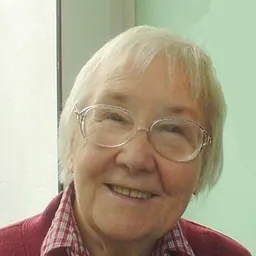


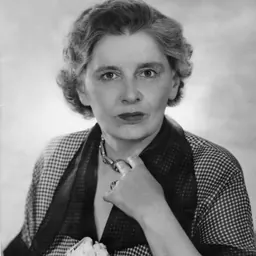


Related people
Same field, nearest in time

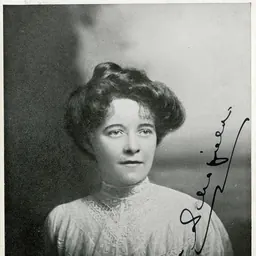

Contemporaries
People whose lives overlapped Margaret Haig Thomas, 2nd Viscountess Rhondda's

Frequently asked questions
Who was Margaret Haig Thomas, 2nd Viscountess Rhondda?
essayist, autobiographer, suffragette (1883-1958)
When was Margaret Haig Thomas, 2nd Viscountess Rhondda born?
Margaret Haig Thomas, 2nd Viscountess Rhondda was born on 12 June 1883 in Bayswater.
When did Margaret Haig Thomas, 2nd Viscountess Rhondda die?
Margaret Haig Thomas, 2nd Viscountess Rhondda died on 20 July 1958 in London.
What was Margaret Haig Thomas, 2nd Viscountess Rhondda's occupation?
Margaret Haig Thomas, 2nd Viscountess Rhondda was a suffragette, politician, entrepreneur, journalist, feminist and businessperson.
What was Margaret Haig Thomas, 2nd Viscountess Rhondda known for?
Margaret Haig Thomas, 2nd Viscountess Rhondda was known for Suffragette.
What nationality was Margaret Haig Thomas, 2nd Viscountess Rhondda?
Margaret Haig Thomas, 2nd Viscountess Rhondda was British.
Sources & further reading
· Wikipedia: Margaret Haig Thomas, 2nd Viscountess Rhondda
· DBpedia: Margaret Haig Thomas, 2nd Viscountess Rhondda
Cite this page
APA: Biography.guide. (2026). Margaret Haig Thomas, 2nd Viscountess Rhondda. https://biography.guide/margaret-haig-thomas-2nd-viscountess-rhondda/
MLA: "Margaret Haig Thomas, 2nd Viscountess Rhondda." Biography.guide, https://biography.guide/margaret-haig-thomas-2nd-viscountess-rhondda/.
Chicago: "Margaret Haig Thomas, 2nd Viscountess Rhondda." Biography.guide. https://biography.guide/margaret-haig-thomas-2nd-viscountess-rhondda/.
Data last updated: 2026-09-26 · Spot an error? Report a correction.
Page generated 2026-09-27 05:15 UTC