
Sergei Chakhotin
Russian microbiologist and sociologist
About Sergei Chakhotin
Lived 1883 – 1973 (aged 90). Sergei Chakhotin was a Russian sociologist, psychologist, esperantist, microbiologist, naturalist and anti-fascist.
Sergei Stepanovich Chakhotin (; 13 September 1883 – 24 December 1973) was a Russian biologist, sociologist and social democrat.
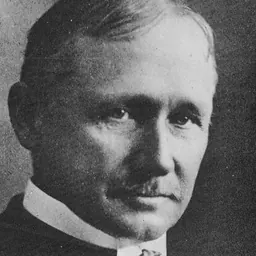
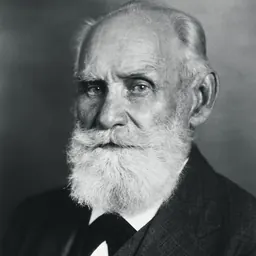
Chakhotin was the inventor of a technique of "cell optical microsurgery". He applied the ideas of Frederick Winslow Taylor and Ivan Pavlov in developing a theory of political propaganda which he applied in opposing the Bolshevik regime (1917–1919) and the rise of fascism in Europe (in Germany 1930–1933; Denmark 1933–1934; and France 1934–1945). He wrote extensively on organization theory, particularly on the "scientific organization of labour" (; also known as NOT).
Life
Early life Chakhotin was born on 13 September 1883, in Istanbul (then in the Ottoman Empire), the son of the Russian consul Stepan Ivanovich Chakhotin. His father had previously been a private secretary to Ivan Turgenev, before pursuing a diplomatic career which led to him becoming a consular interpreter in Istanbul. His mother, Alexandra Motzo, was Greek, and in 1893 he moved with her to Odessa. After graduating from the Third Odessa Gymnasium with a Gold Medal in 1900, Chakhotin enrolled in the Medical Faculty of Moscow University. Participation in a student protest in 1902 resulted in his arrest, incarceration in the Butyrki prison, and exile abroad. In Munich, he enrolled in the Faculty of Medicine and attended the lectures of Wilhelm Konrad Röntgen. He obtained a Doctorate in Zoology (summa cum laude) from the University of Heidelberg in 1907. In Heidelberg he studied problems of zoology under Professor Johann Adam Otto Bütschli, and oncology under Professor V. Čzerny. In 1907, he was invited to the University of Messina by Professor Alberico Benedicenti, Director of the Laboratory for Research in Marine biology, where he engaged in research into mono-cellular organisms, including the Pterotrachea. Chakhotin suffered a spinal injury during the 1908 Messina earthquake. Following recovery, he resumed research in the Zoological Station of Anton Dhorn in Naples and in the Marine Zoological Station of Villefranche-sur-Mer. Following visits to Odessa, Moscow and Kazan in 1909, Chakhotin returned to Heidelberg where, in 1912, he devised a technique of "cell optical microsurgery", using ultra-violet rays projected through a quartz lens and a narrow opening in a metal disc. In 1912 he took up a position in St. Petersburg as assistant in the Laboratory of Physiology of the Imperial Academy of Sciences under Ivan Petrovich Pavlov. He continued to work under Pavlov until 1918, returning occasionally to Villefranche-sur-mer and Naples for research purposes.
Change of Landmarks In emigration, Chakhotin came to the conclusion that opposition to the Bolshevik regime was futile: the émigré intelligentsia should contribute to Russia's economic recovery, promoting the new principles of organization developed in the West in order to "Americanize" Russian industrial production. In Paris in 1920 he delivered a paper To Canossa!, in which he argued this case to a circle that included Yu. V. Kliuchnikov, S. S. Lukyanov, A. V. Bobrishchev-Pushkin and Yu. N. Potekhin, with whom he founded the "Change of Landmarks" group (Smena vekh). In 1921 his paper was included in an anthology published under this title in Prague. The group published a weekly journal with the same title in Paris from 29 October 1921—25 March 1922. In March 1922, on the eve of the Genoa Conference, the Soviet government approved the publication of a daily paper in Berlin, "On the eve" (Nakanune). As members of the editorial board, Chakhotin and Kliuchnikov attended and reported on the Genoa conference. By 1924, when the paper closed down, Chakhotin had published around 40 articles in Nakanune.
Campaigning against Nazism: 1930–1933 The Three Arrows symbol of the Iron Front was co-authored by Chakhotin. From 1926, Chakhotin resumed his work on cell micro-surgery and embarked on new work on cancer research in the Institute of Experimental Pharmacology of the University of Genoa. In 1929, with the support of Albert Einstein, he obtained a three-year grant from the Research Foundation of America, which enabled him to take up a research position at the Kaiser William Medical Institute in Heidelberg the following year. Chakhotin's years in Germany involved intense political activity. At the end of 1931, he and fellow members of the Reichsbanner Schwarz-Rot-Gold, a socialist defence league, waged a "war of graffiti" in Heidelberg, defacing the swastikas on Nazi posters with a single white arrow. In 1932, he campaigned with the Iron Front against the Nazis, alongside the German Social Democrat, Carlo Mierendorff. Chakhotin designed the Three Arrows, the symbol of the Iron Front. With Mierendorff, he published Foundations and Forms of Political Propaganda . His writings of this period provided the foundations for his key work on crowd psychology and propaganda techniques — (Paris, 1939). On 22 April 1933, following police searches at his home and laboratory, Chakhotin was dismissed from the Kaiser Wilhelm Institute.
Sergei Chakhotin was married five times and had seven sons (a first child died in childbirth). According to his wishes, his ashes were scattered in the island of Corsica which he frequently visited as an amateur painter, and where he and his first wife had taken a belated honeymoon in 1908.
Key works
Chakhotin, Sergei Stepanovich. Organizatsiya. Printsipy, metody v proizvodstve, torgovle, administratsii i politike (Berlin, "Opyt", 1923; Gosizdat, Moscow-Petrograd, 1924; 2nd edition Gosizdat, Leningrad, 1925).
The 1st French edition has been translated as: New York: Alliance Book Corporation (Open Library: OL6411667M). The term "totalitarian" does not figure in the title of the French editions of 1939 or 1952 but was added in the English language editions of 1940. The English translation of 1940 has been re-printed by Routledge [London, 2017].
Other translations exist in Esperanto, Italian, Japanese, Portuguese and Romanian.
Don’t just read it —
keep it.
Full-length biographies made to live with: read them, listen on the way to work, watch them tonight.
- E-book
- Audio
- Video
Instant download · yours to keep · every purchase keeps this site free
Important facts
People in Sergei Chakhotin's life
Named in this biography and alive at the same time


Related people
Same field, nearest in time

Contemporaries
People whose lives overlapped Sergei Chakhotin's


Frequently asked questions
Who was Sergei Chakhotin?
Russian microbiologist and sociologist (1883–1973)
When was Sergei Chakhotin born?
Sergei Chakhotin was born on 13 September 1883 in Constantinople.
When did Sergei Chakhotin die?
Sergei Chakhotin died on 24 December 1973 in Moscow.
What was Sergei Chakhotin's occupation?
Sergei Chakhotin was a sociologist, psychologist, esperantist, microbiologist, naturalist and anti-fascist.
What nationality was Sergei Chakhotin?
Sergei Chakhotin was Russian.
Sources & further reading
Cite this page
APA: Biography.guide. (2026). Sergei Chakhotin. https://biography.guide/sergei-chakhotin/
MLA: "Sergei Chakhotin." Biography.guide, https://biography.guide/sergei-chakhotin/.
Chicago: "Sergei Chakhotin." Biography.guide. https://biography.guide/sergei-chakhotin/.
Data last updated: 2026-09-20 · Spot an error? Report a correction.
Page generated 2026-09-27 05:26 UTC