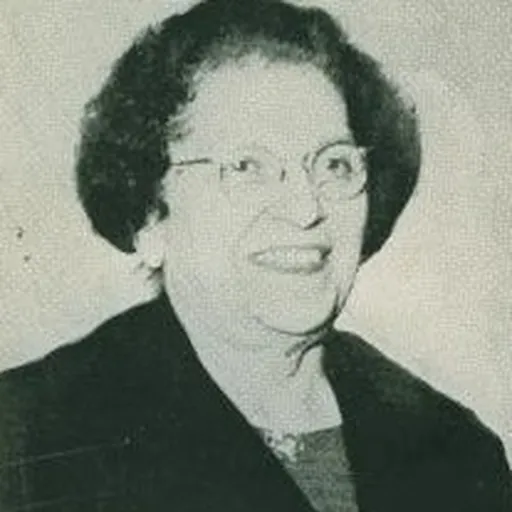
About Sediqeh Dowlatabadi
Lived 1882 – 1961 (aged 78–79). Sediqeh Dowlatabadi was an Iranian journalist, women's rights activist and feminist.
Sediqeh Dowlatabadi ( ; 1882 in Isfahan – 30 July 1961 in Tehran) was an Iranian feminist activist and journalist and one of the pioneering figures in the Persian women's movement.
On one of the occasions when Dowlatabadi was arrested for her activities, she replied: Sir, I was born a hundred years late, if I had been born earlier, I would not have allowed women to be so humiliated and trapped in your chains. Her father was Hadi Dowlatabadi and her mother was Khatameh Begum. Her father was a progressive religious jurist and allowed Dowlatabadi to begin her education in Persian and Arabic in Tehran.
Career
Dowlatabadi believed that the only route for the advancement of women was through their education. In 1917, she founded one of the first girls' primary schools, called Umm Al- Madaris (Mother of Schools).
In order to educate, she recognised that women needed news and articles that addressed their issues and concerns. This led her to establish the first women's gazette in Isfahan called Zaban-e Zanan in 1919. This was the third women's newspaper to be published in Iran, and ran for 57 issues until 1921. She also established the Women's Association of Isfahan at this time.
When the Second Eastern Women's Congress was arranged in Tehran in 1932, Princess Shams Pahlavi served as its president and Dowlatabadi as its secretary. During the late 1920s and 1930s there were rumours that the government planned to introduce a policy of compulsory unveiling (the reform, known as Kashf-e hijab, was promulgated in 1936). Dowlatabadi was an outspoken advocate for the unveiling of women. She is believed to have been the first woman to have done so, Another advocate for unveiling was Khadijeh Afzal Vaziri, who campaigned for change in fashion alongside Dowlatabadi. When Reza Shah banned the veil in 1936, Dowlatabadi was an active supporter of the reform, and engaged in the new women's committee Kanoun-e-Banovan (Ladies Society) formed by the government.
Dowlatabadi died on 27 August 1961 at the age of 80 in Tehran. She had been ill with cancer. Part of this archive was exhibited in February 2016 at an exhibition on the background of the women's movement.
Don’t just read it —
keep it.
Full-length biographies made to live with: read them, listen on the way to work, watch them tonight.
- E-book
- Audio
- Video
Instant download · yours to keep · every purchase keeps this site free
Important facts
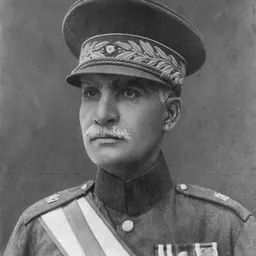
People in Sediqeh Dowlatabadi's life
Named in this biography and alive at the same time
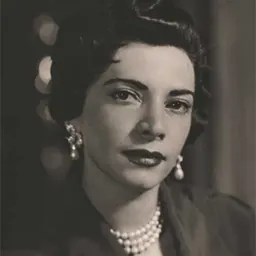

Related people
Same field, nearest in time



Contemporaries
People whose lives overlapped Sediqeh Dowlatabadi's



Frequently asked questions
Who was Sediqeh Dowlatabadi?
Iranian activist
When was Sediqeh Dowlatabadi born?
Sediqeh Dowlatabadi was born in 1882 in Isfahan.
When did Sediqeh Dowlatabadi die?
Sediqeh Dowlatabadi died on 30 July 1961 in Tehran.
What was Sediqeh Dowlatabadi's occupation?
Sediqeh Dowlatabadi was a journalist, women's rights activist and feminist.
What nationality was Sediqeh Dowlatabadi?
Sediqeh Dowlatabadi was Iranian.
Sources & further reading
· Wikipedia: Sediqeh Dowlatabadi
· DBpedia: Sediqeh Dowlatabadi
Cite this page
APA: Biography.guide. (2026). Sediqeh Dowlatabadi. https://biography.guide/sediqeh-dowlatabadi/
MLA: "Sediqeh Dowlatabadi." Biography.guide, https://biography.guide/sediqeh-dowlatabadi/.
Chicago: "Sediqeh Dowlatabadi." Biography.guide. https://biography.guide/sediqeh-dowlatabadi/.
Data last updated: 2026-09-22 · Spot an error? Report a correction.
Portrait: Wikimedia Commons · author & licence
Page generated 2026-09-27 05:01 UTC