
About Sechele I
Lived 1810 – 1892 (aged 81–82). Sechele I was a monarch.
Early life Sechele was born in 1812, the son of the chief of the Kwêna tribe of Tswana people of what is modern-day Botswana. In about 1831 he succeeded in replacing one of his uncles as ruler of half the baKwêna.
Sechele experienced several conflicts between local custom and Christianity. He had to give up his role as the local rainmaker. He fell into conflict with the Livingstone over his marriage to five women. At first Livingstone was inclined to be relaxed about it but feeling under pressure from other missionaries, he demanded divorce of four of the five. Sechele did so. As there were no further impediments, he was baptised in 1848. Because Sechele and the Kwêna lived on the route to Central Africa, between the Transvaal and Shoshong, Sechele was perceived by the Boers as a danger to their western border.
In 1852 a group of Bahurutshe people who were slaves of the Boers escaped and fled to the Kwêna for protection. The Boers destroyed the Kolobeng mission and attacked the Kwêna at Dimawe, where they encountered the combined Batswana tribes of Bakwêna, Bahurutshe, Balete and Batlokwa. Before the attack there was an attempt by the Batswana to protect the women and children by sending them into hiding, but according to Livingstone, many were taken prisoner by the Boers. Under the leadership of Sechele, Khama of Bangwato, and Bathoen I of Bangwaketse, the Boers were defeated by a combination of strategy and fire power. The British did not want to risk their relationship with the Boers by appearing to side with Sechele. Sechele set out for England with the intention of seeking the protection of Queen Victoria, but his resources ran out by the time he reached Cape Town. Officially, there were no converts among the Ndebele until the 1880s.
After the departure of Livingstone, Sechele returned to some of his local customs, including rainmaking and polygamy. Missionaries complained that he used his great knowledge of the scriptures to defend his own actions. Neil Parsons, of the University of Botswana, stated that Sechele "did more to propagate Christianity in nineteenth-century southern Africa than virtually any single European missionary".
Under his leadership, his region became a refuge to other people fleeing persecution, and the numbers that he ruled exceeded 30,000 at the time of his death in 1892.
Don’t just read it —
keep it.
Full-length biographies made to live with: read them, listen on the way to work, watch them tonight.
- E-book
- Audio
- Video
Instant download · yours to keep · every purchase keeps this site free
Important facts
Family & relationships
People in Sechele I's life
Named in this biography and alive at the same time

Related people
Same field, nearest in time
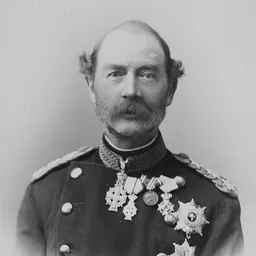

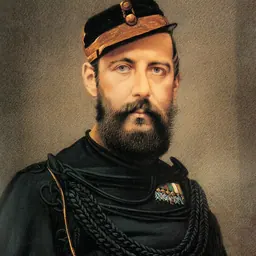

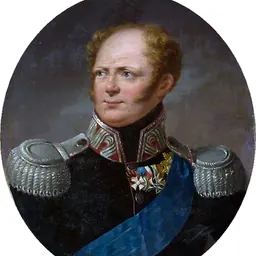
Contemporaries
People whose lives overlapped Sechele I's






Frequently asked questions
Who was Sechele I?
kgosi of the Bakwena of Bechuanaland
When was Sechele I born?
Sechele I was born in 1810 in Botswana.
When did Sechele I die?
Sechele I died in 1892.
What was Sechele I's occupation?
Sechele I was a monarch.
Sources & further reading
Cite this page
APA: Biography.guide. (2026). Sechele I. https://biography.guide/sechele-i/
MLA: "Sechele I." Biography.guide, https://biography.guide/sechele-i/.
Chicago: "Sechele I." Biography.guide. https://biography.guide/sechele-i/.
Data last updated: 2026-09-20 · Spot an error? Report a correction.
Page generated 2026-09-27 05:20 UTC