
About Saul Berlin
Lived 1740 – 1794 (aged 53–54). Saul Berlin was a German rabbi and talmudist.
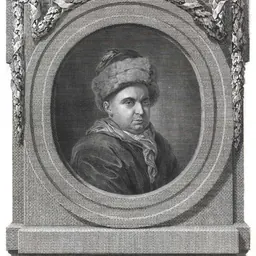
Saul Berlin (also Saul Hirschel after his father; 1740 at Glogau – November 16, 1794 in London) was a German Jewish scholar who published a number of works in opposition to rabbinic Judaism.
Early life He received his general education principally from his father, Hirschel Levin, who had served as rabbi of the Great Synagogue of London and as chief rabbi of Berlin. Saul, the eldest son, was given an education in both the Talmud and secular subjects. His brother, Solomon Hirschell, eventually became Chief Rabbi of Great Britain.
Saul Berlin was ordained as a rabbi at age 20. By 1768, aged 28, he had a rabbinic post in Frankfort-on-the-Oder in the Prussian province of Brandenburg. He married Sarah, the daughter of Rabbi Joseph Jonas Fränkel of Breslau.
In Berlin and Breslau (where he frequently went to visit his father-in-law), he came into personal contact with the representatives of the Jewish Enlightenment, and became one of its most enthusiastic adherents.
Career Berlin began his literary career with an anonymous circular letter, Katuv Yosher (Written Truth) (printed in Berlin, 1794, after the death of the author), which Hartwig Wessely warmly defended in his own contention with the rabbis while pleading for German education among the Jews. Berlin used humor to describe what he viewed as the absurd methods of the Jewish schools, and alleges how the rabbinic casuistry—which then constituted the greater part of the curriculum—injures the sound common sense of the pupils and deadens their noblest aspirations.
He later wrote the pseudonymous work, Mitzpeh Yokt'el (two place-names in Jos. 15:38; by way of pun Mitzpah Yekutiel, "Superseder of Yekutiel") (published by David Friedländer and his brother-in-law Itzig, Berlin, 1789), a polemic against the Torat Yekutiel of Raphael Cohen. The latter, one of the most zealous advocates of rabbinic piety, was a rival candidate with Levin for the Berlin rabbinate, which induced Levin's son to represent Cohen as a forbidding example of rabbinism.
Under the name "Ovadiah b. Baruch of Poland," Berlin attempted in this work to ridicule Talmudic science, and to stigmatize one of its foremost exponents not only as ignorant, but also as dishonest. The publishers declared in the preface that they had received the work from a traveling Polish Talmudist, and had considered it their duty to print it and submit it to the judgment of specialists. To secure the anonymity more thoroughly, Berlin and his father were named among those who were to pass upon it. Berlin's statements, especially his personal attacks against those he disagreed with, undermined his cause. When it reached Altona and Hamburg, where Raphael was chief rabbi, the work and its author was placed under the ban. The dispute that then arose concerning the validity of the ban turned entirely on the question of whether a personal element, like the attack upon the rabbi of Altona, justified such a punishment. Some Polish rabbis supported the ban, while some declared the ban invalid as did Ezekiel Landau, chief rabbi of Prague and a near relation of Berlin. Even the former censured Berlin's actions after circumstances forced him to acknowledge authorship. Ovadia Yosef was aware that the work was considered a forgery but determined that there were valuable teachings in it which were of use in deciding Jewish law. Berlin is also alleged to be the author of the two responsa concerning the modification of the ceremonial laws, especially of such that were apparently especially burdensome to the Berlin youth. For instance, it gives permission to Jewish men to shave their beards (No. 18), to drink non-kosher wine, "yayin nesek" (No. 36), and to continue traveling on Friday night if one is in the middle of a journey and can't stop before Shabbat. Berlin aroused a storm of indignation from authorities who accused him of fraudulently using the name of one of the most famous rabbis of the Middle Ages to combat rabbinism. The Sochatchover Rebbe, Avrohom Bornsztain later wrote that it was prohibited to keep the Besamim Rosh in one's home and it was permitted to burn it even on a Yom Kippur that falls on Sabbath.
The exact historicity of "Besamim Rosh" is still disputed, with it being unclear which parts are forgeries. The Besamim Rosh was reprinted in 1881 and 1984, but some of the texts considered most controversial were removed from the later printings of the work.
Jewish Encyclopedia bibliography Azulai, Shem ha-Gedolim, ed. Wilna, ii. 20, 21; Benet, in Literaturblatt des Orients, v. 53-55, 140-141 (fragment of his above-mentioned letter to Levin); Brann, in the Grätz Jubelschrift, 1887, pp. 255–257; Carmoly, Ha-'Orebim u-Bene Yonah, pp. 39–41; Chajes, Minḥat Kenaot, pp. 14, 21; Grätz, Gesch. der Juden, xi. 89, 151-153; Horwitz, in Kebod ha-Lebanon, x., part 4, pp. 2–9; Jost, Gesch. des Judenthums und Seiner Sekten, iii. 396-400 (a defense of the authenticity of the responsa collection Besamim Rosh); Landshuth, Toledot Anshe ha-Shem, pp. 84–106, 109; M. Straschun, in Fuenn, Kiryah Neemanah, pp. 295–298; Zunz, Ritus, pp. 226–228, who thinks that Isaac Satanow had a part in the fabrication of the responsa.
Don’t just read it —
keep it.
Full-length biographies made to live with: read them, listen on the way to work, watch them tonight.
- E-book
- Audio
- Video
Instant download · yours to keep · every purchase keeps this site free
Important facts
People in Saul Berlin's life
Named in this biography and alive at the same time




Related people
Same field, nearest in time


Contemporaries
People whose lives overlapped Saul Berlin's




Frequently asked questions
Who was Saul Berlin?
German rabbi
When was Saul Berlin born?
Saul Berlin was born in 1740 in Głogów.
When did Saul Berlin die?
Saul Berlin died on 16 November 1794 in London.
What was Saul Berlin's occupation?
Saul Berlin was a rabbi and talmudist.
What nationality was Saul Berlin?
Saul Berlin was German.
Sources & further reading
Cite this page
APA: Biography.guide. (2026). Saul Berlin. https://biography.guide/saul-berlin/
MLA: "Saul Berlin." Biography.guide, https://biography.guide/saul-berlin/.
Chicago: "Saul Berlin." Biography.guide. https://biography.guide/saul-berlin/.
Data last updated: 2026-09-20 · Spot an error? Report a correction.
Page generated 2026-09-27 04:57 UTC