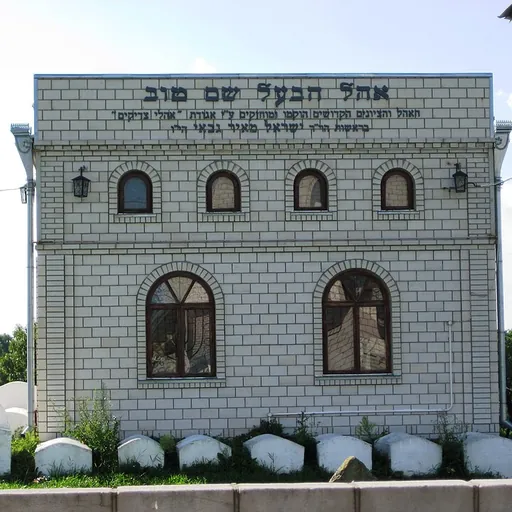
About Baal Shem Tov
Lived 1698 – 1760 (aged 61). Baal Shem Tov was a Polish rabbi, healer and baal Shem.
Israel ben Eliezer ( −1760 ), known as the Baal Shem Tov (; ) or BeShT , was a Jewish mystic and healer regarded as the founder of Hasidic Judaism. A baal shem tov is a "Master of the Good Name". The term has also been used to refer to one able to work miracles using a secret name of God. Other sources explain his sobriquet as arising from a reputation of being a saintly, or superior, Baal Shem ('miracle-worker'); hence, he was given the nickname Baal Shem Tov (the "good Baal Shem").
Biographical information about the Baal Shem Tov comes from contemporary documents from the Polish–Lithuanian Commonwealth and the legends about his life and behavior collected in the Praise of the Besht .
A central tenet of the teachings associated with the Baal Shem Tov is devekut, a direct connection with the divine, which is infused in every human activity and every waking hour. Prayer is of supreme importance, along with the mystical significance of Hebrew letters and words.
Biography
Birth Israel was born about 1700 to a certain Eliezer. Eliezer lived at the edge of Wallachia. He and his wife were elderly. Once upon a time, they were captured and taken prisoner to a far-away land . . . Eliezer found his wife, who thankfully still lived, and the Besht was born when each was near 100 years old.According to other early Hasidic legends, he was born in "Okop" (probably Okopy, Ternopil Oblast), although Shivḥei haBesht mentions him residing there only as an adolescent, and only in a parenthetical insertion by the 1815 printer. Later legend names his mother Sarah.
Romanian-Israeli historian Moshe Idel claims that Baal Shem Tov was born in the Principality of Moldavia, in what is today Bukovina. Idel concludes that there is no solid evidence that he was born in Okopy: "the founder of Hasidism was born to a poor family that inhabited an unknown place on the Romanian part of the border with the Kingdom of Poland... there is no extant evidence whatsoever that the Besht was born in Okopy". -1791 ) records two anecdotes about his father Jacob (1698–1738), the rabbi of Zhvanets, meeting "the renowned Israel Baal Shem, master of divine knowledge" that are non-legendary, as Halpern was not a hasid, although he was only between 9 and 11 when his father died. The Baal Shem Tov performed a dream question, and discovered Jacob was the reincarnation of Isaac Alfasi, a famous Maghrebi scholar. These meetings necessarily occurred before 1738. thumb Polish census records show that a certain holy man lived in Medzhybizh from 1740 to 1760, which was presumably Israel.
Beyond these scant sources, a few letters on theological subjects, attributed to Israel, were printed posthumously. Their authenticity is debated by scholars. Nothing more can be gleaned of his biography from contemporary sources.
Legacy
The old synagogue of Medzhybizh (c. 1915). This building, which was never used by Israel (he preferred an alternate minyan), A second replica opened in 2022 as a community synagogue in Wesley Hills, NY. An 18th-century Kabbalistic siddur in the Chabad library. Chabad claims that Israel used this siddur. Israel ben Eliezer left no books; a kabbalistic commentary on Psalm 107, ascribed to him (Zhytomyr, 1804), Sefer miRabbi Yisrael Baal Shem-tov, is not genuine. The only record of his teachings is in his utterances as recorded in the works of his disciples. Most are found in the works of Jacob Joseph of Polnoy. Since Hasidism immediately after its founder's death was divided into various parties, each claiming for itself the authority of Besht, utmost caution is necessary for judging the authenticity of utterances ascribed to Besht.
Chapin and Weinstock contend that the Besht was essentially the right person in the right place at the right time. 18th-century Podolia was ideal for fostering a sea change in Jewish thinking. It had been depopulated a generation earlier due to the pogroms of the Khmelnytsky uprising. The Ottoman occupation of Podolia occurred within Israel's lifetime, and along with it, the influence within this frontier territory of Sabbatai Zevi and his latter-day spiritual descendants such as Chaim Malach and Jacob Frank. Once the Magnates of Poland and Lithuania regained control of Podolia, it underwent an economic boom. The Magnates valued the financial benefits the Jews provided and encouraged Jewish resettlement to help protect the frontier from future invasions. Thus, the Jewish community itself was essentially starting over.
Notable students His students, some of whom founded dynasties, include the following.
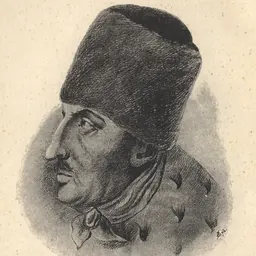
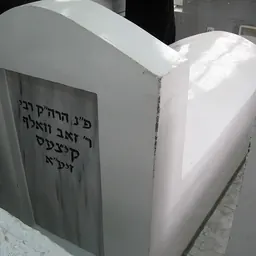
Jacob Joseph of Polonne (1710–1784) Ze'ev Wolf Kitzes of Medzhybizh (~1685–1788) Dov Ber of Mezeritch (1704–1772) Pinchas Shapiro of Koretz (1726–1791) Nachum Twerski of Chernobyl (1730–1797) founder of the Chernobyl Hasidic dynasty Abraham Gershon of Kitov, (1701–1761) (his brother-in-law) Moshe Chaim Ephraim of Sudilkov (1748–1800) (his grandson) Boruch of Medzhybizh (1753–1811) (his grandson) Meir Hagadol of Premishlan (1703–1773) Nachman of Horodenka (d. 1765)
Legends Hasidim soon filled volumes with fantastical legends about his life. These volumes, especially Shivḥei haBesht (1815), are presumed to contain a small historical kernel, but scholars debate which passages are credible.
The opening legend of Shivḥei haBesht tells that his father, Eliezer, was seized during an attack, carried from his home in Wallachia, and sold as a slave to a prince. On account of his wisdom, he found favor with the prince, who gave him to the king to be his minister. During an expedition undertaken by the king, when other counsel failed, and all were disheartened, Eliezer's advice was accepted; and the result was a successful battle of decisive importance. Eliezer was made a general and afterward prime minister, and the king gave him the viceroy's daughter in marriage. But mindful of his duty as a Jew, as he was already married, he married the princess only in name. After being questioned for a long time as to his strange conduct, he confessed he was a Jew to the princess, who loaded him with costly presents and helped him escape to his country. Sometime in 1712 Israel became the shammash (sexton) of the local synagogue. He was hired as a teacher's assistant in the heders of the small villages they passed through. He later related that he took great pleasure in accompanying the children to and from school, using this opportunity to recite prayers with them and tell them Torah stories. Dov Ber of Mezeritch would later say, "If only we kissed a Torah scroll with the same love that my master [the Baal Shem Tov] kissed the children when he took them to heder as a teacher's assistant!" He had visions in which the prophet Ahijah the Shilonite would appear to him. In 1716, Israel married, but soon after, his wife died, and he traveled throughout Eastern Galicia. After serving for a long time as a helper in various small communities of West Ukraine, he settled as a melamed in Tluste. Israel became the leader of this movement at the age of 18. Caring for the Jewish poor, the group of tzadikim encouraged Jews to move to agrarian lifestyles as alternatives to the chronic poverty of city Jews. Continuing this policy, they decided they needed to look after the educational needs of the children living in small farm communities. If a suitable teacher could not be sourced, they would provide one, so Israel became a teacher's assistant. He later commented "The most joyous time in my life was teaching the small children how to say Modeh Ani, Shema Yisrael and Kamatz alef, Ah". He was chosen by people conducting suits against each other to act as their arbitrator and mediator. His services were brought into frequent requisition because the Jews had their own civil courts in Poland. He is said to have made such an impression on Ephraim of Brody that the latter promised Israel his daughter Channah in marriage. The man died, however, without telling his daughter of her betrothal; but when she heard of her father's wishes, she agreed to comply with them.
Israel later took a position as a shohet (ritual butcher) in Kshilowice, near Iaslowice, which he soon gave up to manage a village tavern that his brother-in-law bought for him. His first appearance in public was that of an ordinary Baal Shem, a faith healer who wrote amulets and prescribed cures, After many trips in Podolia and Volhynia as a Baal Shem, Israel, considering his following large enough and his authority established, decided about 1740 to expound his teachings in the shtetl of Medzhybizh and people, mainly from the spiritual elite, came to listen to him. Medzhybizh became the seat of the movement and of the Mezhbizh. His following gradually increased and with it the hostility of the Talmudists. Israel was supported at the beginning of his career by two prominent Talmudists, the brothers Meïr, who were Chief Rabbis of Lemberg and later Ostroh, and author of Meir Netivim and other works, and Isaac Dov Margalios. Later, he won over recognized rabbinic authorities who became his disciples and attested to his scholarship. These include Jacob Joseph of Polonne; Dovid Halperin, rabbi of Ostroha; Israel of Sataniv, author of Tiferet Yisrael; Yoseph Heilperin of Slosowitz; and Dov Ber of Mezeritch. It is chiefly due to the latter that Israel's doctrines (though in an essentially altered form) were introduced into learned Jewish religious circles. The "Agudas Ohalei Tzadikim" organization (based in Israel) has restored many graves of Tzadikim (Ohelim) in Ukraine, including the Baal Shem Tov's. A guesthouse and synagogue are located next to the Ohel of Baal Shem Tov, and the Baal Shem Tov's synagogue in the village proper has been painstakingly restored. Both synagogues are used by the many visitors from all over the world. Israel took sides with the Talmudists in their disputes against Frankism, a Sabbataeanist movement. After the mass conversion of the Frankists to Christianity, the Baal Shem Tov allegedly said that as long as a diseased limb is connected with the body, there is hope that it may be saved; but, once amputated, it is gone, and there is no hope. It is alleged that he died out of grief that the Frankists left Judaism. The Besht was a mystic who claimed to have achieved devekut, meaning that his soul could ascend to heaven, speak with any soul there, and intervene between humans and God. His followers believed that could protect the Jewish community from plague and persecution. According to legend, he ate farfel every Shabbat evening, because the word is similar to the Yiddish word farfaln "wiped out, over, finished". He considered the noodles a symbol marking the beginning of a new week. It was believed the Besht was a great medical practitioner with vast knowledge regarding salves, balms, and similar medicaments. Some aspects of his medical practice are said to have been mystic, though the degree to which this is the case is not agreed upon. Some claim that the Besht could only heal others through prayer, but others describe other mystical methods. Another popular image is in fact , the Gradeitzer Rebbe.
In popular culture In 2019, the American funk quartet The Fearless Flyers released an instrumental single named "The Baal Shem Tov" in honor of the rabbi.
Singer Matisyahu's song Baal Shem Tov on the album Spark Seeker is named after him.
He was portrayed by Luzer Twersky in the Ukrainian film Dovbush (2023).
Gallery
Don’t just read it —
keep it.
Full-length biographies made to live with: read them, listen on the way to work, watch them tonight.
- E-book
- Audio
- Video
Instant download · yours to keep · every purchase keeps this site free
Important facts
People in Baal Shem Tov's life
Named in this biography and alive at the same time





Related people
Same field, nearest in time

Contemporaries
People whose lives overlapped Baal Shem Tov's



Frequently asked questions
Who was Baal Shem Tov?
Polish founder of Hasidic Judaism (1698–1760)
When was Baal Shem Tov born?
Baal Shem Tov was born on 27 August 1698 in Okopy, Principality of Moldavia.
When did Baal Shem Tov die?
Baal Shem Tov died on 21 May 1760 in Medzhybizh.
What was Baal Shem Tov's occupation?
Baal Shem Tov was a rabbi, healer and baal Shem.
What nationality was Baal Shem Tov?
Baal Shem Tov was Polish.
Sources & further reading
Cite this page
APA: Biography.guide. (2026). Baal Shem Tov. https://biography.guide/baal-shem-tov/
MLA: "Baal Shem Tov." Biography.guide, https://biography.guide/baal-shem-tov/.
Chicago: "Baal Shem Tov." Biography.guide. https://biography.guide/baal-shem-tov/.
Data last updated: 2026-09-23 · Spot an error? Report a correction.
Portrait: Wikimedia Commons · author & licence
Page generated 2026-09-27 05:05 UTC