
About Sarah Winnemucca
Lived 1844 – 1891 (aged 46–47). Sarah Winnemucca was an American writer and teacher.
Sarah Hopkins ( Winnemucca; – October 17, 1891) was a Northern Paiute writer, activist, lecturer, teacher, and school organizer. Her Northern Paiute name was Thocmentony, also spelled Tocmetone, which translates as "Shell Flower".
Sarah Winnemucca was born near Humboldt Lake, in present-day Nevada, into an influential Northern Paiute family who led their community in pursuing friendly relations with the arriving groups of Anglo-American settlers. She was the daughter of Chief Winnemucca of the Paiute nation and the granddaughter of Chief Truckee. At 16, Sarah studied at a Catholic school in San Jose, California. When the Paiute War erupted between the Pyramid Lake Paiute and the settlers, including some who were friends of the Winnemucca family, Sarah and some of her family traveled to San Francisco and Virginia City to escape the fighting. They made a living performing onstage as "A Paiute Royal Family". In 1865, while the Winnemucca family was away, their band was attacked by the U.S. cavalry, who killed 29 Paiutes, including Sarah's mother and several members of her extended family.
At the age of 27, Sarah began working in the Bureau of Indian Affairs at Fort McDermit in 1871 as an interpreter. Subsequently, Winnemucca became an advocate for the rights of Native Americans, traveling across the U.S. to tell Anglo- Americans about the plight of her people. When the Paiute were interned in a concentration camp at Yakima, Washington after the Bannock War, she traveled to Washington, D.C., to lobby Congress and the executive branch for their release. She also served U.S. forces as a messenger, interpreter, and guide, and as a teacher for imprisoned Native Americans.
Winnemucca published Life Among the Piutes: Their Wrongs and Claims (1883), which is both a memoir and a history of her people during their first 40 years of contact with European Americans. It is considered the "first known autobiography written by a Native American woman". Anthropologist Omer Stewart described it as "one of the first and one of the most enduring ethnohistorical books written by an American Indian", frequently cited by scholars. Following the publication of the book, Winnemucca toured the Eastern United States, giving lectures about her people in New England, Pennsylvania, and Washington, D.C. She returned to the West, founding a private school for Native American children in Lovelock, Nevada.
Since the late 20th century, scholars have paid renewed attention to Winnemucca for her accomplishments. In 1993, she was inducted posthumously into the Nevada Writers Hall of Fame. In 2005, the state of Nevada contributed a statue of her by sculptor Benjamin Victor to the National Statuary Hall Collection in the U.S. Capitol.
Winnemucca's legacy has been controversial. She was praised for her activism and social work to better living conditions for her people. However, she was critizized for a tendency to exaggerate her social status among the Paiute when speaking to outsiders. Among the Paiute, her assistance to the U.S. military at a time when they were at war with the Paiute was divisive, as was her advocacy for assimilation of Natives to Anglo-American culture.
Early life and family Born "somewhere near 1844" at Humboldt Lake in what is now western Nevada, Sarah Winnemucca was the daughter of Winnemucca (Poito), a Shoshone who had joined the Paiute through marriage, The town of Winnemucca, Nevada was named after her father. Winnemucca's grandfather, Tru-ki-zo or Truckee, had established positive relations with the European Americans who started exploring in the area. He guided Captain John C. Frémont during his 1843–45 survey and map-making expedition across the Great Basin to California. Later, Truckee fought in the Mexican–American War (1846–1848), earning many white friends and leading the way for his extended family's relationships with European Americans.
Sarah had an older sister Mary, younger brother Natchez, She learned the ways of her people, including fishing and gathering plants.
First marriage Winnemucca married Edward Bartlett, a former First Lieutenant in the Army, on January 29, 1872, at Salt Lake City, Utah. He abandoned her, and she returned to Camp McDermit. In 1876, after having moved to Malheur Reservation, she got a divorce and filed to take back her name of Winnemucca, which the court granted. In the divorce decree, Sarah stated what she did to support herself when her husband left her with no money, writing, "I did sewing. I made gloves for a living."
Bannock War Parrish was replaced in the summer of 1876 by agent William V. Rinehart. The Paiute were sorry to see Parrish leave. A proponent of extermination-style warfare, Rinehart emphasized keeping the Paiute under his thumb. He reversed many of the policies that Parrish had initiated, telling the Paiute the reservation land belonged to the government. He failed to pay their workers for agricultural labor in communal fields, and alienated many tribal leaders. Conditions at the Malheur Reservation quickly became intolerable.
In her 1883 book, Winnemucca recounted that Rinehart sold supplies intended for the Paiute people to local whites. Much of the good land on the reservation was illegally expropriated by white settlers. In 1878, virtually all of the Paiute and Bannock people left the reservation because of these abuses and their difficulties in living. The Bannock from southern Idaho had left the Fort Hall Reservation due to similar problems. They moved west, raiding isolated white settlements in southern Oregon and northern Nevada, triggering the Bannock War (1878). The degree to which Northern Paiute people participated with the Bannock is unclear. Winnemucca wrote that she and several other Paiute families were held hostage by the Bannock during the war.
During the Bannock War, Winnemucca worked as a translator for General Oliver O. Howard of the U.S. Army, whom she had met during his visit to the reservation; she also acted as a scout and messenger. According to her account, the Bannock warriors and the Army soldiers liked each other so much that they rarely shot to kill. For whatever reason, casualties were relatively few. Winnemucca was highly regarded by the officers she worked for, and she included letters of recommendation from several of them in her 1883 book. Impressed by many of the officers, Winnemucca began to support the U.S. Army's position to have the military take over administration of the Indian reservations, rather than political appointees.
Move to Yakama Reservation
Following the Bannock War, the Northern Paiute bands were ordered from Nevada to the Yakama Indian Reservation (in eastern Washington Territory), where they endured great deprivation. A total of 543 Paiute were interned in what has been described as a "concentration camp". Instead, the government decided to "discontinue" the Malheur Reservation in 1879, closing it.
Second marriage In 1881, General Oliver O. Howard hired Winnemucca to teach Shoshone prisoners held at Vancouver Barracks. While there, she met and became close to Lieutenant Lewis H. Hopkins, an Indian Department employee. They married that year in San Francisco.
After returning to Nevada in 1884, Winnemucca spent a year lecturing in San Francisco. When she returned again to Pyramid Lake, she and her brother built a school for Indian children at Lovelock, Nevada, in order to promote the Paiute culture and language. The Peabody Indian School, named for its benefactor Mary Peabody Mann in Boston, operated for a couple of years. Changes in federal policy following what was considered the success of the Carlisle Indian School prompted the federal government to promote education for Native American children at English-language boarding schools. Winnemucca's school was closed in 1887 and the children were transferred to a facility in Grand Junction, Colorado.
Later years and death Winnemucca spent the last four years of her life retired from public activity. She died of tuberculosis at her sister Elma Smith's home at Henry's Lake, Idaho. In 1994, a Washoe County, Nevada elementary school was named in her honor. In 1994, Sarah Winnemucca was inducted into the National Women's Hall of Fame. In 2005, the state of Nevada contributed a statue of Winnemucca to the National Statuary Hall Collection in the U.S. Capitol.
Works By Winnemucca 1870. The original letter was addressed to Major H. Douglass. Forwarded by him, with his report as Indian Superintendent, Nevada, to Ely Samuel Parker.
1883, (new edition in 1994 ) 1885,
With Winnemucca or her papers or lecturers 1886 pamphlet, 2015 . Based upon an anthology of publications about Winnemucca and her lectures .
Don’t just read it —
keep it.
Full-length biographies made to live with: read them, listen on the way to work, watch them tonight.
- E-book
- Audio
- Video
Instant download · yours to keep · every purchase keeps this site free
Important facts
People in Sarah Winnemucca's life
Named in this biography and alive at the same time

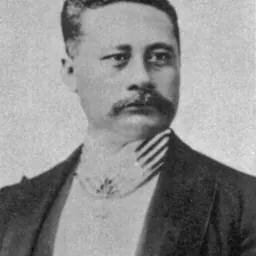


Related people
Same field, nearest in time
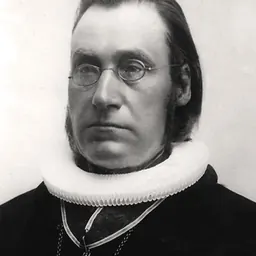

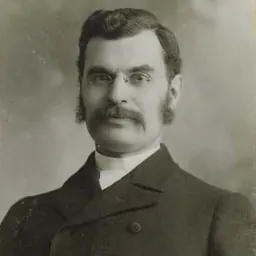
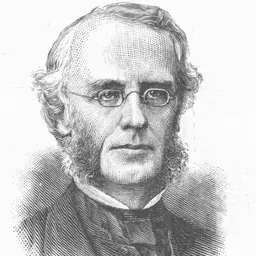
Contemporaries
People whose lives overlapped Sarah Winnemucca's

Frequently asked questions
Who was Sarah Winnemucca?
Native American writer, activist, scout, and teacher (1844–1891)
When was Sarah Winnemucca born?
Sarah Winnemucca was born in 1844 in Humboldt Sink.
When did Sarah Winnemucca die?
Sarah Winnemucca died on 17 October 1891 in Idaho.
What was Sarah Winnemucca's occupation?
Sarah Winnemucca was a writer and teacher.
What nationality was Sarah Winnemucca?
Sarah Winnemucca was American.
Sources & further reading
Cite this page
APA: Biography.guide. (2026). Sarah Winnemucca. https://biography.guide/sarah-winnemucca/
MLA: "Sarah Winnemucca." Biography.guide, https://biography.guide/sarah-winnemucca/.
Chicago: "Sarah Winnemucca." Biography.guide. https://biography.guide/sarah-winnemucca/.
Data last updated: 2026-09-22 · Spot an error? Report a correction.
Page generated 2026-09-27 05:34 UTC