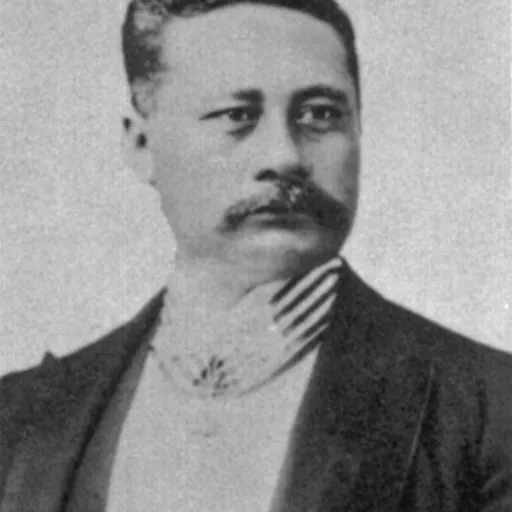
About Samuel Parker
Lived 1853 – 1920 (aged 67). Samuel Parker was an American politician.
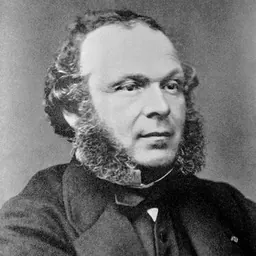
Samuel Parker, known as Kamuela Parker (June 23, 1853 – March 19, 1920) was a major landowner and businessman on the island of Hawaii, heir to the Parker Ranch estate. He was also a leading political figure at a critical time of the history of the Kingdom of Hawaii, serving in its last cabinet.
Background and early life Samuel Parker was born on June 23, 1853. His paternal grandfather, John Palmer Parker (1790–1868), was a member of the eponymous Parker House Hotel family. John Parker was born in Boston, Massachusetts, but settled in the Hawaiian Islands. He founded the Hawaiian branch of the family when he married Chiefess Kipikane (1800–1860), who was related to the high-ranking chiefs of the Big Island. John's younger son, and Samuel's father, was Ebenezer Parker (1829–1855). Ebenezer Parker also married a Hawaiian woman, Kilia Nahulanui, on June 7, 1849. Despite his American-sounding name and upbringing, Samuel Parker was of three-quarters native Hawaiian ancestry.
Samuel Parker's life was influenced by some early deaths in the family. His father Ebenezer had died in 1855, when Samuel was only two years old. Samuel was the second son but his only brother, Ebenezer Christian Parker II, then died in 1860, at the age of ten. Samuel was educated at Oahu College, now known as Punahou School, on Oahu. There he made lasting friendships with his contemporaries among the Hawaiian nobility, a social connection that would prove very helpful in adulthood.
Grandfather John Parker died, in 1868, when Samuel was still only 15 years old. Samuel thus found himself the co-proprietor, with his father's elder brother, of the eponymous Parker Ranch.
The uncle was John Palmer Parker II (1827–1891), who was also married to a Hawaiian lady, Hanai. In 1879, they moved from the Ranch to a much larger and more accessible estate, more suited to their status as a wealthy and prominent couple who liked to entertain: Puu o Pelu. This left the Ranch house to Samuel and growing, new family.
The Parker Ranch began in 1847, with a small cottage called Mana Hale, in the remote uplands of Mauna Kea on Hawaii island, at about elevation at , but was quickly built up into a profitable cattle-estate of 1 640 acres. However, when Samuel took over, he also left the cowboy work, and later the management, to others and was soon looking for further business opportunities.
Family life
Samuel married Harriet ("Hattie") Panana Kaiwaokalani Napela (1852–1901) on August 23, 1871. She was the daughter of Jonathan Napela who was an early convert to Mormonism, She was also three-quarters Hawaiian, and also known as Harriet Richardson, after her mother's maiden name.
Samuel and Harriet Parker had nine children. Their first daughter was Mary Kihilani Parker (1871–1895). The second daughter, Eva Kalanikauleleiaiwi Parker (1872–1922), married her cousin James Frank Woods, the son of Parker's sister Mary. The third daughter, Helen Umiokalani Parker (1874–1929), married Carl Widemann, son of Hermann Widemann.
Samuel's fourth child, John Palmer Parker III (1875–1893), was adopted by John Palmer Parker II and married Elizabeth Jane Lanakila Dowsett, known to later generations as "Aunt Tootsie", on April 18, 1893, at the Parker home in Honolulu. They had one daughter Annie Thelma Kahiluonapuaopiilani Parker March 17, 1894, who generally known by her second name, as Thelma; John III died less than two months later, on May 8, 1894. Thelma married Henry Gaillard Smart July 25, 1912 in Honolulu. and had one son Richard Palmer Smart, born on May 21, 1913. However, she also died soon afterwards, in 1914, aged only 20.
Other children were: Harriet "Hattie" Kaonohilani Parker (1876–1884), Palmer Kuihelani Parker (1878–1896), Samuel Keaoulilani Parker (1879–1934), Ernest Napela Parker (1884–1945) and James Kekoalii Parker (1886–1962).
Parker's uncle, John Palmer Parker II, died in November 1891.
Parker's wife, Harriet, died in 1901, but he did not remain a widower for long.
Sugar-plantations The family business was the Parker Ranch, a huge and successful cattle-business in the interior. However, in the second half of the century, the sugar-industry was developing rapidly in Hawaii, and Parker saw a profitable business opportunity and a chance to diversify from reliance on livestock.
In 1878, he started the Paauhau Plantation with Rufus Anderson Lyman, about 50 miles north of Hilo at coordinates . Lyman was advisor to island governor, Princess Ruth Keelikōlani, the only land owner with holdings greater than those of the Parker Ranch. Her lands later became a major part of the Kamehameha Schools estate.
Parker enjoyed being at the heart of Hawaiian business and social life, and developing a new and powerful circle of friends and associates. He was often involved in real estate deals involving long-term leases from the Kamehameha estate, or buying them fee simple, and also enjoyed the Hawaiian tradition of lavish entertaining at his estates.
On August 19, 1879, Parker invested in the nearby Pacific Sugar Mill in Kukuihaele near Waipio Valley. The Pacific mill had an abundant water supply, but eventually failed from mismanagement. In 1883 manager William H. Purvis introduced the mongoose, which became an invasive pest. Herds of cattle and sheep had to be destroyed later when a glanders epidemic broke out because of poor conditions in the stables. He was generally considered the most powerful member of the cabinet; sometimes called Prime Minister, or Premier, but there was no such official office. The choice of Parker satisfied the people who wanted more native Hawaiians in the government, and he generally had favorable relations with the American interests at the time.
The first sign of trouble came a week later when Parker also became acting Minister of Finance, temporarily replacing Hermann A. Widemann who was also serving on the Supreme Court. The McKinley Tariff act had devastated the Hawaiian economy by making exports to the US much more expensive, undoing the effects of the Reciprocity Treaty of 1875. It was not until July that former self-taught dentist John Mott-Smith would take over the Finance position, which he had taken earlier under Kamehameha V. However, by October Mott-Smith was sent to Washington, DC to negotiate a trade treaty, and Parker had to again take the Finance position until Widemann could resume his duties on January 28, 1892.
Political unrest A time of unprecedented instability in the government began in 1892, with the previously biennial part-time legislature having its longest session. Power was split among three parties, with only one of them, the Hawaiian National Reform Party, considered loyal to the queen. By early 1892, Marshal Charles Burnett Wilson suspected members of the Hawaiian National Liberal Party were planning a takeover of the government in response to the 1887 Bayonet Constitution which essentially limited voting rights to wealthy non-indigenous Hawaiians of American or European descent. These efforts were blocked by the Reform Party, which largely represented wealthy descendants of Americans and Europeans. Parker was attacked by the Liberals and called a "half-caste cowboy". By May some of the Liberals were arrested, but most charges were dropped, with Parker agreeing that prosecutions would just inflame tensions further. He was interviewed by US Commissioner James H. Blount in preparing his Blount Report on April 6, 1893. He stated his opinion that a majority of voters would have approved a restoration of the queen.
Territorial life Parker supported Sanford Dole as the first governor of the Territory of Hawaii, even though he had some encouragement to seek that post himself. In 1900 Parker attended the organizing convention of the Republican Party of Hawaii, and was chosen to attend the national convention in Philadelphia on June 19. In September Parker was nominated without opposition by the Republicans for the first election of delegate to US Congress for the territory. Prince David Kawānanakoa ran as a Democrat; they both lost. Parker came in a close second to Robert W. Wilcox of the Home Rule Party of Hawaii. Parker's second wife and stepchildren It is at this time that most townsfolk believe that the Postal Office in Waimea was renamed Kamuela in honor of Parker. This was to avoid confusion with the larger community of Waimea, Kauaʻi. This claim is supported by documentation within the records of the US Board of Geographic Names.
Parker's first wife died in July 1901. His second wife was Abigail Kuaihelani Maipinepine (1859–1908), widow of industrialist James Campbell. They married January 3, 1902 at the Occidental Hotel in San Francisco, with judge J. C. B. Hebbard officiating. This made him stepfather to Abigail Campbell and his second wife's other daughters. Parker had acquired a reputation as a notorious spendthrift. Even his supporters said:
The titled and the wealthy of all lands who have visited the islands know Parker and have partaken of his hospitality. Few men have bet more money at poker on small hands than has Colonel "Sam" Parker.
Three days later, his stepdaughter Abigail married Prince Kawānanakoa, who had been his opponent in the 1900 election. This family and its descendants became known as the House of Kawānanakoa.
As part of their honeymoon, in early 1902 the Parkers traveled to Washington, DC, where he visited Theodore Roosevelt. They returned to California February 2, 1902; it was rumored that Parker would be appointed as the next governor of the Territory of Hawaii. However, George R. Carter was appointed instead, descended from American missionaries. It would not be until John D. Waihee III in 1986 that an ethnic native Hawaiian would become governor. Parker's wife was a target of a jewel theft when they returned in 1903.
Although Parker stayed active in the Republican party, he was never elected or appointed to a territorial office. He was able to convince Prince Jonah Kūhiō Kalanianaole, brother of his stepson-in-law Kawānanakoa, to run as a Republican in the 1902 election of congressional delegate; Kalanianaole won, and was reelected until his death. Parker served as the first territorial representative on the Republican National Committee. He invested in the Hawaiian Irrigation Company of John T. McCrosson, originally called the Hamakua Ditch company, but changed to avoid confusion with the earlier project of a similar name on Maui by Henry Perrine Baldwin. It was intended to build another irrigation system for Parker's Paauhau Plantation. Although Parker arranged various leases for ranch land, these projects fell into turmoil over contractual disputes.
Parker was often at odds with Parker Ranch manager Alfred Wellington Carter (cousin of governor George Carter). Carter was steadily investing in enlarging the ranch, while Parker was more interested in using its profits to support his lifestyle. Annie Thelma Parker's mother, who had remarried to Frederick S. Knight of San Francisco in October 1900, publicly attacked Parker saying she "had personal knowledge of the extravagance of said Samuel Parker and of his inability to manage his own property affairs in a discreet and prudent manner". Although the court battles dragged on for years, eventually Parker accepted $600,000 and a few small parcels in exchange for his share in the ranch, finalized on September 20, 1906.
After his wife Abigail's death in 1908, the Campbell Estate, one of the largest private landholdings in Hawaii, was left in trust to her children from her first marriage. Parker spent more time in the US, including visiting his distant Boston relations. The press liked to call him the "King of Hawaii". His health started to fail, and he headed back to Hawaii in November 1913 on a new steamship of the Matson Navigation Company line.
Parker died March 19, 1920, after a heart illness. He and many family members are buried at the original Parker family cemetery near Hale Mana. The Parker Ranch, estimated worth about $6 million at the time, was left in trust to his six-year-old great-grandson Richard Smart. Parker's personal estate went to five surviving children. When Smart died in 1992 the ranch passed to a non-profit trust. Parker's nephew James Frank Woods (1872–1930), widower of daughter Eva, in 1923 married Elizabeth Kahanu Kalanianaole (1879–1932), who was the widow of Prince Jonah Kūhiō Kalanianaole.
Family tree
Don’t just read it —
keep it.
Full-length biographies made to live with: read them, listen on the way to work, watch them tonight.
- E-book
- Audio
- Video
Instant download · yours to keep · every purchase keeps this site free
Important facts
Family & relationships
People in Samuel Parker's life
Named in this biography and alive at the same time



Related people
Same field, nearest in time




Contemporaries
People whose lives overlapped Samuel Parker's
Frequently asked questions
Who was Samuel Parker?
Landowner and businessman on Hawaii
When was Samuel Parker born?
Samuel Parker was born on 23 June 1853 in Waimea.
When did Samuel Parker die?
Samuel Parker died on 4 July 1920 in Territory of Hawaii.
What was Samuel Parker's occupation?
Samuel Parker was a politician.
What nationality was Samuel Parker?
Samuel Parker was American.
Sources & further reading
· DBpedia: Samuel Parker (Hawaii politician)
Cite this page
APA: Biography.guide. (2026). Samuel Parker. https://biography.guide/samuel-parker/
MLA: "Samuel Parker." Biography.guide, https://biography.guide/samuel-parker/.
Chicago: "Samuel Parker." Biography.guide. https://biography.guide/samuel-parker/.
Data last updated: 2026-09-22 · Spot an error? Report a correction.
Portrait: Wikimedia Commons · author & licence
Page generated 2026-09-27 05:01 UTC