
About Sara Bard Field
Lived 1882 – 1974 (aged 91). Sara Bard Field was an American poet, orator, missionary, suffragist and women's suffrage.
Sara Bard Field (September 1, 1882 – June 15, 1974) was an American poet, suffragist, free love advocate, Georgist, and Christian socialist. She worked on successful campaigns for women's suffrage in Oregon and Nevada. Working with Alice Paul and the National Woman's Party at the 1915 Panama-Pacific International Exposition in San Francisco, Field drove across the country from California to Washington, D.C., to present a petition containing a reported 500,000 signatures demanding a federal suffrage amendment to President Woodrow Wilson. She was known as a skilled orator and became a poet later in her career, marrying her long-time partner and mentor, poet and lawyer C.E.S. Wood.
Early life and marriage Sara Bard Field was born in Cincinnati, Ohio, on September 1, 1882, to Annie Jenkins (née Stevens) and George Bard Field. Her mother had a Quaker background and her father was a strict Baptist. Their family moved to Detroit, Michigan, in 1885. Sara graduated from Detroit Central High School in 1900. She married minister Albert Ehrgott, a man twice her age, in September 1900. She traveled with Ehrgott through India to Rangoon, Burma. She gave birth to a son, Albert Field, in 1901 and sustained injuries from childbirth. She returned to the United States in 1902 and the family settled in New Haven, Connecticut.
Ehrgott relocated to a parish in Cleveland, Ohio, in 1903. The pair were influenced by the Christian socialism and Georgism movements. Sara started a kindergarten and soup kitchen there and came to the attention of Progressive Cleveland mayor Tom L. Johnson. Her sister, Mary Field, introduced her to lawyer Clarence Darrow. Sara gave birth to a daughter, Katherine Louise, in 1906. The two became friends and she was hired to be Wood's assistant, offering critiques of his work. Their friendship grew into a love affair. She joined the Oregon College Equal Suffrage League and continued the work of Abigail Scott Duniway, campaigning for suffrage throughout Oregon.
During 1913–1914, she established residency in Nevada in order to pursue a divorce and used her time there to campaign for women's suffrage in Nevada. Over the objection of her husband, she was granted a divorce in November 1914, reverting to her maiden name. Ehrgott was awarded custody of their children and moved to Berkeley, California. Field moved to San Francisco to be close to her son and daughter. Field, Jolliffe, and two Swedish women (Ingeborg Kinstedt and Maria Kindberg) left San Francisco on September 16, 1915, in a celebratory kick-off event at the Panama-Pacific International Expo. Jolliffe left the car in Nevada, because of illness, but rejoined the group on the East Coast. Suffragist and Congressional Union (CU) organizer Mabel Vernon traveled by train ahead of the envoys and organized parades, receptions, and meetings with local politicians, all in an effort to garner publicity for the road trip and the suffrage cause. The trip was reported in the CU's weekly journal, The Suffragist, as well as in local and national newspapers. The suffrage envoys completed their journey on December 6, 1915, and presented the petition to President Woodrow Wilson in Washington, D.C.
Field spoke at the Chicago convention of the National Woman's Party in 1916, and on behalf of Anne Henrietta Martin during Martin's bid for the U.S. Senate from Nevada. In the summer of 1917, Field stayed in Newport, Rhode Island, where she helped millionaire socialite Alva Belmont write her memoirs. In February 1921, Field represented the NWP in presenting a women's rights statue to the U.S. Congress, a statue currently on display in the Capitol Rotunda.
Later life and poetry
Field began living with lawyer and poet Charles Erskine Scott Wood in San Francisco after 1918. His wife refused to grant him a divorce. Field focused on her poetry and the couple hosted local artists at their home such as Genevieve Taggard, Benny Bufano, Ralph Stackpole, Llewelyn Powys, and George Sterling. Wood was wealthy and the couple were patrons of the arts and supported political causes, including the pardon of Tom Mooney and a birth control clinic.
Field's first collection of poetry, The Pale Woman, was published in 1927. She followed the collection with the epic poem Barabbas in 1932. Barabbas earned her a gold medal from the Book Club of California. Her second collection of poetry, Darkling Plain, was published in 1936.
Following the death of his wife, Wood married Field in 1938. Wood died in 1944 and in 1955, Field moved near her daughter in Berkeley. Field died from arteriosclerotic heart disease on June 15, 1974.
Selected works
Don’t just read it —
keep it.
Full-length biographies made to live with: read them, listen on the way to work, watch them tonight.
- E-book
- Audio
- Video
Instant download · yours to keep · every purchase keeps this site free
Important facts
Family & relationships
People in Sara Bard Field's life
Named in this biography and alive at the same time



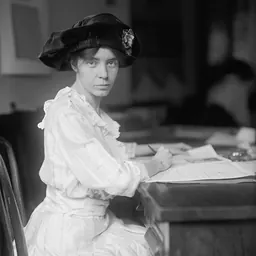
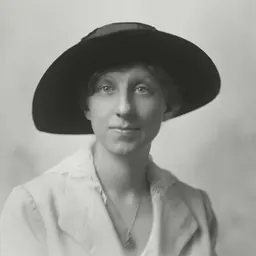

Related people
Same field, nearest in time
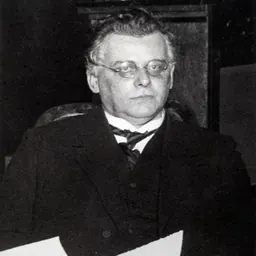
Contemporaries
People whose lives overlapped Sara Bard Field's


Frequently asked questions
Who was Sara Bard Field?
American suffragist and poet (1882–1974)
When was Sara Bard Field born?
Sara Bard Field was born on 1 September 1882 in Cincinnati.
When did Sara Bard Field die?
Sara Bard Field died on 15 June 1974 in Berkeley.
What was Sara Bard Field's occupation?
Sara Bard Field was a poet, orator, missionary, suffragist and women's suffrage.
What nationality was Sara Bard Field?
Sara Bard Field was American.
Sources & further reading
Cite this page
APA: Biography.guide. (2026). Sara Bard Field. https://biography.guide/sara-bard-field/
MLA: "Sara Bard Field." Biography.guide, https://biography.guide/sara-bard-field/.
Chicago: "Sara Bard Field." Biography.guide. https://biography.guide/sara-bard-field/.
Data last updated: 2026-09-25 · Spot an error? Report a correction.
Page generated 2026-09-27 05:12 UTC