
About Samuel Wendell Williston
Lived 1851 – 1918 (aged 67). Samuel Wendell Williston was an American paleontologist, entomologist, zoologist, illustrator, university teacher and pedagogue, known for Allosaurus and Diplodocus.
Samuel Wendell Williston (July 10, 1852 – August 30, 1918) was an American educator, entomologist, and paleontologist who was the first to propose that birds developed flight cursorially (by running), rather than arboreally (by leaping from tree to tree). He was a specialist on the flies, Diptera.
He is remembered for Williston's law, which states that parts in an organism, such as arthropod limbs, become reduced in number and specialized in function through evolutionary history.
Early life
Williston was born in Boston, Massachusetts to Samuel Williston and Jane A. Williston née Turner. As a young child, Williston's family travelled to Kansas Territory in 1857 under the auspices of the New England Emigrant Aid Company to help fight the extension of slavery. He was raised in Manhattan, Kansas, attended public high school there, and graduated from Kansas State Agricultural College (now Kansas State University) in 1872, afterwards receiving a Master of Arts from that institution.
In 1874, he went on his first field fossil hunting expedition for Othniel Charles Marsh at Yale University under the mentorship of Benjamin Franklin Mudge, and led his first expedition in 1877. With Mudge, Williston discovered the first fossils of the dinosaurs Allosaurus and Diplodocus. He was noted for painstakingly illustrating the finds. In 1880, he matriculated to Yale University, for several years was a post-graduate student and faculty member. Around this time, he proposed the first explicit model for the terrestrial origin of bird flight (i.e., that dinosaurs developed flight by running along the ground rather than jumping from trees).
Williston returned to Kansas in 1890, to take a position on the faculty at the University of Kansas as a professor of geology and anatomy. a member of the American Academy of Arts and Sciences, and a member of the American Philosophical Society. He was president of the Kansas Academy of Science, and in 1903 became president of the Society of Vertebrate Paleontology. He was the author of several books, and the Smithsonian Institution now administers an endowment fund in his name.
Work on Diptera Although never employed as a professional entomologist, Samuel W. Williston was a Fellow of the Entomological Society of America since 1915, and was well-renowned specialist on the taxonomy and systematics of flies (Diptera). He became the first North American specialist on this group, publishing over 50 books and papers, and naming more than 1250 species. His best-known works were the three editions of the Manual of North American Diptera (1888, 1896, 1908).
The Osteology of the Reptiles In 1925, Williston published (post hum?) a comprehensive survey of the reptilian skeleton, which was a precursor to the monumental Osteology of Reptiles by A. S. Romer.
Williston's law
Williston noticed that, over evolutionary time, the modular and serially repeated parts distinguishing animal groups exhibited trends in numbers and types. For instance, ancient vertebrates were characterized by mouths that contained mostly similar teeth, whereas recent vertebrates are characterized by mouths with different kinds of teeth, adapted for biting, tearing, and compacting food; differences ultimately characterized different diets, with carnivores bearing incisors, canines and carnassials, and grazers bearing mostly molars. In 1914, Williston declared that "it is also a law in evolution that the parts in an organism tend toward reduction in number, with the fewer parts greatly specialized in function". However, empirical studies have not always confirmed this generalization. For instance, a study of the evolution in the number of branchiostegal rays in osteichthyans has failed to support a generalized trend towards reduction. Instead, this series of elements shows an early burst pattern (rapid evolution early in the history of the group, followed by a decrease in evolutionary rate).
Don’t just read it —
keep it.
Full-length biographies made to live with: read them, listen on the way to work, watch them tonight.
- E-book
- Audio
- Video
Instant download · yours to keep · every purchase keeps this site free
Important facts
People in Samuel Wendell Williston's life
Named in this biography and alive at the same time
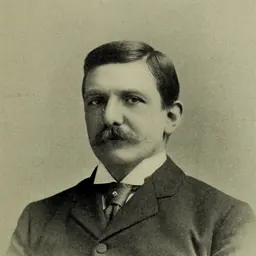

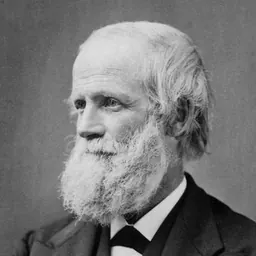

Related people
Same field, nearest in time
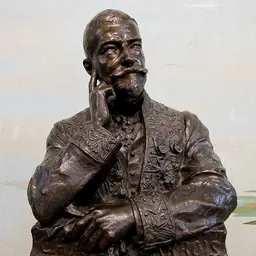

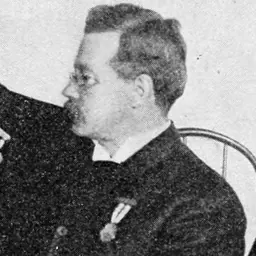

Contemporaries
People whose lives overlapped Samuel Wendell Williston's






Frequently asked questions
Who was Samuel Wendell Williston?
American paleontologist (1851–1918)
When was Samuel Wendell Williston born?
Samuel Wendell Williston was born on 10 July 1851 in Boston.
When did Samuel Wendell Williston die?
Samuel Wendell Williston died on 30 August 1918 in Chicago.
What was Samuel Wendell Williston's occupation?
Samuel Wendell Williston was a paleontologist, entomologist, zoologist, illustrator, university teacher and pedagogue.
What was Samuel Wendell Williston known for?
Samuel Wendell Williston was known for Allosaurus and Diplodocus.
What nationality was Samuel Wendell Williston?
Samuel Wendell Williston was American.
Sources & further reading
· Wikipedia: Samuel Wendell Williston
· DBpedia: Samuel Wendell Williston
Cite this page
APA: Biography.guide. (2026). Samuel Wendell Williston. https://biography.guide/samuel-wendell-williston/
MLA: "Samuel Wendell Williston." Biography.guide, https://biography.guide/samuel-wendell-williston/.
Chicago: "Samuel Wendell Williston." Biography.guide. https://biography.guide/samuel-wendell-williston/.
Data last updated: 2026-09-20 · Spot an error? Report a correction.
Page generated 2026-09-27 05:26 UTC