
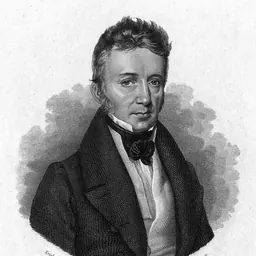
Benjamin Franklin Mudge
American geologist, paleontologist, teacher, lawyer, chemist
About Benjamin Franklin Mudge
Lived 1817 – 1879 (aged 62). Benjamin Franklin Mudge was an American paleontologist, politician, university teacher, geologist, chemist and meteorological observer.
Benjamin Franklin Mudge (August 11, 1817 – November 21, 1879) was an American lawyer, geologist and teacher. Briefly the mayor of Lynn, Massachusetts, he later moved to Kansas where he was appointed the first State Geologist. He led the first geological survey of the state in 1864, and published the first book on the geology of Kansas. He lectured extensively, and was department chair at the Kansas State Agricultural College (KSAC, now Kansas State University).
He also avidly collected fossils, and was one of the first to systematically explore the Permian and Mesozoic biota in the geologic formations of Kansas and the American West, including the Niobrara Chalk, the Morrison Formation, and the Dakota Sandstone. While not formally trained in paleontology, he kept extensive and accurate field notes and sent most of his fossils East to be described by some of the most noted paleontologists of his time, including the rivals Othniel Charles Marsh and Edward Drinker Cope.
His discoveries included at least 80 new species of extinct animals and plants, which are found in the collections of some of the most prestigious U.S. institutions of natural history, including the Smithsonian and Yale's Peabody Museum of Natural History. One of his most notable finds is the holotype of the first recognized "bird with teeth", Ichthyornis. While working for Marsh, he also discovered the type species of the sauropod dinosaur Diplodocus, and the theropod dinosaur Allosaurus, with his protégé Samuel Wendell Williston.
Biography
Early life
Mudge was born in Orrington, Maine to James and Ruth Mudge on August 11, 1817, and moved with his family to Lynn, Massachusetts, in 1818. He helped support three older brothers enrolled in the Methodist Episcopal Conference by working as a shoemaker for 6 years, before attending Wesleyan University. Unlike his brothers who all became clergy, Benjamin studied science and the classics before graduating in 1840. He acquired his Master of Arts several years later from the same institution, and passed the bar and began practicing as a lawyer in 1842. On September 16, 1842, he married Mary E. Beckford; he continued his practice, and was elected mayor of Lynn in 1852 on a temperance platform.
In 1859 he moved to Cloverport, Kentucky, where he briefly worked as a chemist at Breckinridge Coal and Oil Company, a local oil refinery. ) where he took a job teaching public school in Kansas City. In Quindaro, Mudge and his family operated a waystation of the Underground Railroad, aiding slaves fleeing from Missouri,
He lectured around the state, and in 1864 delivered a series on "Scientific and Economical Geology" to the legislature in Topeka while the bill to establish the first state geological survey was being debated in the House. The Topeka Tribune wrote:
After Watson Foster withdrew due to opposition, and George C. Swallow was accused of disloyalty, Mudge was appointed as the stage geologist and the director of the first Kansas Geological Survey by Governor Thomas Carney. He reluctantly accepted, writing the following note at the bottom of the Senate nomination: "This petition was started without my knowledge or consent. I am in favor of the appointment of Prof. W. Foster".
Mudge was responsible for surveying of mineral and soil resources by the end of the year, with a budget of US$3,500 and a staff of five. In the 1860s, there were no railroads and very few towns west of Topeka, and the area had seen a resurgence of "Indian trouble". Mudge moved to Manhattan, Kansas, and despite not being able to visit all the areas of the state, he submitted Geology of Kansas by the November 30, 1864, deadline, the first book on the geology of Kansas. The document covered stratigraphy but primarily focused on exploitable economic resources, particularly coal and salt. Mudge resigned at the end of his term, but the position was renewed and Swallow was appointed to head the 1865 survey with a larger budget and staff, and completed a more extensive survey. Due to funding problems, both the 1864 and 1865 reports were not published until 1866. After the two surveys, the Kansas Geologic Survey went into abeyance until 1895, when it was permanently established at the University of Kansas. over back pay.
While he maintained a small collection at KSAC, the majority of his finds were sent to Eastern paleontologists to be described. He initially corresponded in this fashion with Fielding Bradford Meek at the Smithsonian (primarily concerning molluscs), Leo Lesquereux (plants), Edward Drinker Cope at the Academy of Natural Sciences in Philadelphia (vertebrates), Othniel Charles Marsh at the Peabody Museum of Natural History at Yale, Louis Agassiz at Harvard, and James Dwight Dana at Yale. In turn, Cope visited Mudge in 1871, and Cope, Marsh, and Lesquerenx all visited in 1872. Cope and Lesquerenx published most of Mudge's discoveries from this period.
Mudge discovered Ichthyornis in 1872. While he initially planned to ship the specimen to Cope, he heard of Othniel Charles Marsh's interest and sent it instead to his former acquaintance from Connecticut. Marsh first described the bird in 1872, but a reevaluation in 1967 and new specimens confirmed Marsh's assessment.
This was the first bird described with teeth; Richard Owen's original description of the London Specimen of Archaeopteryx in 1861 did not recognize its associated teeth, and assumed the bird had a beak. This was also the start of Mudge's association with Marsh, as the rivalry between Cope and Marsh (known as the "Bone Wars") heated up.
Fossils for Marsh
After his dismissal from KSAC in 1874, Mudge wrote to Marsh:
Marsh hired Mudge to lead fossil hunting expeditions. He was assisted on his 1874 expedition by Samuel Wendell Williston, who started leading his own expeditions in 1877. Mudge primarily focused on the Kansas Chalk from 1874 to 1876, but from 1876 to 1879 he expanded into Colorado discovering some of the first Jurassic dinosaurs in the American West. and he became a fellow of the American Association for the Advancement of Science in 1878. though it is now considered to be a specimen of Platecarpus tympaniticus, Liodon remains as a junior synonym. The jaw of the Ichthyornis that Marsh originally believed belonged to a saurian was named Colonosaurus mudgei.
Publications
Mudge was not a prolific publisher of scientific papers. According to the Kansas Geological Survey Online Bibliography of Geology, his entire output was contained in twenty-two publications, and most were very short.
(Reprinted in 1895 as Transactions of the Kansas Academy of Science 1: pp. 50–53.) (Reprinted in 1895 as Transactions of the Kansas Academy of Science 1: pp. 37–39. ) (Excerpts from Mudge, 1866.) (Reprinted in 1896 as Transactions of the Kansas Academy of Science 2: pp. 71–74. ) (Reprinted in 1896 as Transactions of the Kansas Academy of Science 3: pp. 113–117. )
(Reprinted in 1896 as Transactions of the Kansas Academy of Science 3: pp. 121–122.) (Reprinted in 1896 as Transactions of the Kansas Academy of Science 3: pp. 101–102.)
(Reprinted in 1906 as 5: pp. 4–5.) (Reprinted in 1906 as p. 10.)
(Reprinted in 1906 as pp. 11–13.)
Footnotes
Don’t just read it —
keep it.
Full-length biographies made to live with: read them, listen on the way to work, watch them tonight.
- E-book
- Audio
- Video
Instant download · yours to keep · every purchase keeps this site free
Important facts
Family & relationships
People in Benjamin Franklin Mudge's life
Named in this biography and alive at the same time





Related people
Same field, nearest in time
Contemporaries
People whose lives overlapped Benjamin Franklin Mudge's




Frequently asked questions
Who was Benjamin Franklin Mudge?
American geologist, paleontologist, teacher, lawyer, chemist (1817-1879)
When was Benjamin Franklin Mudge born?
Benjamin Franklin Mudge was born on 11 August 1817 in Orrington.
When did Benjamin Franklin Mudge die?
Benjamin Franklin Mudge died on 21 November 1879 in Manhattan.
What was Benjamin Franklin Mudge's occupation?
Benjamin Franklin Mudge was a paleontologist, politician, university teacher, geologist, chemist and meteorological observer.
What nationality was Benjamin Franklin Mudge?
Benjamin Franklin Mudge was American.
Sources & further reading
· Wikipedia: Benjamin Franklin Mudge
· DBpedia: Benjamin Franklin Mudge
Cite this page
APA: Biography.guide. (2026). Benjamin Franklin Mudge. https://biography.guide/benjamin-franklin-mudge/
MLA: "Benjamin Franklin Mudge." Biography.guide, https://biography.guide/benjamin-franklin-mudge/.
Chicago: "Benjamin Franklin Mudge." Biography.guide. https://biography.guide/benjamin-franklin-mudge/.
Data last updated: 2026-09-26 · Spot an error? Report a correction.
Page generated 2026-09-27 05:14 UTC