
Charles Emerson Beecher
American paleontologist
About Charles Emerson Beecher
Lived 1856 – 1904 (aged 47). Charles Emerson Beecher was an American paleontologist, geologist and scientific collector, known for Trilobite.
Charles Emerson Beecher (October 9, 1856 – February 14, 1904) was an American paleontologist most famous for the thorough excavation, preparation and study of trilobite ventral anatomy from specimens collected at Beecher's Trilobite Bed. Beecher was rapidly promoted at Yale Peabody Museum, eventually rising to head that institution.
Early life Charles Emerson Beecher, the son of Moses and Emily Emerson Beecher, was born in Dunkirk, New York, on October 9, 1856. Beecher is credited in many of Hall's publications for his fossil preparation, photographic and systematic contributions. In 1891 he was Instructor for Paleontology at Sheffield Scientific School (SSS) and took the geology course for James Dwight Dana, who was ill.
Beecher was awarded his doctorate for his study on Brachiospongidae (enigmatic Silurian sponges) in 1891. Remarkable preparations of brachiopods, trilobites, Crawfordsville crinoids and Uintacrinus specimens for exhibition at Yale Peabody Museum were especially noteworthy and pay tribute to Beecher's exceptional skills as a fossil preparator. Pyrite preservation of soft body parts at this site is geologically rare, leading to its later recognition as a Konservat-Lagerstätten. In 1893, Beecher began publishing work on trilobite anatomy and classification, using specialized preparation techniques the reveal ventral appendages, including antennae and legs, that had not been preserved in previously known specimens. The first one he chose was YPM VP 2182, a well-complete and articulate hadrosaur dinosaur identified then as "Claosaurus" annectans but now understood to be Edmontosaurus. The mount serves the first of many things, such as the first nearly complete dinosaur mounted in the US, and the first mounted dinosaur to have its spine horizontal to the ground, rather than be upright and tail-dragging. Beecher recognised from trackways the absence of tail marks, as well as how the ischium of the dinosaur would get in the way of the tail.
Beecher died suddenly of heart disease on February 14, 1904 Beecher was survived by his wife, two young daughters, mother and brother. he is also regarded for his work on corals and noted for contributions in evolution.
Yale reprinted a collection of some of Beecher's most important papers, Studies in Evolution, as part of their bicentennial in 1901, although a modest Beecher deplored as extravagance the republication of papers already in print. American Geologist; Science; Museum's Journal [London]; Geological Magazine [London]; and American Naturalist. A comprehensive re-examination of exceptionally preserved trilobites published in 1920 was dedicated to Beecher; his contribution was still significant nearly 20 years after his death.
Career summary B.S., University of Michigan, 1878 Assistant to James Hall, New York State Museum, 1878–1888 Assistant in Paleontology, New York State Museum Consulting Paleontologist, New York State Museum Assistant, Yale Peabody Museum, 1888–1899 Ph.D. awarded, Yale University, 1889 Instructor in Paleontology, Sheffield Scientific School, Yale, 1891–1892 Assistant Professor of Paleontology, Sheffield Scientific School, Yale, 1892–1897 Member of the governing board of the Sheffield Scientific School, Yale, 1892 Professor of Historical Geology, Sheffield Scientific School, Yale, 1897–1902 Corresponding member of the Boston Society of Natural History, 1898 Curator of Geological Collections, Yale Peabody Museum, 1899–1904 Member of the National Academy of Sciences, 1899 Foreign correspondent of the Geological Society of London, 1899 Fellow of the Geological Society of America, 1899 Member of the Board of Trustees, Yale Peabody Museum, 1899 Secretary of the Board of Trustees, Yale Peabody Museum Member of the Executive Committee, Yale Peabody Museum President of the Connecticut Academy of Arts and Sciences, 1900–1902 University Professor of Paleontology, Sheffield Scientific School, Yale, 1902–1904
Don’t just read it —
keep it.
Full-length biographies made to live with: read them, listen on the way to work, watch them tonight.
- E-book
- Audio
- Video
Instant download · yours to keep · every purchase keeps this site free
Important facts
People in Charles Emerson Beecher's life
Named in this biography and alive at the same time


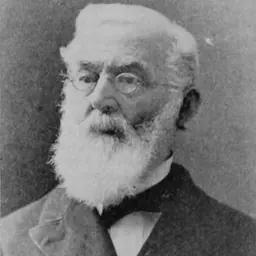
Related people
Same field, nearest in time


Contemporaries
People whose lives overlapped Charles Emerson Beecher's


Frequently asked questions
Who was Charles Emerson Beecher?
American paleontologist (1856–1904)
When was Charles Emerson Beecher born?
Charles Emerson Beecher was born on 9 October 1856 in Dunkirk.
When did Charles Emerson Beecher die?
Charles Emerson Beecher died on 14 February 1904 in New Haven.
What was Charles Emerson Beecher's occupation?
Charles Emerson Beecher was a paleontologist, geologist and scientific collector.
What was Charles Emerson Beecher known for?
Charles Emerson Beecher was known for Trilobite.
What nationality was Charles Emerson Beecher?
Charles Emerson Beecher was American.
Sources & further reading
· Wikipedia: Charles Emerson Beecher
· DBpedia: Charles Emerson Beecher
Cite this page
APA: Biography.guide. (2026). Charles Emerson Beecher. https://biography.guide/charles-emerson-beecher/
MLA: "Charles Emerson Beecher." Biography.guide, https://biography.guide/charles-emerson-beecher/.
Chicago: "Charles Emerson Beecher." Biography.guide. https://biography.guide/charles-emerson-beecher/.
Data last updated: 2026-09-20 · Spot an error? Report a correction.
Page generated 2026-09-27 05:26 UTC