
About Samuel Warren
Lived 1769 – 1839 (aged 70). Samuel Warren was a British military officer.
Sir Samuel Warren KCB KCH (9 January 1769 – 15 October 1839) was an officer of the Royal Navy who served during the American War of Independence, and the French Revolutionary and Napoleonic Wars.
Warren entered the navy towards the end of the American War of Independence, and after seeing service at several actions in European waters, served on a number of ships prior to the outbreak of the French Revolutionary Wars. A lieutenant by then, he was at the Glorious First of June and the Battle of Groix, before being promoted to his own commands. He was successful against French privateers and merchants in the Caribbean in HMS Scourge, before being promoted to captain in 1802. He saw action in command of a ship of the line at the Battle of Cape Finisterre in 1805, before supporting operations off the Río de la Plata in 1806 and 1807.
Warren took command of in 1808 and served in the Baltic Sea, carrying out operations against Russian shipping. He then commanded a frigate, in which he was charged with transporting Lucien Bonaparte and his family to England. He then sailed to the East Indies and played an important role in the Invasion of Java in 1811. He was made a Companion of the Bath at the end of the Napoleonic Wars in 1815, and commanded several more ships, including the royal yacht. He also held a number of shore appointments, being knighted and made a Knight Commander of the Royal Guelphic Order in 1835. Promoted to rear-admiral in 1837, he was made a Knight Commander of the Bath shortly before his death in 1839.
Family and early life Samuel Warren was born in Sandwich, Kent, on 9 January 1769. He entered the navy in January 1782, serving as a midshipman aboard the 64-gun under the command of Captain John Harvey, who was a relation of Warren's. Warren went out in Sampson with the fleet sent to relieve Gibraltar under Lord Howe, and later saw action at the Battle of Cape Spartel on 20 October 1782. Warren later served aboard the 10-gun cutter , the 32-gun , the 74-gun , the 98-gun , and the 100-gun . He was serving aboard the Ramillies, commanded by Captain Henry Harvey, soon after the outbreak of the French Revolutionary Wars. Scourge went on to capture the 2-gun privateer Chasseur off Puerto Rico on 8 April 1798, and destroyed another small privateer on 1 May 1798. Vesuvius was appointed to the squadron in the Channel under the command of Rear-Admiral Horatio Nelson, aboard . Domett was unable to raise his flag due to ill-health, and instead Glory became the flagship of Rear-Admiral Sir Charles Stirling. Stirling retained Warren as his flag-captain, and Glory sailed in July 1805 to join the fleet amassing off Cape Finisterre under Vice-Admiral Robert Calder, with orders to intercept a Franco-Spanish fleet under Vice-Admiral Pierre-Charles Villeneuve. Calder successfully made the interception and Warren commanded Glory at the Battle of Cape Finisterre on 22 July 1805. By 1809 the strategic situation in the Baltic had deteriorated after Russia signed the Treaties of Tilsit and began to support France. Bellerophon was ordered to join the fleet stationed in the Baltic under Admiral Sir James Saumarez. The water was too shallow to allow them to approach the luggers, so Warren dispatched a boat party. The British boarded the luggers, but found themselves in a trap, when numerous Russian shore batteries and several gunboats opened fire on them. The British commander promptly ordered the luggers to be burnt, reboarded his men and landed them next to the nearest Russian shore battery. The battery, defended by 100 sailors, was stormed and carried, the British spiked the guns and destroyed the magazine, before returning to the ships with only five men wounded. Bellerophon made several cruises during the rest of the year, visiting Åland and Karlskrona, before returning to Britain with a convoy in November 1809.
East Indies Batavia, capital of the Dutch East Indies. Warren was part of the British force which captured the city, and the island of Java, in 1811. After paying off Bellerophon Warren was appointed to command the 44-gun HMS President in September 1810. He was assigned to transport Lucien Bonaparte, Napoleon's brother, and his family from Malta to England, after which he sent to reinforce the British squadrons in the East Indies. He left for the Cape of Good Hope on 31 December 1810, in company with the frigates and .
Later life With the final end of the Napoleonic Wars in 1815, Warren was nominated one of the first Companions of the Bath in the restructuring of the order. His services while in command of her included transporting Sir Benjamin Bloomfield, the ambassador to Stockholm, in mid-1823. Warren became resident agent of transports at Deptford in January 1830, and commodore in the Thames in 1831, commanding the yacht HMY William and Mary. He then became Captain Superintendent at Woolwich Dockyard until his promotion to rear-admiral on 10 January 1837. He had been nominated a Knight Commander of the Royal Guelphic Order on 3 August 1835, and knighted at the same time. He was advanced to a Knight Commander of the Bath on 18 April 1839. Rear-Admiral Sir Samuel Warren died at Southampton on 15 October 1839. He had married in 1800, and left behind a large family.
Don’t just read it —
keep it.
Full-length biographies made to live with: read them, listen on the way to work, watch them tonight.
- E-book
- Audio
- Video
Instant download · yours to keep · every purchase keeps this site free
Important facts
People in Samuel Warren's life
Named in this biography and alive at the same time

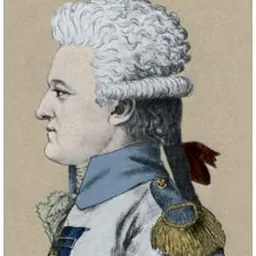

Related people
Same field, nearest in time
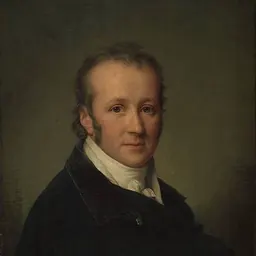
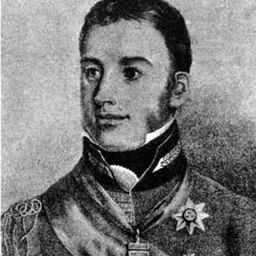
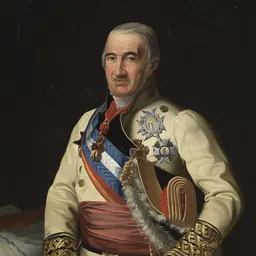

Contemporaries
People whose lives overlapped Samuel Warren's






Frequently asked questions
Who was Samuel Warren?
Royal Navy officer
When was Samuel Warren born?
Samuel Warren was born on 9 January 1769 in Sandwich.
When did Samuel Warren die?
Samuel Warren died on 15 October 1839 in Southampton.
What was Samuel Warren's occupation?
Samuel Warren was a military officer.
What nationality was Samuel Warren?
Samuel Warren was British.
Sources & further reading
· DBpedia: Samuel Warren (Royal Navy officer)
Cite this page
APA: Biography.guide. (2026). Samuel Warren. https://biography.guide/samuel-warren-military-officer/
MLA: "Samuel Warren." Biography.guide, https://biography.guide/samuel-warren-military-officer/.
Chicago: "Samuel Warren." Biography.guide. https://biography.guide/samuel-warren-military-officer/.
Data last updated: 2026-09-20 · Spot an error? Report a correction.
Page generated 2026-09-27 05:24 UTC