
About Samuel Roth
Lived 1893 – 1974 (aged 80–81). Samuel Roth was an American poet, publisher and writer.
Samuel Roth (1893 - July 3, 1974) was an American publisher and writer. He was the plaintiff in the landmark 1957 case Roth v. United States, in which the United States Supreme Court redefined the constitutional test for determining which constitutes obscene material unprotected by the First Amendment. It became a template for the liberalizing First Amendment decisions in the 1960s.
Roth spent nine years in jail on state and federal obscenity convictions, spending eight years in Lewisburg Federal Penitentiary.
Background Roth was born in 1893 in Nuszcze, then Galicia, now in Ukraine into a Jewish family. His Hebrew name was "Mshilliam" (Meshulam). The family emigrated to the Lower East Side of Manhattan when he was 4 in 1897. He started working at age 8 as an egg chandler, at 10 as a newsboy, and at 14 as a baker. By the age of 16, he was working for the New York Globe as a Lower East Side correspondent. When the paper folded, Roth became homeless but continued writing and publishing and attended Columbia University for a year on scholarship.
Career
Successes (1920s)
Roth's early poetry was praised by Edwin Arlington Robinson, Louis Untermeyer, Maurice Samuel, and Ezra Pound, among others. It appeared in several respected magazines, such as The Maccabean and The Hebrew Standard, and in anthologies. His sequence of 18 sonnets, "Nustscha" (composed c. 1915–18) is an elegy to his hometown. His "Sonnets on Sinai" in The Menorah Journal depict the speaker of the poems planning to visit Sinai in order to return the Ten Commandments to God, after they have failed to obey God's covenant.
After World War I, Roth founded a bookshop. In 1921, he traveled to London to interview European writers with the hope of selling his essays to magazines. During this time, he wrote two books on the state of the "two worlds" (Europe and America) and the situation of Jews on both continents. Europe: A Book for America (Boni & Liveright, 1919) is a lengthy, prophetic poem on the decay of Europe and the promise of America. Now and Forever (McBride, 1925) is an imaginary "conversation" between Roth and British writer Israel Zangwill on the merits of Diaspora and Zionism for the Jewish people. Zangwill praised Roth for his "poetry and pugnacity."
In the mid-1920s, with money earned by establishing a school for teaching immigrants English, Roth founded four literary magazines. These included Beau, a forerunner of Esquire and perhaps the first American "men's magazine.” The most important products in his short-lived magazine empire were the quarterly Two Worlds and Two Worlds Monthly. He chose to publish (in some cases, without permission) some sexually explicit, contemporary authors, including (in Two Worlds Monthly), segments of James Joyce's Ulysses. Joyce won an injunction to stop Roth from printing these expurgated installments. Joyce's publisher Sylvia Beach, at the writer's urging, engineered an international protest in 1927 against Roth, although the nature of copyright law at the time made the charge of piracy debatable. Due to the well-organized protest of 167 authors against him, Roth became an international literary pariah, and Random House won its case to "de-censor" Ulysses in 1934.
Roth soon after published pirated editions of Lady Chatterley's Lover, most likely the first American to do so. After a raid on his Fifth Avenue warehouse by the New York Society for the Suppression of Vice in 1929, Roth spent over a year in prison on Welfare Island, and in Philadelphia, for distributing material deemed obscene.
Written under the pressures of bankruptcy, he published Jews Must Live, a collection of autobiographical and polemical reflections about his Jewish identity, described by critics as an example of Jewish self-hatred.
Jail (1930s)
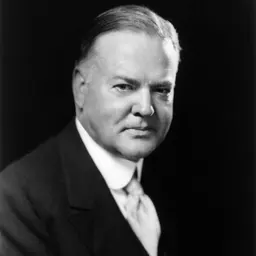
Roth did well with his William Faro imprint in the early 1930s. His expurgated version of Lady Chatterley's Lover was a big seller, as were reprints of classic erotica (especially Mirbeau's Diary of a Chambermaid), from which books' explicit sex was excised. In 1931, Roth published an exposé of Herbert Hoover (The Strange Career of Mr. Hoover Under Two Flags) which sold extremely well.
However, he began to run afoul of the law as early as October 1929, when Roth, his brother Max Roth, and Henry Zolinsky (later known as Henry Zolan, an Objectivist poet who had edited The Lavender student poetry magazine at the City College of New York from 1923 to 1926 ) were arrested at a warehouse owned by the Golden Hind Press in Wilkes-Barre, Pennsylvania, a distribution point near New York City.
After 1933, due to a lack of money, Roth began distributing strictly banned pornography. He received illustrated books and pamphlets and sometimes left them in subway lockers for trusted customers. The FBI traced the works back to Roth, who therefore spent 1936 to 1939 in Lewisburg Federal Penitentiary. He also spent the years 1957 to 1961 there due to his conviction for distributing what was considered obscene and pandering to prurience in his advertisements.
Overall, his incarcerations included: 1928: 3 months in New York "workhouse" for possessing indecent materials with intent to sell 1929: 6 months imprisonment in "Detention Headquarters, NYC" for violation of parole: occurred after NY Society for the Suppression of Vice raided Roth's Fifth Avenue warehouse and found copies of Lady Chatterley's Lover, Ulysses, Fanny Hill, other titles and pictures 1930: 2 months in Moyamensing Prison, remanded after serving time in New York for selling obscene books (including Ulysses) in Philadelphia 1934: $100 fine (otherwise 20 days in jail) 1936-1939: incarceration at Lewisburg Federal Penitentiary 1957-1961: incarceration at Lewisburg Federal Penitentiary There were several other cases where the charge was dismissed. In 1954, police raided the office of the Seven Sirens Press on Lafayette Street as well as Roth's apartment on the upper West Side, led by an assistant District Attorney. All books, correspondence, and furniture were removed from the office. Roth attempted to leave the apartment to make a telephone call and an altercation with a police officer occurred. After Roth promised not to sue, the case was dismissed due to vagueness of the search warrant and illegal methods of search and seizure.
Hiss Case connections (1940s) In the 1940s, Roth became involved in a book against U.S. Senator Burton K. Wheeler. In the mid-1920s, Roth received poems by Whittaker Chambers (common friend of Henry Zolinsky and Louis Zukofsky) in his magazine Two Worlds Quarterly.
During the 1940s, Roth had David George Plotkin write a number of books for him. In 1946, Plotkin published The Plot Against America, an exposé of U.S. Senator Burton K. Wheeler. Though Roth did not publish the book, an incensed Wheeler asked the FBI to investigate, which shared Plotkin's file with the House Un-American Activities Committee (HUAC). In the process, the government made a connection between Plotkin and Roth. "First Offering: A Book of Sonnets and Lyrics" Europe: A Book for America (New York: Boni and Liveright, 1919) Now and Forever: A Conversation with Mr. Israel Zangwill on the Jew and the Future, 1925 Stone Walls Do Not: The Chronicle of a Captivity, 1930 Lady Chatterley's Husbands: An Anonymous Sequel to the Celebrated Novel, Lady Chatterley's Lover (New York: William Faro, 1931) Lady Chatterley's Lover: A Dramatization of His Version of D.H. Lawrence's Novel (New York: William Faro, 1931) The Private Life of Frank Harris (New York: William Faro, 1931) Songs Out of Season (New York: William Faro, 1932)
Dear Richard: A Letter to My Son in the Fighting Forces of the United States (New York: Wisdom House, 1942) Peep-Hole of the Present: An Inquiry into the Substance of Appearance (New York: Philosophical Book-Club, 1945) Bumarap: The Story of a Male Virgin (New York: Arrowhead Books, 1947) Apotheosis: The Nazarene in Our World (New York: Bridgehead Books, 1957) My Friend Yeshua (New York: Bridgehead Books, 1961)
Editing: New Songs of Zion: A Zionist Anthology (New York: Judean Press, 1914)
Magazines edited: Two Worlds Monthly; Devoted to the Increase of the Gaiety of Nations (New York: Two Worlds Publishing, 1926-????) Two Worlds: A Literary Quarterly Devoted to the Increase of the Gaiety of Nations, 1925 Good Times: A Revue of the World of Pleasure, 1954-1956
Poems edited: "Yahrzeit" (poem), The Nation (May 8, 1920)
Other: "A Letter to Mr. J. C. Squire," The Nation (November 10, 1920)
Don’t just read it —
keep it.
Full-length biographies made to live with: read them, listen on the way to work, watch them tonight.
- E-book
- Audio
- Video
Instant download · yours to keep · every purchase keeps this site free
Important facts
People in Samuel Roth's life
Named in this biography and alive at the same time





Related people
Same field, nearest in time

Contemporaries
People whose lives overlapped Samuel Roth's


Frequently asked questions
Who was Samuel Roth?
American publisher (1893–1974)
When was Samuel Roth born?
Samuel Roth was born in 1893 in Zboriv.
When did Samuel Roth die?
Samuel Roth died on 3 July 1974 in New York City.
What was Samuel Roth's occupation?
Samuel Roth was a poet, publisher and writer.
What nationality was Samuel Roth?
Samuel Roth was American.
Sources & further reading
Cite this page
APA: Biography.guide. (2026). Samuel Roth. https://biography.guide/samuel-roth/
MLA: "Samuel Roth." Biography.guide, https://biography.guide/samuel-roth/.
Chicago: "Samuel Roth." Biography.guide. https://biography.guide/samuel-roth/.
Data last updated: 2026-09-20 · Spot an error? Report a correction.
Page generated 2026-09-27 05:18 UTC