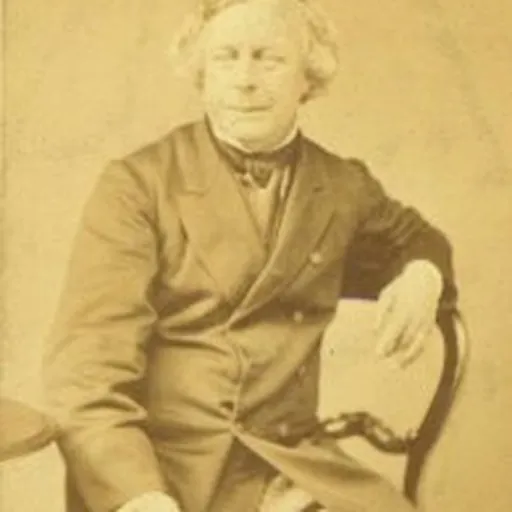
About Samuel Rayner
Lived 1806 – 1879 (aged 72–73). Samuel Rayner was a British painter.
Samuel A. Rayner (15 April 1806 – 1879) was an English landscape artist, known for his paintings of buildings and their interiors, including abbeys, churches and old mansions. He achieved the distinction of having a work accepted for exhibition at the Royal Academy at the age of 15. His wife, Ann Rayner, was an engraver on Ashford Black Marble and six of their children went on to be professional artists.
Biography Samuel Rayner was born in 1806, at Colnbrook in Buckinghamshire (now in Berkshire); afterwards the family moved to Marylebone in London where he was possibly trained by his grandfather. By the age of fifteen, Rayner was training as a draughtsman with the antiquary John Britton when Rayner had a picture of Malmesbury Abbey accepted by the Royal Academy.
Samuel Rayner and his wife, Anne Manser Rayner, founded a "painting family". In 1823, he eloped with Anne Manser, who was four years older than him and was already known as an artist. They married in 1824. Their first child was born in London but he soon died. Six of their children became painters in turn. Rayner's house was a museum in Matlock Bath in the 1830s where Louise, William Henry and Rhoda (Rose) were born. The engraving by Arthur Jewitt illustrated shows Rayner's house in Matlock Back in 1832. There are two extended entrance ways to museums in the picture. The museum on the right was John Mawe's museum whilst on the left was Vallance's Royal Centre Museum. Vallance and Rayner were in partnership. There is a view of Matlock Bath engraved by Ann Rayner which also shows their house and it is now in Buxton Museum. This engraving was made by Samuel's wife with a diamond on Ashford Black Marble which was mined locally.
Rayner's painting of the 1839 Derby Exhibition which illustrates the early years of what to become Derby Museum and Art Gallery's collections. This painting includes Joseph Wright of Derby's painting Romeo and Juliet: the tomb scene which is on the left of the back wall.
Louise Rayner is the best known of Samuel and Ann's children: her siblings were Ann ("Nancy"), Margaret, Rose, Frances, and Richard. Nancy Rayner was influenced by Octavius Oakley and she was the first to be recognised as a distinguished artist but she died of consumption at the age of 28. Samuel was elected an associate of the Society of Painters in Water Colours in 1845 but was excluded from the Society in 1851 after a financial scandal. Some of his work can be seen at Derby Museum and Art Gallery.
Don’t just read it —
keep it.
Full-length biographies made to live with: read them, listen on the way to work, watch them tonight.
- E-book
- Audio
- Video
Instant download · yours to keep · every purchase keeps this site free
Important facts
Family & relationships
People in Samuel Rayner's life
Named in this biography and alive at the same time



Related people
Same field, nearest in time


Contemporaries
People whose lives overlapped Samuel Rayner's





Frequently asked questions
Who was Samuel Rayner?
English landscape artist (1806-1879)
When was Samuel Rayner born?
Samuel Rayner was born on 15 April 1806 in Colnbrook.
When did Samuel Rayner die?
Samuel Rayner died in 1879.
What was Samuel Rayner's occupation?
Samuel Rayner was a painter.
What nationality was Samuel Rayner?
Samuel Rayner was British.
Sources & further reading
Cite this page
APA: Biography.guide. (2026). Samuel Rayner. https://biography.guide/samuel-rayner/
MLA: "Samuel Rayner." Biography.guide, https://biography.guide/samuel-rayner/.
Chicago: "Samuel Rayner." Biography.guide. https://biography.guide/samuel-rayner/.
Data last updated: 2026-09-22 · Spot an error? Report a correction.
Portrait: Wikimedia Commons · author & licence
Page generated 2026-09-27 05:04 UTC