
About Samuel Parker
Lived 1640 – 1688 (aged 47–48). Samuel Parker was an English theologian, anglican priest, cleric and bishop.
Samuel Parker (1640 – 21 March 1688) was an English churchman, of strong Erastian views and a fierce opponent of Dissenters. His political position is often compared with that of Thomas Hobbes, but there are also clear differences; he was also called in his time a Latitudinarian, but this is not something on which modern scholars are agreed. During the reign of King James II he served as Bishop of Oxford, and was considered by James to be a moderate in his attitude to Catholics.
Early life and career He was born at Northampton, England in 1640, the second son of John Parker the judge and Baron of the Exchequer. After studying at Northampton Grammar School, he entered Wadham College, Oxford, 30 September 1656, and matriculated at the Michaelmas term 1657. At Wadham he lived an intense presbyterian life, and graduated BA 28 February 1659. After the Restoration, his views met the disapproval of the warden of Wadham, Walter Blandford, and he migrated to Trinity College, where he proceeded MA 9 July 1663. Under the influence of Ralph Bathurst, senior fellow of Trinity, he moderated his views, and in the following year he was ordained.
Parker became rector of Chartham, Kent, in 1667, and in 1670 he became Archdeacon of Canterbury. Two years after he was appointed rector of Ickham, Kent. In 1673 he was elected master of the Eastbridge Hospital, Canterbury.
He was elected a Fellow of the Royal Society in June 1666.
Against the Platonists In 1665 he published an essay entitled Tentamina physico-theologica de Deo, dedicated to Archbishop Gilbert Sheldon, who in 1667 appointed him one of his chaplains. In 1666-7 Parker published two pamphlets targeting the Cambridge Platonists. He had just become a Fellow of the Royal Society, and these works were designed to put distance between the experimentalists of the Society and the speculations of metaphysics. In fact the Free and Impartial Censure took wide aim at hermetic thinkers in general, such as Rosicrucians, Thomas Vaughan and John Heydon. It also had as a byproduct of the critique of Platonism acute things to say about the assumption that innate knowledge was necessarily correct.
A Discourse of Ecclesiastical Politie His Discourse of Ecclesiastical Politie (1670) advocated state regulation of religious affairs, and is his major work. It has been called "the most ferocious of the Restoration assaults upon the dissenters". The aim of the book was, 'by representing the palpable inconsistency of fanatique tempers and principles with the welfare and security of government, to awaken Authority to beware of its worst and most dangerous enemies, and to force them to that modesty and obedience by severity of Laws to which all the strength of Reason in the world can never persuade them.' Hobbes's doctrine of sovereignty is fully accepted (p. 27), and the absolute supremacy of the civil power is unhesitatingly asserted. Religion, it is asserted, is so far from being at liberty from the authority of the civil power that 'nothing in the world will be found to require more of its care and influence' (p. 15). Other points of Leviathan, however, are sharply criticised. The position of dissenters is declared to be untenable and ridiculous, and the author discourses with much spirit upon 'the Pretense of a Tender and Unsatisfied Conscience; the Absurdity of Pleading it in opposition to the commands of Publick Authority.' John Locke wrote comments on the Discourse, but they remained unpublished.
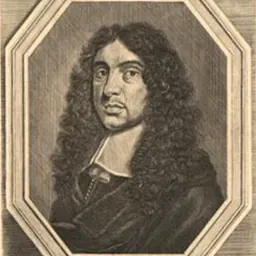
It also led him into polemical controversy with Andrew Marvell (1621–1678) who illegally published the two parts of The Rehearsal Transpros'd (London, 1672, 1673) as a response to several of Parker's pamphlets, including Discourse &c. Parker further defended his position. In the controversy, Marvell succeeded in humiliating Parker to such an extent that he did not return to ecclesiastical controversy until after Marvell's death.
Against Hobbes Although Parker was thought to be close to the arguments on Hobbes on state power (and this opinion is still current), he went to lengths to attack Hobbes on the grounds of atheism, a common charge brought up against him. In A Demonstration of the Divine Authority of the Law of Nature (1681) Parker developed earlier work, and also adapted arguments from the De legibus naturae (1672) of Richard Cumberland. He contradicts Hobbes on human nature as selfish, and argues that our understanding of natural law develops from our understanding of nature, without the requirement that it be innate.
Parker was commonly regarded as a Roman Catholic, because of his actions at Magdalen. Those were consistent with an extreme exponent of the High Church doctrine of passive obedience. To Catholic priests sent to persuade him on his deathbed to be received into the Roman Church, the bishop declared that he "never had been and never would be of that religion," and he died in the communion of the Church of England.
Family He died in Magdalen College, Oxford in 1688 and was buried in the chapel there. His second son, also named Samuel Parker (1681–1730), was a writer.
Works Tentamina Physico-Theologica de Deo. London: 1665. An Account of the Nature and Extent of the Divine Dominion & Goodnesse. Oxford: 1666. A Free and Impartial Censure of the Platonick Philosophie. Oxford: 1666. A Discourse of Ecclesiastical Politie. London: 1670. A Defence and Continuation of the Ecclesiastical Politie. London: 1671. A Discourse in Vindication of Bishop Bramhall and the Clergy of the Church of England. London: 1673. A Reproof to the Rehearsal Transprosed. London: 1673. Disputationes de Deo et Providentia Divina. London: 1678. A Demonstration of the Divine Authority of the Law of Nature and of the Christian Religion in Two Parts. London: 1681. The Case of the Church of England. London: 1681. An Account of the Government of the Christian Church for the First Six Hundred Years. London: 1683. Religion and Loyalty. London: 1684. Religion and Loyalty, the Second Part. London: 1685. Reasons for Abrogating the Test Imposed upon All Members of Parliament. London: 1688. A Discourse Sent to the Late King James. London: 1690. History of His Own Times. London: 1727.
Don’t just read it —
keep it.
Full-length biographies made to live with: read them, listen on the way to work, watch them tonight.
- E-book
- Audio
- Video
Instant download · yours to keep · every purchase keeps this site free
Important facts
People in Samuel Parker's life
Named in this biography and alive at the same time



Related people
Same field, nearest in time


Contemporaries
People whose lives overlapped Samuel Parker's



Frequently asked questions
Who was Samuel Parker?
Bishop of Oxford (1640-1688)
When was Samuel Parker born?
Samuel Parker was born in 1640 in Northampton.
When did Samuel Parker die?
Samuel Parker died on 20 March 1688 in Oxford.
What was Samuel Parker's occupation?
Samuel Parker was a theologian, anglican priest, cleric and bishop.
What nationality was Samuel Parker?
Samuel Parker was English.
Sources & further reading
· DBpedia: Samuel Parker (bishop of Oxford)
Cite this page
APA: Biography.guide. (2026). Samuel Parker. https://biography.guide/samuel-parker-theologian/
MLA: "Samuel Parker." Biography.guide, https://biography.guide/samuel-parker-theologian/.
Chicago: "Samuel Parker." Biography.guide. https://biography.guide/samuel-parker-theologian/.
Data last updated: 2026-09-20 · Spot an error? Report a correction.
Page generated 2026-09-27 05:22 UTC