
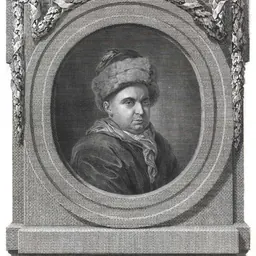
Samuel Huntington
American statesman; 18th Governor of Connecticut
About Samuel Huntington
Lived 1731 – 1796 (aged 64). Samuel Huntington was an American and British lawyer, judge, politician, governor and jurist.
Samuel Huntington (July 16, 1731 – January 5, 1796) was a Founding Father of the United States and a lawyer, jurist, statesman, and Patriot in the American Revolution from Connecticut. As a delegate to the Continental Congress, he signed the Declaration of Independence and the Articles of Confederation. He also served as President of the Continental Congress from 1779 to 1781, President of the United States in Congress Assembled in 1781, chief justice of the Connecticut Supreme Court from 1784 to 1785, and the 18th governor of Connecticut from 1786 until his death in 1796.
Early life and education
Huntington was born to Nathaniel and Mehetabel Huntington on July 16, 1731, in Windham, Connecticut Colony in present-day Scotland, Connecticut, which broke off from Windham in 1857. His house is currently accessible off Route 14. He was the fourth of ten children and the oldest son. He had a limited education in the common schools, then was self-educated. When he was 16, he was apprenticed to a cooper but also continued to help his father on the family farm. His education largely was a product of books he read from the library of Rev. Ebenezer Devotion and books borrowed from local lawyers.
In 1754, Huntington was admitted to the bar, and moved to Norwich, Connecticut, to begin practicing law.
Career Connecticut Assembly After brief service as a selectman, Huntington began his political career in earnest in 1764 when Norwich sent him as one of their representatives to the lower house of the Connecticut Assembly, where he served until 1774. In 1775, he was elected to the upper house, the Governor's Council, where he served until 1784. In addition to serving in the legislature, he was appointed king's attorney for Connecticut in 1768 and in 1773 was appointed to the colony's supreme court, then known as the Supreme Court of Errors. He was chief justice of the Supreme Court from 1784 until 1787.
American Revolution Huntington was an outspoken critic of the Coercive Acts of the British Parliament. In October 1775, the assembly elected him to be one of their delegates to the Second Continental Congress in Philadelphia.
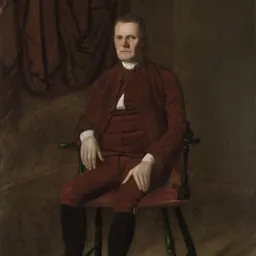
In January 1776, he joined Roger Sherman and Oliver Wolcott, which collectively represented the Connecticut Colony's delegation in the Second Continental Congress. He voted for and signed the Declaration of Independence and the Articles of Confederation. He served in the Congress in the years 1776, 1778–1781, and 1783. He suffered from an attack of smallpox while in Congress. He spent his time as president urging the states and their legislatures to support the levies for men, supplies, and money needed to fight the Revolutionary War. The Articles of Confederation were ratified during his term.
Huntington remained as President of Congress until July 9, 1781, when ill health forced him to resign and return to Connecticut. In 1782, Connecticut again named him as a delegate, but his health and judicial duties kept him from accepting. He returned to the Congress as a delegate for the 1783 session to see the success of the revolution embodied in the Treaty of Paris. In that same year, he was elected a member of the American Philosophical Society.
Governor of Connecticut In 1785, Huntington built his mansion house just off the green in Norwichtown, Connecticut at what is now 34 East Town Street Gov. Samuel Huntington House and the current headquarters of United and Community Family Services, Inc. In 1785, he was elected as lieutenant governor of Connecticut, serving with Governor Matthew Griswold.
Personal life Huntington married Martha Devotion (Rev. Devotion's daughter) in 1761. They remained together until her death in 1794. The couple did not birth any children, but when his brother (Rev. Joseph Huntington) died they adopted their nephew and niece. They raised Samuel Huntington "Jr." and Frances as their own. Samuel Huntington never owned slaves.
Death While serving as governor of Connecticut, Huntington died of dropsy at his home in Norwich on January 5, 1796. His tomb, which was extensively restored in 2003, is located in the Old Norwichtown Cemetery behind his mansion house. Both Samuel and his wife Martha's remains were disinterred during the course of the project and then reinterred in a formal ceremony on November 23, 2003.
Legacy Huntington, Connecticut, was named in his honor in 1789 but was later renamed to Shelton when the town incorporated with Shelton to form a city in 1919. He is the namesake of Huntington County, Indiana. Huntington Mills is a small town in northeastern Pennsylvania which also derives its name in honor of Samuel Huntington.
The home that Samuel was born in was built by his father, Nathaniel, around 1732 and still stands. The area is now within the borders of the town of Scotland, Connecticut. In 1994, the home and some grounds were purchased by a local historic trust. The Samuel Huntington Birthplace is a National Historic Landmark.
His nephew and adopted son Samuel H. Huntington moved to the Ohio Country region that he had been instrumental in opening up and later became the third governor of Ohio.
Because Huntington was the president of the Second Continental Congress when the Articles of Confederation were ratified, some unconventional biographers and civic groups inaccurately consider Huntington the first President of the United States.
Don’t just read it —
keep it.
Full-length biographies made to live with: read them, listen on the way to work, watch them tonight.
- E-book
- Audio
- Video
Instant download · yours to keep · every purchase keeps this site free
Important facts
People in Samuel Huntington's life
Named in this biography and alive at the same time

Related people
Same field, nearest in time


Contemporaries
People whose lives overlapped Samuel Huntington's





Frequently asked questions
Who was Samuel Huntington?
American statesman; 18th Governor of Connecticut (1731-1796)
When was Samuel Huntington born?
Samuel Huntington was born on 16 July 1731 in Windham.
When did Samuel Huntington die?
Samuel Huntington died on 5 January 1796 in Norwich.
What was Samuel Huntington's occupation?
Samuel Huntington was a lawyer, judge, politician, governor and jurist.
What nationality was Samuel Huntington?
Samuel Huntington was American and British.
Sources & further reading
· Wikipedia: Samuel Huntington
· DBpedia: Samuel Huntington (Connecticut politician)
Cite this page
APA: Biography.guide. (2026). Samuel Huntington. https://biography.guide/samuel-huntington-lawyer/
MLA: "Samuel Huntington." Biography.guide, https://biography.guide/samuel-huntington-lawyer/.
Chicago: "Samuel Huntington." Biography.guide. https://biography.guide/samuel-huntington-lawyer/.
Data last updated: 2026-09-26 · Spot an error? Report a correction.
Page generated 2026-09-27 05:15 UTC