
About Samuel Bourn
Lived 1714 – 1796 (aged 81–82). Samuel Bourn was a parson.
Samuel Bourn (1714–1796) was an English Dissenter minister.
Bourn was the third Samuel Bourn and a second son of Samuel Bourn the Younger, and his wife, Hannah Harrison, a widow, née Hannah Taylor of Kendal. His grandfather was Samuel Bourn the elder.
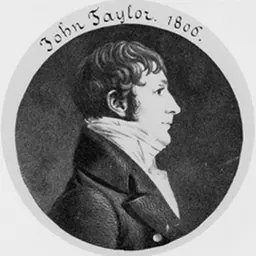
He was educated at Stand Grammar School, Lancashire, and the University of Glasgow. In 1742 he became dissenting minister of Rivington, Lancashire, where he enjoyed the friendship of Hugh Willoughby, 15th Baron Willoughby of Parham. In 1754 Bourn moved to Norwich to assist the Presbyterian minister John Taylor, who three years later left for Warrington Academy.
Life He was born at Crook near Kendal, and educated at Stand Grammar School and the University of Glasgow where he studied under Francis Hutcheson and John Simson. In 1742 he settled in the ministry at Rivington, Lancashire, where he enjoyed the friendship of Hugh, 15th Lord Willoughby of Parham, who lived at Shaw Place, near Rivington, and was the representative of the last of the Presbyterian noble families. He was a fundamental scripturalist, a Bible Protestant, who relied solely on the witness of the New Testament in matter of doctrine and ethics.
Bourn was not ordained till some years after his settlement. He then made a lengthy declaration (printed by Joshua Toulmin) dealing with the duties of the ministry and allowing no doctrine or duty except those taught in the New Testament. Bourn lived partly at Leicester Mills, a wooded vale near Rivington, and partly at Bolton. In 1752 the publication of his first sermon under the title The Rise, Progress, Corruption and Declension of the Christian Religion, led to overtures from the Presbyterian congregation at Norwich, and in 1754, apparently after the death of the senior minister, Peter Finch, Bourn became the colleague of John Taylor. The Norwich Presbyterians had laid the first stone of a new meeting-house on 25 February 1754. When Bourn came to them they were worshipping in St Mary the Less, Norwich, an ancient edifice, then held by trustees for the Walloon or Huguenot Protestants. On 12 May 1756 was opened the new building, the Octagon Chapel, Norwich. Not long after Bourn lost £1,000, which he had risked in his brother Daniel Bourn's cotton mill venture. Among those brought up under his ministry was Sir James Edward Smith, founder of the Linnean Society. Discourses on the Parables of our Saviour (1764) Fifty Sermons on Various Subjects, Critical, Philosophical and Moral (1777) Joshua Toulmin, Memoirs of the Rev Samuel Bourn (1808) W Field, Memoirs of the life, writings and opinions the Rev Samuel Parr, 2 vols(1828) John Taylor and Edward Taylor, History of the Octagon Chapel, Norwich (1848)
Don’t just read it —
keep it.
Full-length biographies made to live with: read them, listen on the way to work, watch them tonight.
- E-book
- Audio
- Video
Instant download · yours to keep · every purchase keeps this site free
Important facts
People in Samuel Bourn's life
Named in this biography and alive at the same time



Related people
Same field, nearest in time

Contemporaries
People whose lives overlapped Samuel Bourn's




Frequently asked questions
Who was Samuel Bourn?
English dissenting minister (1714–1796)
When was Samuel Bourn born?
Samuel Bourn was born in 1714 in Crook.
When did Samuel Bourn die?
Samuel Bourn died on 24 September 1796 in Norwich.
What was Samuel Bourn's occupation?
Samuel Bourn was a parson.
Sources & further reading
Cite this page
APA: Biography.guide. (2026). Samuel Bourn. https://biography.guide/samuel-bourn/
MLA: "Samuel Bourn." Biography.guide, https://biography.guide/samuel-bourn/.
Chicago: "Samuel Bourn." Biography.guide. https://biography.guide/samuel-bourn/.
Data last updated: 2026-09-20 · Spot an error? Report a correction.
Page generated 2026-09-27 04:57 UTC