
About Salleh Masri
Lived 1919 – 1997 (aged 77–78). Salleh Masri was a politician.
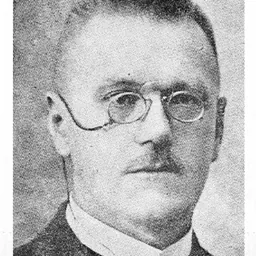
Mohd Salleh bin Haji Masri (26 June 1919 – 14 December 1996), pen name H. M. Salleh, was a Bruneian aristocrat, nationalist politician, activist and an experience teacher who was among the founding members of the Brunei Youth Front and Brunei People's Party (Parti Rakyat Brunei). Him alongside Yura Halim were considered to be the country's first novelists. He was the initial head of the Brunei Nationalist Movement in the 1940s and 1950s.
H. M. Salleh was the author of the book Tunangan Pemimpin Bangsa, which he authored while spending 100 days in government custody in Kuala Belait, describing his experiences during the battle. He regularly discussed the struggles endured by Bruneians who were subjected to prejudice in their own country and were deprived of their own heritage and sovereignty.
Early life and career Salleh was born on 26 June 1919. He completed his early schooling at the Brunei Town Malay School from 1925 to 1930. From 1934 to 1936, he worked as an assistant teacher. He attended the Sultan Idris Training College (SITC), Tanjung Malim, Malaysia, from 1937 to 1940. He began publishing articles on nationalistic subjects for Utusan Zaman, a Singaporean magazine, in 1937. Later, he started writing for Utusan Melayu, under the pseudonym Putera Jati. The First Scout troop in the Belait District was opened in 1939 and was led by him.
Sultan Ahmad Tajuddin received his early education in the palace prior attending formal school, Salleh was one of the teachers assigned to teach him. He was then employed as a teacher at the Kuala Belait Malay School and the Brunei Town Malay School between 1940 and 1941 before being named headmaster. He co-founded the Barisan Pemuda (BARIP) in 1939 with Pengiran Yusof and Jamil Al-Sufri. He also served as the head of the Belait Youth Association.
Salleh was also one of the leaders of the Malay-Chinese clash in March 1946 and was imprisoned for three months for his involvement. The arrest of H.M. Salleh seems to have infuriated Bruneian locals. At the time, he had never concealed his disapproval of Chinese interests. The local intellectuals had looked up to him for his vocal criticism of the foreign government before A. M. Azahari became well known as the head of the Parti Rakyat Brunei (BRP). After being held for six months, he was greeted with heroism upon his release. Additionally, he was chosen unanimously to lead BARIP going forward, replacing outgoing President Abdullah bin Jahfar, who resigned after just five months in office.
Salleh served as the BARIP's president from 1947 to 1948 during the time it was reconstituted. The PRB's first meeting was held in his home at Kampong Kianggeh. Furthermore, he served as the PRB's vice president from 1956 to 1958 and was one of the organization's founding members in August 1956. Salleh Masri, Azahari, and a number of other PRB leaders were punished in 1958 for failing to provide the Registrar of Societies with the PRB's yearly financial records. Midway through 1958, he was sentenced to a few months in prison once more after being accused of drinking too much at a social event at the capital's Brunei Hotel.
According to a 1991 interview with Azahari, the decision to revolt was made in A. M. Azahari's absence. When it was suggested that Salleh might have been an informant, Azahari responded that it was strange that Salleh was not detained during the Brunei Film Company (BRUFICO) on 28 October 1952, that he would later only briefly imprisoned during the Brunei rebellion, and that Salleh was now a "big-shot" in Brunei. Azahari made no additional remarks.
After 1962, he had a number of high-ranking positions in the government, including chief information officer from 1974 to 1980 and commissioner of social welfare from 1961 to 1974. In addition, he served as a member of the Legislative Council from 1962 to 1964, 1970 to 1974, and 1981 to 1984. From 1981 to 1983, he also served as a member of the Majlis Menteri-Menteri, the Council of Ministers. In 1986, when the Parti Perpaduan Kebangsaan Brunei (PPKB) was established, Salleh Masri allegedly returned to politics. When Haji Abdul Latif Bin Chuchu resigned from his position as the BNSP's president in April 1996, Salleh Masri—at the time the vice president—was chosen to fill the vacancy.
Salleh died on 14 December 1996, a little over a year after taking up the position.
Don’t just read it —
keep it.
Full-length biographies made to live with: read them, listen on the way to work, watch them tonight.
- E-book
- Audio
- Video
Instant download · yours to keep · every purchase keeps this site free
Important facts
People in Salleh Masri's life
Named in this biography and alive at the same time



Related people
Same field, nearest in time




Contemporaries
People whose lives overlapped Salleh Masri's

Frequently asked questions
Who was Salleh Masri?
Bruneian politician, writer and educator
When was Salleh Masri born?
Salleh Masri was born in 1919.
When did Salleh Masri die?
Salleh Masri died in 1997.
What was Salleh Masri's occupation?
Salleh Masri was a politician.
Sources & further reading
Cite this page
APA: Biography.guide. (2026). Salleh Masri. https://biography.guide/salleh-masri/
MLA: "Salleh Masri." Biography.guide, https://biography.guide/salleh-masri/.
Chicago: "Salleh Masri." Biography.guide. https://biography.guide/salleh-masri/.
Data last updated: 2026-09-20 · Spot an error? Report a correction.
Page generated 2026-09-27 05:18 UTC