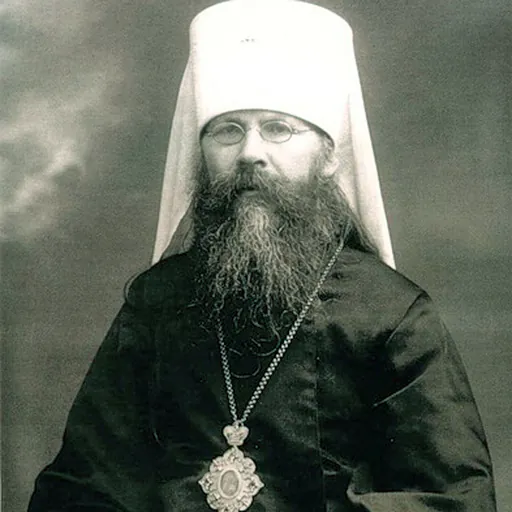
About Saint Benjamin of Petrograd
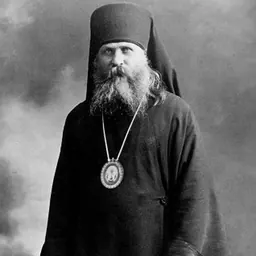
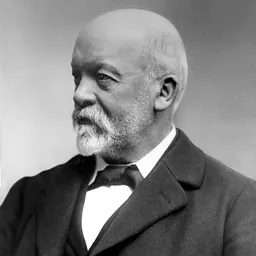
Lived 1873 – 1922 (aged 49). Saint Benjamin of Petrograd was a Russian eastern Orthodox priest.
Benjamin of Petrograd (, Veniamin Petrogradsky, – ), born Vasily Pavlovich Kazansky , was a hieromartyr under Soviet anti-religious persecution, a bishop in the Russian Orthodox Church and eventually Metropolitan of Petrograd and Gdov from 1917 to 1922. Due to his role in leading nonviolent resistance to Soviet anti-religious legislation, Metropolitan Benjamin was martyred following a drumhead show trial and executed by a firing squad of the Soviet secret police. In April 1992 Benjamin was glorified (canonized) by the Russian Orthodox Church together with several other martyrs, including Archimandrite Sergius (Shein), Professor Yury Novitsky, and John Kovsharov (a lawyer), who were executed alongside him. and on he was elevated to metropolitan.
According to future Soviet dissident Dmitri Likhachev, who was then a devoutly Orthodox layman in Petrograd, "Persecution of the Church began almost contemporaneously with the October cataclysm. This was so intolerable for any Russian that many unbelievers began to go to church, distancing themselves psychologically from the persecutors."
In a letter from Petrograd to Pope Pius XI, Fr. Leonid Feodorov, the first Exarch of the Russian Greek Catholic Church, praised the Orthodox religious revival being masterminded by the new Metropolitan, "These [Orthodox] priests, who formerly seemed to have been struck by dumbness, are today preaching quite well and teaching the Christian doctrine. Under the auspices of some churches, women have also organized study centers were religious subjects are being taught in a very simple manner: Holy Scripture, history of the Church, patrology, dogmatic and moral theology, apologetics, and liturgy. Needless to say, similar activity does not exist in the villages or in the smaller towns, and yet once ignited, the flame of religious fervor spreads rapidly everywhere."
Even though many Russian Orthodox bishops and lower clergy enthusiastically supported the anti-communist White Movement during the Russian Civil War, Metropolitan Benjamin chose to maintain a purely apolitical stance. For example, during the anti-religious campaign at the height of the Russian Civil War, the Metropolitan made the offer that if the Soviet State withheld from seizing or otherwise desecrating the relics of St Alexander Nevsky, that he would suspend any Orthodox priest in his Diocese who aided the White Movement.
Unfortunately, the Russian Orthodox Church and Soviet State had diametrically opposite world views. What is worse, all religions were viewed as dangerous counter-revolutionary ideologies that must be eliminated completely through religious persecution and coercively replaced with Marxist-Leninist atheism.
In a 1918 article about the ongoing Soviet anti-religious campaign, Isaak Babel described how he attended an anti-Christian polemical lecture by a senior official of the Party's League of Militant Atheists. Inside the former Great Hall of the Winter Palace, however, Babel witnessed as the Atheist speaker lectured about, "The All-forgiving Persona of Christ and Vomiting up the Anathema of Christianity" while being loudly heckled by Orthodox members of the audience. Babel then attended a Russian Orthodox Divine Liturgy inside the overwhelmingly crowded Cathedral of Our Lady of Kazan on Nevsky Prospect. About the Liturgy, Babel recalled, "In his sermon the priest speaks of the Holy Countenance that is once more averted in unbearable pain. He speaks of everything holy being spat upon, slapped, and of sacrileges committed by ignorant men, 'who know not what they do'. The words of the sermon are mournful, vague, and portentious. 'Flock to the Church, our last stronghold! The Church will not betray you!'"
Babel also interviewed an old woman who was attending the same Liturgy, who told him, "How nicely the chorus is chanting. What nice services these are! Last week the Metropolitan himself conducted the services -- never before has there been such holy goodness! The workers from our factory, they, too, come to the services. The people are tired, they're all crumpled up with worry, and in the church there's quiet and there's singing, you can get away from everything."
In a 18 July 1921 letter to Metropolitan bishop Andrey Sheptytsky, Exarch Leonid Feodorov recalled, "From the very beginning, no sooner was I named Exarch of the Russian Catholic Church than I sought every means of entering into relations with the Orthodox clergy. The Metropolitan of Petrograd, Mgr. Benjamin, and several others who enjoyed great influence over the clergy and the people gradually became my good friends. In 1918 (within a year of my appointment) I entered into relations with Patriarch Tikhon himself who cordially received me. At the same period we formed a united front with the Orthodox to defend ourselves against the Bolshevik aggressions. In 1919 we made a joint protest. For the first time in Russian history, the names of Orthodox and Catholic priests were signed to a Christian document drawn up against infernal forces."
The real conflict, however, came out into the open during the Russian famine of 1921 when the Soviet authorities announced the confiscation of Church valuables, allegedly to pay for famine relief. The Russian Orthodox Church agreed to this, but declined to hand over valuables which had actually touched the Eucharist.
Meanwhile, the friendship and alliance between Exarch Leonid Feodorov and Metropolitan Benjamin collapsed after the latter lost his temper and said, "You promise us Union! You want us to meet like brothers in Christ and all this time your Latin priests are causing havoc to our flock behind our back!"
Dmitri Likhachev later recalled, "Services in the remaining Orthodox churches were conducted with especial devoutness. Church choirs sang particularly well as they were swollen by many professional singers (often from the opera company of the Mariinsky Theatre). Priests and other clergy officiated with great feeling."
Metropolitan Benjamin was willing to donate the Church's valuables voluntarily, but would not accept the plundering, desecration, and confiscation by the State of an increasingly number of church buildings by the Bolsheviks. On 6 March Benjamin met with a commission formed to help the starving that agreed to his voluntary dispersal of funds controlled by the parishes. Newspapers praised Benjamin and his clergy for their charitable spirit. The Government also agreed to allow parishioners to substitute their own valuables for other church valuables of historic or religious significance. Vladimir Lenin was reportedly enraged when the news reached him.
According to Alexander Solzhenitsyn's The Gulag Archipelago, "The noxious fumes of Christianity were poisoning the revolutionary will. That kind of unity and that way of handing over the valuables were not what the starving people of the Volga needed! The spineless membership of the Petrograd Pomgol was changed. The newspapers began to howl about the 'evil pastors' and 'princes of the Church', and the representatives of the Church were told: 'We don't need your donations! And there won't be any negotiations with you! Everything belongs to the Government - and the Government will take whatever it considers necessary!'"
In response, protesters gathered in Petrograd, shouting and throwing stones at Party officials who were raiding Orthodox churches.
In an ultimatum of his own, Metropolitan Benjamin now demanded proof that the Soviet State had already exhausted all other sources of revenue, solid proof that the seized Church valuables were going only towards feeding the starving, and signed consent from Patriarch Tikhon before agreeing to further confiscations.
Dmitri Likhachev later recalled, "As persecution of the Church became more widespread, and executions more numerous so all of us felt an even keener grief for the Russia that was dying. Our love for our Motherland resembled least of all prise in her, her victories and conquests. Nowadays many find that hard to understand. We did not sing patriotic songs -- we wept and prayed."
Arrest The final conflict for Metropolitan Benjamin began when the State-controlled Living Church tried to wrest control away from Patriarch Tikhon and the established hierarchy. While secretly confident of the result, Metropolitan Benjamin offered to put the issue before his clergy and laity at the Alexander Nevsky Lavra. First, both sides would speak and then the people would vote.
On Sunday 28 May 1922, after everyone gathered, Vvedensky spoke first, "Brothers and sisters, up to now we have been subject to the Tsar and the Metropolitans. But now we are free, and we ourselves must rule the people and the Church. More than 1,900 years have already passed since it was written for us that the Lord Jesus Christ was born from the Virgin Mary and is the Son of God. But that is not true. We recognize the existence of the God of Sabbaoth, about whom our whole Bible and all the prophets have written... But Jesus Christ is not God. He was simply a very clever man. And it is impossible to call Mary - who was born of a Jewish tribe and herself gave birth to Jesus - the Mother of God and Virgin. And so now we have all recognized the existence of God, that is the God of Sabbaoth, and we must all be united; both Jews and Catholics must be a living people's church." who was placed under house arrest pending trial.
Instead of backing down, Metropolitan Benjamin issued a 29 May pastoral letter to every parish and strictly forbade Vvedensky or any other Living Church priests from administering the sacraments within his Diocese until they had first repented before Patriarch Tikhon.
For this reason, an outraged Vvedensky made a point of accompanying the GPU agents who arrested the Metropolitan at his residence. In addition to anti-Soviet agitation, Metropolitan Benjamin stood accused of, "entering with evil intent into an agreement with... the Soviet Government... and thereby obtaining a relaxation of the decree on the requisitioning of valuables", and obstructing the efforts of the Renovationists to gain control of his Diocese.
According to historian Paul Gabel, "The prosecutor was arch-atheist Peter Krasikov, who, like Krylenko in the Moscow Trial, saw conspiracy rather than genuine religious passion as the cause of the violence surrounding churches. He had orders from Moscow to discredit the Church, and the verdicts were foregone conclusions. At one point in the trial he shouted that the entire Church was a subversive organization and everybody in it should be thrown in prison."
In a subsequent interview in Paris with Constantin de Grunwald, the Metropolitan's Jewish defence attorney, S. Gurovich, recalled, "I felt that I had a genuine Saint sitting behind me on the accused's bench."
According to Paul Gabel, "The defendants, as before, cited the power of Church canons. They also argued that priests had actually attempted to calm the angry crowds that were surrounding and protecting the churches. But when three witnesses came forward to testify for Benjamin they were promptly arrested, thus effectively ending the defense's case. When Benjamin spoke in his own defense, he only offered he had always acted alone and was never an enemy of the people. He had dedicated his whole life to them, and they had repaid him with love."
The defendants were found guilty of being, "dangerous and uncompromising foes of the Republic" and condemned to the supreme penalty of death by shooting.
Furthermore, Irish Catholic New York Herald correspondent Captain Francis McCullagh attempted to make the whole world aware of the trial and execution of Metropolitan Benjamin, but his every attempt, "was suppressed by the censor". Although McCullagh was more successful in raising global awareness of the 1923 Moscow show trial of Archbishop Jan Cieplak, Monsignor Konstanty Budkiewicz, and Exarch Leonid Feodorov, the Captain later recalled, "Bishop Benjamin was a martyr quite as much as Mgr. Budkiewicz was. And as I have shown, he was not the only martyr of the Orthodox Church who suffered on this occasion."
Legacy Although the anti-communist and White émigré hierarchy of Russian Orthodox Church Outside Russia (ROCOR) canonized the Russian Orthodox martyrs of the Red Terror decades before the collapse of the Soviet Union, the surviving hierarchy of the Moscow Patriarchate was taken over in 1926 by former Renovationist, Soviet secret police informant, and agent of influence, Metropolitan (later Patriarch) Sergei (Stragorodsky) . In what other Orthodox jurisdictions have repeatedly condemned as the "heresy of Sergianism", the Moscow Patriarchate hierarchy embraced an official policy that the Soviet State was just and correct in all its actions up to and including the show trials and mass executions of Orthodox clergy and laity. Nevertheless, covert veneration of Metropolitan Benjamin and other Russian Orthodox Martyrs at the hands of the Soviet State continued within the Moscow Patriarchate anyway .
On 1 October 1990, the Supreme Soviet of the Soviet Union passed a decree formally repudiating seven decades of traditional Marxist-Leninist anti-religious policy and granting religious freedom, the equality of all religious denominations before the law, and the right to arrange the religious education of children to all Soviet citizens without exception. In 1992 the Moscow Patriarchate formally Canonized Metropolitan Benjamin as a Saint and a Martyr.
Benjamin's cenotaph is located in the Nikolskoe Cemetery of the Alexander Nevsky Lavra; the Decree of Canonization directs for Benjamin and others "That their precious remains, should they have been found, shall be considered holy relics."
Don’t just read it —
keep it.
Full-length biographies made to live with: read them, listen on the way to work, watch them tonight.
- E-book
- Audio
- Video
Instant download · yours to keep · every purchase keeps this site free
Important facts
People in Saint Benjamin of Petrograd's life
Named in this biography and alive at the same time




Related people
Same field, nearest in time


Contemporaries
People whose lives overlapped Saint Benjamin of Petrograd's


Frequently asked questions
Who was Saint Benjamin of Petrograd?
Veniamin of Petersburg (1873–1922)
When was Saint Benjamin of Petrograd born?
Saint Benjamin of Petrograd was born on 17 April 1873 in Olonets Governorate, Russian Empire.
When did Saint Benjamin of Petrograd die?
Saint Benjamin of Petrograd died on 13 August 1922 in Saint Petersburg.
What was Saint Benjamin of Petrograd's occupation?
Saint Benjamin of Petrograd was an eastern Orthodox priest.
What nationality was Saint Benjamin of Petrograd?
Saint Benjamin of Petrograd was Russian.
Sources & further reading
· Wikipedia: Saint Benjamin of Petrograd
· DBpedia: Benjamin of Petrograd
Cite this page
APA: Biography.guide. (2026). Saint Benjamin of Petrograd. https://biography.guide/saint-benjamin-of-petrograd/
MLA: "Saint Benjamin of Petrograd." Biography.guide, https://biography.guide/saint-benjamin-of-petrograd/.
Chicago: "Saint Benjamin of Petrograd." Biography.guide. https://biography.guide/saint-benjamin-of-petrograd/.
Data last updated: 2026-09-22 · Spot an error? Report a correction.
Portrait: Wikimedia Commons · author & licence
Page generated 2026-09-27 05:02 UTC