
About Saigō Tsugumichi
Lived 1843 – 1902 (aged 59). Saigō Tsugumichi was a Japanese politician and military personnel.
, also known as Saigō Tsugumichi, was a Japanese politician and admiral in the Meiji period.
Early life Saigō was born in Shimokajiyachō, Kagoshima, the son of the samurai Saigō Kichibe of the Satsuma Domain. His siblings included his famous older brother, samurai and nobleman Saigō Takamori. Saigō changed his name many times throughout his life. Besides the two listed above, he sometimes went by the nickname "Shingō". His real name was either "Ryūkō", or "Ryūdō" (隆興). It is possible that he went by the name "Ryūsuke".
Following the Meiji Restoration, Saigō went to a government office to register his name. He intended to register orally under his given name (Ryūkō or Ryūdō). However, the civil servant misheard his name and he therefore became under the law. He did not particularly mind, so he never bothered to change it back. The name "Tsugumichi" arose as an alternate pronunciation for the characters of his name.
At the recommendation of Arimura Shunsai, he became a tea-serving Buddhist monk for the daimyō of Satsuma, Shimazu Nariakira. After he returned to secular life, he became one of a group of devoted followers of Arimura. As a Satsuma samurai, he participated in the Anglo-Satsuma War. He later joined the movement to overthrow the Tokugawa shogunate.
Imperial Japanese Army
In 1869, two years after the establishment of the Meiji government, Saigō travelled to Europe with Yamagata Aritomo to study the military systems of Prussia, France and Russia.
In 1873, his brother Saigō Takamori resigned from the government, over the rejection of his proposal to invade Korea during the Seikanron debate. Many other officials from the Satsuma region followed suit. However, Saigō Jūdō continued to remain loyal to the Meiji government. When the Satsuma Rebellion broke out in 1877, Saigō declined to join his brother's side; while Yamagata Aritomo led government forces against the rebels, Saigō took over Yamagata's duties as acting head of the army back in Tokyo.
Personal life Saigō's former residence (once in Meguro, Tokyo) is registered as an Important Cultural Property by the Japanese government and is now at the Meiji-mura historical park outside of Inuyama, Aichi Prefecture. Saigō also owned a cottage in Yanagihara (present-day Numazu), Shizuoka Prefecture. Saigō Jūdō was the first person in Japan to own a race horse.
Gensui the Marquis Saigō died in 1902 and was buried in the Tama Cemetery in Fuchū in Tokyo.
Honours National honours Grand Cordon of the Order of the Chrysanthemum Grand Cordon with Paulownia Flowers of the Order of the Rising Sun Order of the Golden Kite, Second Class
Ancestry
Don’t just read it —
keep it.
Full-length biographies made to live with: read them, listen on the way to work, watch them tonight.
- E-book
- Audio
- Video
Instant download · yours to keep · every purchase keeps this site free
Important facts
People in Saigō Tsugumichi's life
Named in this biography and alive at the same time


Related people
Same field, nearest in time


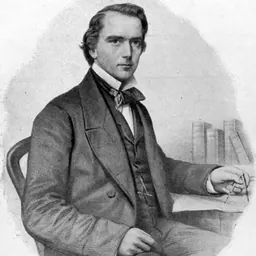



Contemporaries
People whose lives overlapped Saigō Tsugumichi's

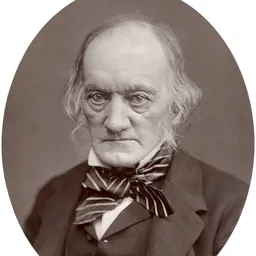
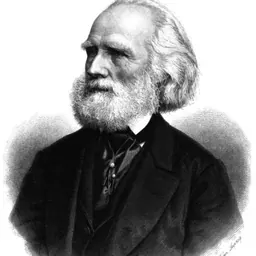
Frequently asked questions
Who was Saigō Tsugumichi?
Japanese politician and admiral (1843-1902)
When was Saigō Tsugumichi born?
Saigō Tsugumichi was born on 1 June 1843 in Kajiya-chō.
When did Saigō Tsugumichi die?
Saigō Tsugumichi died on 18 July 1902 in Meguro.
What was Saigō Tsugumichi's occupation?
Saigō Tsugumichi was a politician and military personnel.
What nationality was Saigō Tsugumichi?
Saigō Tsugumichi was Japanese.
Sources & further reading
Cite this page
APA: Biography.guide. (2026). Saigō Tsugumichi. https://biography.guide/saigo-tsugumichi/
MLA: "Saigō Tsugumichi." Biography.guide, https://biography.guide/saigo-tsugumichi/.
Chicago: "Saigō Tsugumichi." Biography.guide. https://biography.guide/saigo-tsugumichi/.
Data last updated: 2026-09-20 · Spot an error? Report a correction.
Page generated 2026-09-27 05:18 UTC