
About Saburō Hasegawa
Lived 1906 – 1957 (aged 50). Saburō Hasegawa was a Japanese painter, university teacher, calligrapher and printmaker.
was a Japanese-born American calligrapher, painter, art writer, curator, and teacher. He was an early advocate of abstract art in Japan and an equally vocal supporter of the Japanese traditional arts (Japanese calligraphy, ikebana, tea ceremony, ink painting) and Zen Buddhism. Throughout his career he argued for the connection between East Asian classical arts and Western abstract painting.
Biography
Early life: 1906–1929 Saburō Hasegawa was born in Yamaguchi Prefecture in 1906, the fifth of eleven children. His father was an executive for Mitsui & Co. who had worked in London and Hong Kong. In 1910, when his father was transferred to Kobe for work, the family relocated to nearby Ashiya and lived in a European-style home. Hasegawa learned English during his school years, and together with three friends, formed an art club known as the Hakuzōkai (White Elephant Group). In 1924, Hasegawa began to study under the post-impressionist painter Narashige Koide in Osaka. In 1926, against his father's wishes, Hasegawa entered the art history department of Tokyo Imperial University (today University of Tokyo). He graduated in 1929 with a thesis discussing the famous ink painter of the Muromachi period, Sesshū Tōyō.
Early career: 1930s 24th Nika Exhibition venue (1937) with Saburo Hasegawa (left) and Jiro Yoshihara (right). From 1929 to 1932, Hasegawa traveled to San Francisco, New York, Boston, England, France, Spain, and Italy. His work Still Life (Vegetable) (1930) was accepted for exhibition at the 1931 Salon d'Automne in Paris.
Hasegawa and de Boers divorced in 1936 after having one daughter, Sumire (1934-1996). He married his second wife, Kiyoko (1913-2006) in October 1936. Together they had one son, Shōbu (1940-2015), and one daughter, Michiko (b. 1943).
Hasegawa helped reorganize a prominent oil painting exhibition society as the Jiyū Bijutsuka Kyōkai ("Free Artists Association") in 1937. The society became a champion of abstraction in the Japanese art world. In the late 1930s, Hasegawa began to explore media besides painting, including photography. He exhibited his documentary photography with the Jiyū Bijutsuka Kyōkai. In Abusutorakuto āto, for example, he linked abstract painting to classical Japanese calligraphy. He continued to explore these themes for the rest of his career.
Wartime activities: 1940–1948 Hasegawa continued to produce photographs during World War II. He was arrested in 1940 for refusing to participate in war drills. After his short jail sentence, Hasegawa moved his family to Nagahama, north of Kyoto, where they spent the rest of the war in extreme poverty. During this time, Hasegawa began subsistence farming and all but stopped creating artwork or writing art essays. He began to study Daoism and Zen Buddhism in more depth and visited and corresponded with Zen priests and Buddhist scholars.
Postwar career: 1948–1957 In 1948, Hasegawa again began publishing essays on art and creating modernist oil paintings. He continued to be fascinated by Japanese historical culture, but also revived his interest in European modernism.
Relationship with Isamu Noguchi Because Hasegawa was both fluent in English and already held a respected position in the Japanese art world, he was invited to work as a guide for Japanese American artist Isamu Noguchi during Noguchi's trip to Japan in 1950. Hasegawa and Noguchi visited landmark sites together including the Katsura Imperial Villa, Ryōan-ji, and Ise Shrine. Over the course of the trip, they discovered they had much in common and became close friends. Noguchi was excited to have access to lesser-known sites of Japanese art and culture, and his own art reflected certain Japanese aesthetic qualities. Hasegawa felt that this enthusiasm for Japanese tradition displayed by Noguchi, a modern artist, helped legitimize his own belief in the convergence of Japanese tradition and modern art.
Hasegawa published numerous articles on Noguchi's work. Their relationship and exchanges gained significant media attention. According to art historian Kitazawa Noriaki, Noguchi's trip to Japan may have been the catalyst for a series of intellectual debates that occurred in Japan in the 1950s on the meaning of Japanese tradition in modern art, architecture, and society. This is commonly known as the "Tradition Dispute" (dentō ronsō). Hasegawa also helped select artists for the 1954 exhibition at the Museum of Modern Art in New York, Japanese Calligraphy. He attended the opening of the exhibition. Hasegawa met Sari Dienes, and was photographed with her at the Hotel Beaux Arts dated 1954. They became friends, and he visited her studio at 58 West 57th Street often. They both showed at Gumps Gallery in San Francisco, before Sari left to visit Japan.
Hasegawa had two solo exhibitions at galleries in New York, which drew prominent New York art world figures. He was also had several new essays published in American publications such as ARTnews.
Activity in San Francisco Hasegawa moved to San Francisco in September 1955, where he taught drawing and Asian art history at the California College of Arts and Crafts (CCAC), and lectured at the American Academy of Asian Studies (AAAS). Hasegawa had several exhibitions in the Bay area, including at CCAC, the department store Gump's, the Oakland Art Museum, and the San Francisco Museum of Modern Art.
Hasegawa died of oral cancer in San Francisco in 1957.
Work
Paintings and prints Hasegawa Saburo, Cho no kiseki (Traces of a Butterfly), 1937. Oil on canvas, 130x163 cm. National Museum of Modern Art, Kyoto. Hasegawa's earliest works were oil paintings in the Fauvist or post-impressionist style. By the mid-1930s, when he first became involved with the Free Artists Association, Hasegawa's work was transitioning into abstraction, and he began experimenting with collage using materials such as yarn and glass. During World War II, Hasegawa largely stopped painting, with the exception of a series of landscape and still life oil paintings completed in 1943.
Around 1951, Hasegawa stopped working in oil painting and instead devoted himself to creating prints and ink paintings, and to exploring photography through photograms. Some of his ink paintings from this time closely approached avant-garde calligraphy practiced by calligraphers such as the members of the group Bokujinkai in the 1950s. Avant-garde calligraphy focused on the form of ink lines but often resulted in abstract art rather than conveying any legible characters. Hasegawa's paintings from this time thus merged the gesturalism of Japanese calligraphy with the spontaneity of postwar Western gestural abstraction. Hasegawa also created paintings in ink wash. His prints were monotypes in watercolor, gouache, or ink, made with kamaboko-ita (rectangular pieces of wood used to steam kamaboko, or fish cakes, in Japan) and funaita (ship planks) as the printing blocks. He also created ink rubbings, and mixed media pieces that combined any of the above techniques.
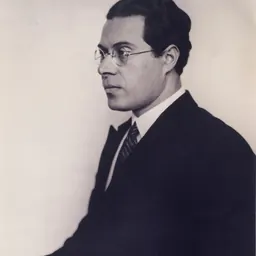
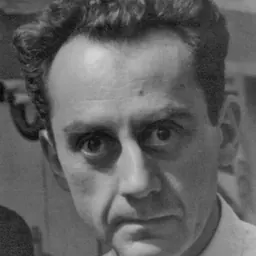
Photography Hasegawa first encountered experimental photography and photograms through European and American magazines reproducing works by artists such as Man Ray and László Moholy-Nagy. His first photographic works were in the documentary tradition, taken during his trip to China in 1938, where he composed experimental shots of Buddhist cave sculptures. He later produced a series of documentary photographs in 1939, entitled Kyōdoshi ("Local Journal"), in which he explored local village life through images with a distinctly modernist framing. The photographs paid careful attention to framing, modeling, and the sculptural quality of the captured subject. He exhibited several of these photographs with the Jiyū Bijutsuka Kyōkai in 1940. Hasegawa Saburo, Nature, 1953. Ink on paper, 135x66 cm. National Museum of Modern Art, Kyoto. After the war, Hasegawa began experimenting more with photography. From 1953 to 1954, he created a series of collaborative works with the photographer Kiyoji Ōtsuji and other artists from Jikken Kōbō for the Asahi Picture News. Hasegawa arranged a collage which was photographed by Ōtsuji, resulting in a mixed media photographic work.
Writing on calligraphy In the 1930s, and again in the 1950s, Hasegawa encouraged new developments in avant-garde calligraphy, especially as a new form of abstract painting. From 1950 to 1953, he promoted new experiments in calligraphy by editing the column "Alpha Section of Selection and Criticism" for the calligraphy journals Sho no bi and Bokubi – two periodicals edited by Morita Shiryū of the Bokujinkai calligraphy group. Hasegawa selected and reviewed works of abstract calligraphy in the column. Hasegawa also contributed several articles to Bokubi in which he theorized (as he had in the 1930s) a particular relationship between abstract painting and calligraphy, including a series entitled "Reflections on New Western and Old Eastern Art."
The parallels Hasegawa discussed between Western abstract art and Japanese calligraphy deeply inspired the calligraphers of Bokujinkai and contributed to their early theoretical foundations.
In 2019, Hasegawa's work was included in the exhibition "Changing and Unchanging things: Noguchi and Hasegawa in Postwar Japan" organized by the Noguchi Museum. The exhibition included around 90 works from Hasegawa and Noguchi, and featured Hasegawa's paintings, calligraphic drawings and some of his poems.
Footnotes
Don’t just read it —
keep it.
Full-length biographies made to live with: read them, listen on the way to work, watch them tonight.
- E-book
- Audio
- Video
Instant download · yours to keep · every purchase keeps this site free
Important facts
People in Saburō Hasegawa's life
Named in this biography and alive at the same time




Related people
Same field, nearest in time


Contemporaries
People whose lives overlapped Saburō Hasegawa's
Frequently asked questions
Who was Saburō Hasegawa?
Japanese painter
When was Saburō Hasegawa born?
Saburō Hasegawa was born on 6 September 1906 in Yamaguchi Prefecture.
When did Saburō Hasegawa die?
Saburō Hasegawa died on 11 March 1957 in San Francisco.
What was Saburō Hasegawa's occupation?
Saburō Hasegawa was a painter, university teacher, calligrapher and printmaker.
What nationality was Saburō Hasegawa?
Saburō Hasegawa was Japanese.
Sources & further reading
Cite this page
APA: Biography.guide. (2026). Saburō Hasegawa. https://biography.guide/saburo-hasegawa/
MLA: "Saburō Hasegawa." Biography.guide, https://biography.guide/saburo-hasegawa/.
Chicago: "Saburō Hasegawa." Biography.guide. https://biography.guide/saburo-hasegawa/.
Data last updated: 2026-09-22 · Spot an error? Report a correction.
Portrait: Wikimedia Commons · author & licence
Page generated 2026-09-27 05:03 UTC