
About Kiyoji Ōtsuji
Lived 1923 – 2001 (aged 78). Kiyoji Ōtsuji was a Japanese photographer, installation artist and artist.
was a Japanese photographer, photography theorist, and educator. He was active in the avant-garde art world in Japan after World War II, both creating his own experimental photographs, and taking widely circulated documentary photographs of other artists and art projects. He became an authority in Japanese photography, extensively publishing commentaries and educating future generations of photographers.
Biography
Early life: 1923–1945 Ōtsuji was born in the Kōtō ward of Tokyo on July 27, 1923. He first became interested in photography when he purchased back issues of the photography periodical Photo Times from a used book store. Through Photo Times he first encountered avant-garde photography from Europe, the United States, and Japan, and was deeply inspired by the photography criticism of Shūzō Takiguchi and Abe Nobuya.
In 1942, Ōtsuji enrolled in the art department at the Tokyo Professional School of Photography (today Tokyo Polytechnic University). In 1943, in the middle of his studies, he was drafted into the army and trained as an aircraft mechanic. He later graduated from the Tokyo Professional School of Photography in 1944. The same year, he and other alumni from the Tokyo Professional School of Photography began to publish the magazine Fotogurafii ("Photography"), to which Ōtsuji contributed several written essays on photography.
Ōtsuji's early individual works are often viewed as a re-exploration of prewar Surrealist photography in Japan. Art historian Masachika Tani argues that Iwata Nakayama, Kansuke Yamamoto, and Ōtsuji each developed distinct possibilities for Surrealist photography, adapting Surrealist procedures to local conditions. For example, his work Aishi ni tsuite ("About Feet") (1949) captures a raw chicken positioned upside down with its legs dramatically crossed in mid-air, thus offering a strange, almost lifelike view of the dead animal. Another early series of photographs, shot in the leading Bijutsu Bunka member Nobuya Abe's studio in 1950, depict the future Jikken Kōbō member Hideko Fukushima and other women, both clothed and nude, posing within a geometric network of strings, thus appearing like dolls or puppets. Following these examples, for the rest of his career, Ōtsuji's individual work continued to explore the presence of objects (もの, mono) – ready-made or found objects – and to capture their ephemerality with his camera. Each photograph was printed as a small header in the top corner of the Asahi Picture News double-page spread. After this project, Ōtsuji joined the group as an official member. He contributed photographs made into autoslide projections for the 5th Experimental Workshop Presentation in 1953, and continued to photograph the group's events and rehearsals until they split up in 1957.
In 1953, Ōtsuji also joined Gurafikku Shudan ("Graphic Group"), a group of photographers and designers, with whom he exhibited photography and collaborated on publications and other projects. In 1955, Ōtsuji screened the experimental film Kine Calligraph at the 2nd Graphic Group Presentation. The film, produced with Yasuhiro Ishimoto and Saiko Tsuji, with a score by Tōru Takemitsu, involved painting directly onto film to create purely abstract effects. It was an early example of abstract film in Japan.
From 1956 to 1959, Ōtsuji worked as a part-time photographer for the art magazine Geijutsu Shinchō, contributing photographs for articles covering art, design, architecture, music, theater, dance and film.
Throughout the 1950s, Ōtsuji continued to experiment both with photographic expression and with the photographic apparatus. In 1956, he took a series of close-up photographs of Lake Ōnuma, focusing on such images as slanted lines left behind on its frozen surface by ice skates. With none of the surrounding landscape depicted, the icy surface resembled gestural abstraction.
In 1956, Ōtsuji also participated in the newly founded Japan Subjective Photography League, a postwar framework through which prewar avant-garde photographers such as Kansuke Yamamoto were briefly regrouped alongside emerging figures such as Ikkō Narahara and Yasuhiro Ishimoto in the First International Subjective Photography Exhibition later that year.
He built his own camera and even devised a cinematic device called an "autoscope" that was used to project images at the Sekiya Industries booth at the Japan International Trade Fair in Tokyo in 1957.
Around 1965, Ōtsuji began to frequently contribute essays and articles to photography magazines such as Camera Mainichi, Camera Jidai, S D: Space Design, and Shashin Hihyō, among others. Throughout the 1960s and 1970s, he also continued to experiment with his individual works and publish them, often alongside his texts. In the 1970s, his published works became increasingly theoretical. A series of photographs for Asahi Camera, "Ōtsuji Kiyoji Experimental Workshop of Photography" (1975), featured both essays and photographs that considered the theoretical issues surrounding photography as a process and discipline. His series Hitohako no kako ("Past of One Tin Can") was created for his first solo exhibition in 1977, and featured a 23-photograph sequence showing a can of memories being unpacked and individual elements examined by the camera – including old photographs. The series can be seen as a prolonged meditation on the object, which had interested him since his early career. Exemplified by two photo books published in 1971 – Hibi (Day to Day) by Ōtsuji’s student Shigeo Gochō, and A Sentimental Journey by Araki Nobuyoshi – konpora photography’s clear, steady images were a contrasting response to the 'are-bure-boke' ( 'grainy/rough, blurry, out-of-focus') style of documentary photography published in Provoke. Instead of Provoke’s negative, anti-establishment attitude, konpora photographers attempted to capture the world dispassionately, with simple, straightforward snapshots of commonplace, ordinary subjects.
By the 1970s, Ōtsuji’s authority in the Japanese photography world had solidified, and in addition to publishing frequently, he was asked to become a regular guest in a series of roundtable discussions published in Asahi Camera titled "Roundtable: On Talked-About Photographs," where he was joined by other prominent photographers. He participated in these discussions in 1974, from 1976 to 1978, and again in 1985.
Selected solo and group exhibitions
VIVI exhibition, Maruzen Gallery, Nagoya, 1949. 9th–12th Bijutsu Bunka Exhibitions, Tokyo Metropolitan Art Museum, 1949–1952 Ogawa Yoshikazu and Ōtsuji Kiyoji Two-Man Show, Takemiya Gallery, Tokyo, 1952 The 5th Experimental Workshop Presentation, Daiichi Seimei Hall, Tokyo, 1953 1st–3rd Graphic Group Exhibitions, Matsuya Department Store, Ginza, 1953, 1955–1956; 4th Graphic Group Exhibition, Konishiroku Gallery, Tokyo, 1956 From Space to Environment, Matsuya Department Store, Ginza, Tokyo, 1966 Past of One Tin Can, Prism, Tokyo, 1977 Exhibition Ōtsuji Kiyoji, Tokyo Gallery, Tokyo, 1987 Ōtsuji Kiyoji 1948–1987 Exhibition, University of Tsukuba Gallery, Tsukuba, 1987 The Age of Modernism, Tokyo Metropolitan Museum of Photography, 1995 Ōtsuji Kiyoji Portfolio, Mole, Tokyo, 1997 Kiyoji Ōtsuji Retrospective: Experimental Workshop of Photography, National Film Center, National Museum of Modern Art, Tokyo, 1999 Kiyoji Ōtsuji and Fifteen Photographers, Tokyo Zōkei University Yokoyama Memorial Manzu Art Museum, Tokyo, 1999 Kiyoji Ōtsuji: Shūzō Takiguchi & Yoshishige Saitō on Photo, Museum of Modern Art, Toyama, 2003 Kiyoji Ōtsuji: Photographs as Collaborations, Shoto Museum of Art, Tokyo, 2007 APN Research, Kunsthalle Bern, 2012 Kiyoji Ōtsuji "Photographic Archive": The Traces of the Photographer and the Art of His Era 1940–1980, Musashino Art University Museum & Library, Tokyo, 2012 Gutai: Splendid Playground, Solomon R. Guggenheim Museum, New York, 2013 Jikken Kōbō: Experimental Workshop, Museum of Modern Art, Kamakura, 2013 Ōtsuji Kiyoji, Taka Ishii Gallery, Tokyo, 2013 For a New World to Come: Experiments in Japanese Art and Photography, 1968–1979, Museum of Fine Arts, Houston, 2015 Japanese Photography from Postwar to Now, SF MoMA, San Francisco, 2016
Collections and archives Ōtsuji’s photographic archives are held by the Musashino Art University Museum & Library. Prints of his photographs are also held in the collections of the National Museum of Modern Art, Tokyo, the Tate Modern, the Museum of Modern Art, SF MoMA, and M+ Hong Kong.
Don’t just read it —
keep it.
Full-length biographies made to live with: read them, listen on the way to work, watch them tonight.
- E-book
- Audio
- Video
Instant download · yours to keep · every purchase keeps this site free
Important facts
People in Kiyoji Ōtsuji's life
Named in this biography and alive at the same time

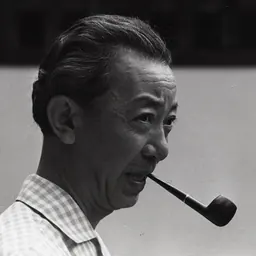
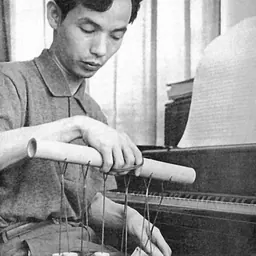
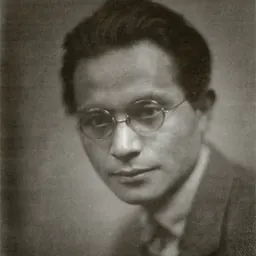


Related people
Same field, nearest in time





Contemporaries
People whose lives overlapped Kiyoji Ōtsuji's

Frequently asked questions
Who was Kiyoji Ōtsuji?
Japanese photographer (1923-2001)
When was Kiyoji Ōtsuji born?
Kiyoji Ōtsuji was born on 27 July 1923 in Tokyo.
When did Kiyoji Ōtsuji die?
Kiyoji Ōtsuji died on 19 December 2001.
What was Kiyoji Ōtsuji's occupation?
Kiyoji Ōtsuji was a photographer, installation artist and artist.
What nationality was Kiyoji Ōtsuji?
Kiyoji Ōtsuji was Japanese.
Sources & further reading
Cite this page
APA: Biography.guide. (2026). Kiyoji Ōtsuji. https://biography.guide/kiyoji-otsuji/
MLA: "Kiyoji Ōtsuji." Biography.guide, https://biography.guide/kiyoji-otsuji/.
Chicago: "Kiyoji Ōtsuji." Biography.guide. https://biography.guide/kiyoji-otsuji/.
Data last updated: 2026-09-20 · Spot an error? Report a correction.
Page generated 2026-09-27 05:06 UTC