
Yasuhiro Ishimoto
Japanese photographer
About Yasuhiro Ishimoto
Lived 1921 – 2012 (aged 90). Yasuhiro Ishimoto was a Japanese and American photographer, architectural photographer, camera operator and cinematographer.
was a Japanese-American photographer. His decades-long career explored expressions of modernist design in traditional architecture, the quiet anxieties of urban life in Tokyo and Chicago, and the camera's capacity to bring out the abstract in the everyday and seemingly concrete fixtures of the world around him.
Born in the United States and raised in Japan, Ishimoto returned to the States as a young adult as the Second World War began to escalate, and was soon after sent to the Amache Internment Camp in Colorado after the signing of Executive Order 9066. After the war, he studied photography at the Bauhaus-inspired Institute of Design (ID) at the Illinois Institute of Technology, and established a robust photographic practice between the United States and Japan.
As a transnational interlocutor between Japanese and American art and architecture circles, Ishimoto played a prominent role in bringing visions of Japanese architectural modernism to audiences abroad. His photographs of the Katsura Imperial Villa, taken in 1953-54 and published in 1960 as Katsura: Tradition and Creation in Japanese Architecture, were widely celebrated in architecture and design circles for evoking the formal, geometric purity of the villa’s structural details with a deep sensitivity towards the atmospheric qualities of the space. The book, which features accompanying essays by Kenzō Tange and Walter Gropius, was instrumental in stimulating the discourse surrounding modernism’s relationship to tradition in Japanese architecture.
Ishimoto’s work was exhibited widely in the United States and Japan during his lifetime, and two of his photographs were featured in the monumental 1955 Museum of Modern Art exhibition The Family of Man. He maintained close ties to Chicago and published a series titled Chicago, Chicago in 1969.
After graduating from high school, he returned to the United States in 1939 to study modern agricultural methods at the behest of his parents and teachers. Though cameras had initially been confiscated by authorities, by May 1943 restrictions on cameras had lifted in camps outside of the Western Defense Command (including Amache), and Ishimoto began taking photographs around the camp using a Kodak 35mm camera. Ishimoto and his fellow photographs used creative solutions to work through the technological limitations in the camp, recalling how his friend fashioned an enlarger from a ketchup container and the bellows from a folding camera.
The following year, Ishimoto joined the Fort Dearborn Camera Club through the introduction of Japanese-American photographer Harry K. Shigeta, who co-founded the organization in 1924. Many of the club members still adhered to the late 19th-, early 20th century conventions of pictorialism, which sought to replicate the painterly qualities of pictorial art through photography.
In his teaching, Moholy-Nagy encouraged students to treat light as a "raw material," subject to experimentation and manipulation through carefully calibrated engagements with chemicals, atmospheric conditions, surfaces, camera settings, and spatial arrangements—an orientation that would percolate into Ishimoto's deliberate and meticulous arrangements of light and form in his architectural photographs.
Ishimoto's many accolades include winning the Life magazine Young Photographer's Contest (1951); the Japan Photo Critics Association photographer of the year award (1957); the Mainichi Art Award (1970); the annual award (1978, 1990) and distinguished contribution award (1991) of the Photographic Society of Japan; and the Kochi prefectural cultural award (1996). ).
Artwork
Katsura (1953-58) While at the ID, Callahan introduced Ishimoto to renowned photography and curator Edward Steichen, who aided in opening up new professional avenues for the burgeoning photographer's career. The two had met at a Sōgetsu-ryū study group, where she was an instructor and assistant to Teshigahara.
Katsura Imperial Villa Steichen introduced Ishimoto to MoMA architecture curator Arthur Drexler, who in 1953 tasked Ishimoto, along with architect Junzō Yoshimura, to guide him through Japan to conduct research for his 1954 exhibition "Japanese Exhibition House." Designed and constructed over a fifty-year period under the auspices of Prince Toshihito and Prince Toshitada of the Hachijō-no-miya family, the villa complex consists of a series of aristocratic dwellings built in the shoin style, along with four tea-ceremony houses built in the sukiya style, and a Buddhist hall surrounded by a lavish and carefully curated garden. His access to the codified space (considering the little time that had elapsed since the American occupation of Japan) was made possible in part due to his American passport. Many of the images Ishimoto took using his 4x5 Linhof, he recalled, were shot on an up-to-date format that was not widely recognized in postwar Japan, leading to many of the negatives becoming ruined during the development process. After receiving a commission from publisher Iwanami Shoten, Ishimoto revisited the site in November 1981 and February 1982, this time photographing the villa in both black-and-white and color using a Sinar camera with a variety of lenses.
In 1993, Ishimoto was invited to photograph Ise Grand Shrine during the 61st iteration of the ceremonial dismantling and rebuilding process, which takes place every twenty years.
Chicago and street photography
Early postwar work in Chicago Ishimoto's arrival in Chicago following the war took place alongside the second great migration of African Americans to the north. Chicago was only second to New York City in the number of new residents received in both migrations. The series also calls attention to the rise of mass consumerism in 1980s Japan, and the anxieties that Ishimoto, as someone who grew up in a working-class family during an era of scarcity, felt with regards to the loss of distinctiveness and food safety that came in tandem with rapid industrial and commercial growth. Yasuhiro Ishimoto: Mandalas of the Two Worlds at the Kyoo Gokokuji, National Museum of Art, Osaka, Osaka, 1999 Yasuhiro Ishimoto Photographs: Traces of Memory, Cleveland Museum of Art, 2000–2001 Ishimoto Yasuhiro Shashinten 1946–2001 ( 1946–2001) / Yasuhiro Ishimoto, The Museum of Art, Kōchi, Kōchi, Japan, 2001 Tokyo: Yasuhiro Ishimoto, Canadian Centre for Architecture, Montreal, 2012 Yasuhiro Ishimoto: Bilingual Photography and the Architecture of Greene & Greene, the Huntington, San Marino, 2016 Yasuhiro Ishimoto: Someday, Chicago, DePaul Art Museum, Chicago, 2018
Select group exhibitions On June 14, 2013, the museum established the Ishimoto Yasuhiro Photo Center in order to foster continued preservation efforts and encourage further research on the photographer's work.
Publications
Photobooks by Ishimoto
Aru hi aru tokoro / Someday somewhere. Geibi Shuppansha, 1958. Tuttle, 1959. Katsura: Nihon kenchiku ni okeru dentō to sōzō / Katsura: Tradition and Creation in Japanese Architecture. Zōkeisha and Yale University Press, 1960. Second edition (without English text): Tokyo: Chūōkōronsha, 1971. English-language edition: New Haven: Yale University Press, 1972. Shikago, Shikago / Chicago, Chicago. Tokyo: Bijutsu Shuppansha, 1969. Second edition Tokyo: Japan Publications, 1983. Toshi (都市, "City"). Tokyo: Chūōkōronsha, 1971. (With Haruo Tomiyama.) Ningen kakumei no kiroku / The Document of Human Revolution. Tokyo: Shashin Hyōronsha, 1973. Nōmen (, "Noh masks"). Tokyo: Heibonsha, 1974. Den Shingonin Ryōkai Mandara / The Mandalas of the Two Worlds. Tokyo: Heibonsha, 1977. Photographs on folded screens, lavishly produced and packed in two very large boxes. (An edition of 500, priced at 880,000 yen.) Eros und Cosmos in Mandala: The Mandalas of the Two Worlds at the Kyoo Gokoku-ji. Seibu Museum of Art. Den Shingon in mandara . Kyoto: Sanburaito Shuppan, 1978. Kunisaki kikō (, "Kunisaki travelogue"). Nihon no Bi. Tokyo: Shūeisha, 1978. A large-format collection of colour photographs of the Kunisaki peninsula in Kyūshū. Karesansui no niwa (, "Dry gardens"). Tokyo: Kōdansha, 1980. Yamataikoku gensō . Nihon no Kokoro. Tokyo: Shūeisha, 1980. Isuramu: Kūkan to mon'yō / Islam: Space and Design. Kyoto: Shinshindō, 1980. Kōkoku no jūichimen kannon . Tokyo: Iwanami, 1982. Shikago, Shikago: Sono 2 / Chicago, Chicago. Tokyo: Libro Port, 1983. . Shikago, Shikago: Sono 2 / Chicago, Chicago. Tokyo: Canon, 1983. More black and white photographs of Chicago. No captions; foreword and chronology of the photographer in Japanese. Katsura rikyū: Kūkan to katachi . Tokyo: Iwanami, 1983. English translation: Katsura Villa: Space and Form. New York: Rizzoli, 1987. Hana / Hana. Tokyo: Kyūryūdō, 1988. . English edition: Flowers, San Francisco: Chronicle, 1989. . Kyō no tewaza: Takumi-tachi no emoyō . Tokyo: Gakugei Shorin, 1988. . The Photography of Yasuhiro Ishimoto: 1948–1989. Tokyo: Seibu Museum of Art, 1989. Ishimoto Yasuhiro Shashinten 1946–2001 ( 1946–2001) / Yasuhiro Ishimoto. Kōchi, Kōchi : The Museum of Art, Kochi, 2001. Text in Japanese and English. Arata Isozaki Works 30: Architectural Models, Prints, Drawings. Gingko, 1992. . Ise Jingū (, "Ise shrine"). Tokyo: Iwanami, 1995. . Genzai no kioku / Remembrance of Things Present. Tokyo: National Museum of Modern Art, 1996. Catalogue of an exhibition held at the National Film Center in 1996. Captions and text in both Japanese and English. Ishimoto Yasuhiro . Nihon no Shashinka. Tokyo: Iwanami, 1997. . A compact survey of Ishimoto's monochrome work; text in Japanese only. Yasuhiro Ishimoto: A Tale of Two Cities. Ed. Colin Westerbeck. Chicago: Art Institute of Chicago, 1999. . Catalogue of an exhibition at the Art Institute of Chicago, May–September 1999. Toki / Moment. Tokyo: Heibonsha, 2004. . A survey of Ishimoto's monochrome work; text in Japanese and English. Shibuya, Shibuya . Tokyo: Heibonsha, 2007. . Monochrome images, mostly of the backs of individual people waiting for the lights to change at the main crossroads in front of Shibuya Station. No captions; the minimal text is in Japanese and English. Meguriau iro to katachi / Composition. Tokyo: Heibonsha, 2008. . Compositions of colors. The minimal text is in Japanese only. Tajū rokō / Multi Exposure. Exhibition catalogue. Katsura rikyū . 2010. . Nakamori, Yasufumi. Katsura: Picturing Modernism in Japanese Architecture. Museum of Fine Arts Houston, 2010. . Moriyama Akiko . Ishimoto Yasuhiro: Shashin to iu shikō / Yasuhiro Ishimoto: Beyond the Eye that Shapes. 武蔵野美術大学出版局, 2010. 。
Other publications including Ishimoto's work Szarkowski, John, and Shoji Yamagishi. New Japanese Photography. New York: Museum of Modern Art, 1974. (hard), (paper) Four photographs (1953–1954) from Katsura (1960). Nihon nūdo meisakushū (, Japanese nudes). Camera Mainichi bessatsu. Tokyo: Mainichi Shinbunsha, 1982. Pp. 166–69 show nudes by Ishimoto. Nihon shashin no tenkan: 1960 nendai no hyōgen / Innovation in Japanese Photography in the 1960s. Tokyo: Tokyo Metropolitan Museum of Photography, 1991. Exhibition catalogue, text in Japanese and English. Pp. 68–77 show examples from "Chicago, Chicago". Densha ni miru toshi fūkei 1981–2006 ( / Scenes of Tokyo City: Prospects from the Train 1981–2006. Tama City, Tokyo: Tama City Cultural Foundation Parthenon Tama, 2006. Exhibition catalogue; pp. 4–13 are devoted to Ishimoto. Captions and text in Japanese and English.
Don’t just read it —
keep it.
Full-length biographies made to live with: read them, listen on the way to work, watch them tonight.
- E-book
- Audio
- Video
Instant download · yours to keep · every purchase keeps this site free
Important facts
People in Yasuhiro Ishimoto's life
Named in this biography and alive at the same time

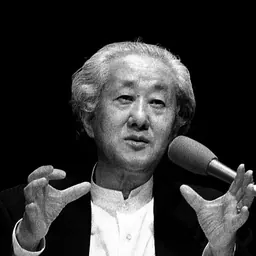

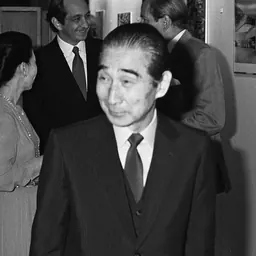




Related people
Same field, nearest in time
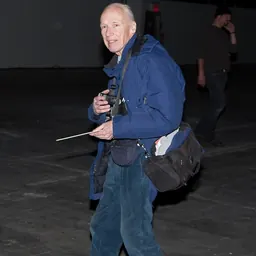



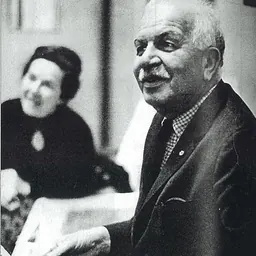
Contemporaries
People whose lives overlapped Yasuhiro Ishimoto's




Frequently asked questions
Who was Yasuhiro Ishimoto?
Japanese photographer (1921–2012)
When was Yasuhiro Ishimoto born?
Yasuhiro Ishimoto was born on 14 June 1921 in San Francisco.
When did Yasuhiro Ishimoto die?
Yasuhiro Ishimoto died on 6 February 2012 in Tokyo.
What was Yasuhiro Ishimoto's occupation?
Yasuhiro Ishimoto was a photographer, architectural photographer, camera operator and cinematographer.
What nationality was Yasuhiro Ishimoto?
Yasuhiro Ishimoto was Japanese and American.
Sources & further reading
· Wikipedia: Yasuhiro Ishimoto
Cite this page
APA: Biography.guide. (2026). Yasuhiro Ishimoto. https://biography.guide/yasuhiro-ishimoto/
MLA: "Yasuhiro Ishimoto." Biography.guide, https://biography.guide/yasuhiro-ishimoto/.
Chicago: "Yasuhiro Ishimoto." Biography.guide. https://biography.guide/yasuhiro-ishimoto/.
Data last updated: 2026-09-20 · Spot an error? Report a correction.
Page generated 2026-09-27 05:17 UTC