
About Rudolph Schoenheimer
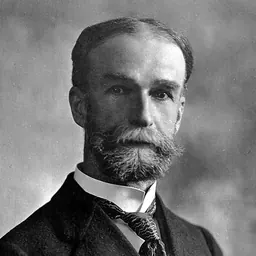
Lived 1898 – 1941 (aged 43). Rudolph Schoenheimer was an American biochemist, university teacher and physician, known for Isotope.
Rudolf Schoenheimer (May 10, 1898 – September 11, 1941) was a German-American biochemist who developed the technique of isotope labelling of biomolecules, enabling detailed study of metabolism. which led to him in 1941 committing suicide using sodium cyanide. He had been honoured with the request to give the Dunham Lecture at Harvard before his death. It was read for him following his death. He was the son of Gertrude Edel and Hugo Schoenheimer, who was a physician. He was Jewish, however his family converted to Christianity. During this time, he began his research and studies on the issue of atherosclerosis. There he worked as an assistant professor.
Early work: 1924-1933 In 1926, while at the University of Leipzig, Schoenheimer developed a method of synthesising peptides. A suitable method was needed, which involved an amino blocking group being removed by a nonhydrolyptic process. It was assumed also that there would only small chemical changes were necessary when modifying these compounds to suit specific needs. Schoenheimer worked alongside David Rittenburg and later Konrad Bloch. Schoenheimer and his colleagues began their research by conducting experiments with the use of deuterium. Deuterium, which is a stable isotope of hydrogen, was discovered by physical chemist Harold Urey in 1932. One of the methods used in the experiment involved heavy water administered into animals in order to analyse the deuterium present in the different constituents of the body. These molecules go through a process of replacement and interchange in the body tissue, as well as other transformations and fundamental chemical reactions. The methods and techniques used by Schoenheimer also provided a means to measure quantities of substances within the body prior to the advent of the technologies and software for dynamic modeling. In later years, with greater advancements in science and technology, including the advent of radioactive isotopes, greater information on cholesterol feedback was discovered.
Don’t just read it —
keep it.
Full-length biographies made to live with: read them, listen on the way to work, watch them tonight.
- E-book
- Audio
- Video
Instant download · yours to keep · every purchase keeps this site free
Important facts
People in Rudolph Schoenheimer's life
Named in this biography and alive at the same time

Related people
Same field, nearest in time



Contemporaries
People whose lives overlapped Rudolph Schoenheimer's



Frequently asked questions
Who was Rudolph Schoenheimer?
German-American biochemist (1898-1941)
When was Rudolph Schoenheimer born?
Rudolph Schoenheimer was born on 10 May 1898 in Berlin.
When did Rudolph Schoenheimer die?
Rudolph Schoenheimer died on 11 September 1941 in New York City.
What was Rudolph Schoenheimer's occupation?
Rudolph Schoenheimer was a biochemist, university teacher and physician.
What was Rudolph Schoenheimer known for?
Rudolph Schoenheimer was known for Isotope.
What nationality was Rudolph Schoenheimer?
Rudolph Schoenheimer was American.
Sources & further reading
· Wikipedia: Rudolph Schoenheimer
· DBpedia: Rudolph Schoenheimer
Cite this page
APA: Biography.guide. (2026). Rudolph Schoenheimer. https://biography.guide/rudolph-schoenheimer/
MLA: "Rudolph Schoenheimer." Biography.guide, https://biography.guide/rudolph-schoenheimer/.
Chicago: "Rudolph Schoenheimer." Biography.guide. https://biography.guide/rudolph-schoenheimer/.
Data last updated: 2026-09-20 · Spot an error? Report a correction.
Page generated 2026-09-27 05:24 UTC