
Rudolf Spanner
German physician, anatomist, and pathologist
About Rudolf Spanner
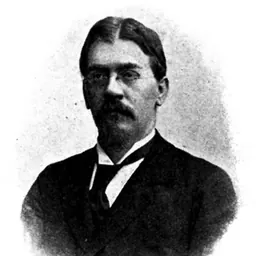
Lived 1895 – 1960 (aged 65). Rudolf Spanner was a German military physician, university teacher and anatomist.
A memorial tablet in Gdańsk, Poland, chronicling Rudolph Spanner's alleged experiments. Rudolf Spanner (born 17 April 1895 in Metternich bei Koblenz; died 31 August 1960) was Director of the Danzig Anatomical Institute during World War II and Nazi Party member (party membership ID 2733605). During the Second World War, Spanner used human corpses in the creation of anatomical models for the institute, which after a soap-like byproduct from the model-creation process was presented in the Nuremberg trials as soap made from victims of the Holocaust, has led to numerous accusations against Spanner of crimes against humanity.
Production of human soap
Historian Joachim Neander states that the rumors which allege that the Nazis produced soap from the bodies of Jews who they murdered in their concentration camps, long-since thoroughly debunked, are still widely believed, and exploited by Holocaust deniers. He however goes on to say that even scholars who reject the aforementioned claims that the Germans made soap from human fat and mass-produced it are sometimes still convinced that the Germans attempted "experimental" soap production on a smaller scale in Danzig and that this claim is still repeated as if a firm fact in several remembrance contexts. He, and the Polish historians Monika Tomkiewicz, who works in the investigative department of the Institute of National Remembrance (IPN) in Gdańsk, and Piotr Semków, formerly also an employee of the IPN, later a lecturer at the Naval Academy in Gdynia, have thoroughly investigated the claims around the Danzig Anatomical Institute by Spanner and have all concluded the Holocaust-related soap-making claims surrounding it to also be myths, particularly cemented into Polish consciousness by Zofia Nałkowska's 1946 book Medaliony, which was mandatory reading in Poland until 1990, was widely distributed in the Eastern Bloc, and is still popular today. They all alleged that such secondary sources have played a far larger role of spreading information about the claim than scholarly research.
According to both Neander, and Tomkiewicz and Semków, "soap", made from human cadavers, did indeed come into existence at the Danzig institute, but that this was not related to the alleged Holocaust-related crimes of "harvesting" Jews or Poles for soap-making purposes, since the connection between "the Holocaust" on the one side and the "Danzig soap" on the other exists only by way of the confirmed false rumors of "concentration camp soap" which circulated during the war. The idea that the Danzig Anatomical Institute, and Dr. Spanners work therein, was related to the Holocaust originally stemmed from the findings of bodies and bone maceration processes in the creation of anatomical models in a small brick building on the premise of the anatomical institute. This, and the soapy grease created for injection into the models' flexible joints, and 2006, respectively, but his and Tomkiewicz research concluded but that the soapy grease presented at the trials (claimed to be "unfinished soap" but discontinued the criminal investigation of this due to lacking grounds to claim that Spanner had incited killings in order to obtain corpses for the institute. it was noted by Tomkiewicz and Semków that Spanner had previously done research on kaolin injections into cadavers, meaning that the kaolin found in the soap could have come from the cadaver itself, rather than as later additive. After being dismissed by intervention from the British occupation authorities he was declared "clean" by the denazification program in 1948, officially exonerated, and resumed his academic career, becoming director of the Institute of Anatomy in Cologne in 1957 and editor of the esteemed Werner Spalteholz anatomical atlas, before dying in 1960.
Neander concludes that no research or experiments on soap-making were conducted in Danzig, that corpses which were delivered to be boiled and turned into anatomical models were all the corpses of Germans who had not been killed in order to "harvest" their bodies and that the only soap created was a byproduct of this. He also concludes that what the IPN called the "chemical substance which was essentially soap", obtained by human fat, was used for laboratory cleaning purposes towards the end of the war, with Spanner, as head of the institute, bearing responsibility for this, but that such handling of dead bodies amounted to a misdemeanor as opposed to any criminal behavior, let alone a crime against humanity or involvement in any genocidal activities, something which is today officially acknowledged in Poland.
Don’t just read it —
keep it.
Full-length biographies made to live with: read them, listen on the way to work, watch them tonight.
- E-book
- Audio
- Video
Instant download · yours to keep · every purchase keeps this site free
Important facts
People in Rudolf Spanner's life
Named in this biography and alive at the same time
Related people
Same field, nearest in time


Contemporaries
People whose lives overlapped Rudolf Spanner's

Frequently asked questions
Who was Rudolf Spanner?
German physician, anatomist, and pathologist (1895–1960)
When was Rudolf Spanner born?
Rudolf Spanner was born on 17 April 1895 in Koblenz-Metternich.
When did Rudolf Spanner die?
Rudolf Spanner died on 31 August 1960 in Cologne.
What was Rudolf Spanner's occupation?
Rudolf Spanner was a military physician, university teacher and anatomist.
What nationality was Rudolf Spanner?
Rudolf Spanner was German.
Sources & further reading
Cite this page
APA: Biography.guide. (2026). Rudolf Spanner. https://biography.guide/rudolf-spanner/
MLA: "Rudolf Spanner." Biography.guide, https://biography.guide/rudolf-spanner/.
Chicago: "Rudolf Spanner." Biography.guide. https://biography.guide/rudolf-spanner/.
Data last updated: 2026-09-20 · Spot an error? Report a correction.
Page generated 2026-09-27 05:03 UTC