
About Rudolf Huch
Lived 1862 – 1943 (aged 80). Rudolf Huch was a poet lawyer, writer, lawyer and jurist.
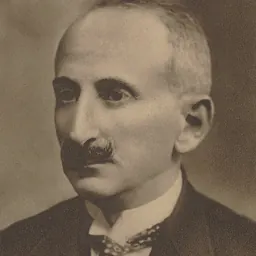
Rudolf Huch (28 February 1862 – 13 January 1943) was a Brazilian- born German jurist, essayist and author, primarily of satirical novels and short stories. He also produced a number of educational novels. A theme to which he returned repeatedly in his writing was upward social mobility from the ranks of the provincial petty bourgeoisie. He is sometimes identified in sources by his pseudonym as "A. Schuster".
Life Provenance and early years Rudolf Huch was born in Porto Alegre, but spent most of his childhood and indeed of his adult life in and around the Braunschweig region of Germany. At the time of his birth his father, Richard Huch (1830–1887) was running a wholesale importing business in Brazil which he had acquired following the death of an older brother. However, when Rudolf was approximately eighteen months old the family returned to Germany, and it was here, in Braunschweig, that the child grew up and attended school, while his father pursued his business career, trading in "colonial goods" from, in particular, Brazil.
The boy was enrolled at the prestigious Martino-Katharineum (secondary school) in the early summer of 1871. As teenagers, at the recommendation of the family doctor, Rudolf and Ricarda Huch took lengthy annual holidays at the spa resort of Bad Suderode in the hill country between Braunschweig and Leipzig. From his later writing it is clear that Rudolf Huch would always look back on those childhood vacations in the Harz "paradise" with particular affection.
Lawyer Huch remained in Braunschweig for some months, employed as a "Gerichtsassessor" (loosely, "trainee judge"), but the bankruptcy of his father's business ruled out any immediate possibility of a career in the government justice service.
Writer During the 1890s Huch seems to have found work as a small town lawyer less than fulfilling, and he embarked on a parallel career as a writer. His work betrays an underlying pessimism and melancholy, possibly driven by a belief that as a writer he would always be overshadowed by more confident relatives who would leave their own larger footprints on literary history. His first published work involved literary criticism. He found wider prominence with his aphoristic volume "Mehr Goethe" ("More Goethe"), published in 1899, which he described as "a high spirited cavalry charge against the diverse literary nonsenses of modern life".... einem "temperamentvollen Husarenritt gegen allerlei Unfug modernen Literaturlebens". His mostly satirical narratives, critical of contemporary society, including a number of autobiographical pieces, found a wide readership during the first part of the twentieth century. The book is a brutal satirical assault against the social customs he had observed among the townsfolk of Braunschweig and Wolfenbüttel. During this first phase of his creativity Huch also wrote a number of stage plays. Most of these were comedies. An early exception was "Menschenfreund" ("Philanthropist"), a stage tragedy published in 1895.
Of the thirty or so mostly satirical novels that Rudolf Huch produced two, in particular, stand out for the way in which they retained the support of critics and readers, even after the author's death. These were both, in their ways, sociological studies, "Die Beiden Ritterhelm" ("Both the Knights' Helmets") and "Die Familie Hellmann" ("The Hellmann Family"), published in 1908/09 and 1909.
The final decade of Rudolf Huch's life, between 1933 and 1943, was lived under National Socialism. It has done nothing for Huch's posthumous reputation that after they came to power the National Socialists exploited the social criticism of the petty bourgeoisie the ooze from the pages of his novels to denigrate their political adversaries and infer endorsement of their state-mandated antisemitism. It is, however, hard to see Huch's books as inherently antisemitic, given the popularity they enjoyed within the German-Jewish community during the years of the republic. As political polarisation spilled onto the streets and the Reichstag became deadlocked, Huch was nevertheless one of those who moved towards Hitlerism. In 1933 he was accepted into the Prussian Academy of Arts (Poetry section) shortly after 40 members considered politically undesirable had been resigned from the institution. In October 1933 Huch's was one of 87 signatures on the infamous proclamation of loyalty to Adolf Hitler from German writers, which appeared in the Vossische Zeitung. A number of those who signed, when later they were moved to understand in greater depth the sheer inhumanity of Hitler's vision for Germany, recanted with varying levels of openness and conviction. Rudolf Huch (who was 71 when the declaration was published) did not. In 1934 he published the 76 page propaganda booklet "Israel und wir". Although there is no record of further public endorsement of the government on this level by Huch, his novels continued to be popular with readers through the twelve Hitler years. After he died at the start of 1943 work began on a tribute publication to be entitled "im Einvernehmen mit dem Dichter". Nevertheless, despite the abundance of his own published output, it never reached before two volumes, and after the war ended two years later work on it ceased. With the western two thirds of Germany divided and under military occupation after 1945, three of Huch's later works, published during the twelve Hitler years, were placed on the "Liste der auszusondernden Literatur" (loosely, "List of Literature to be weeded out") in the Soviet occupation zone.
Don’t just read it —
keep it.
Full-length biographies made to live with: read them, listen on the way to work, watch them tonight.
- E-book
- Audio
- Video
Instant download · yours to keep · every purchase keeps this site free
Important facts
People in Rudolf Huch's life
Named in this biography and alive at the same time

Related people
Same field, nearest in time




Contemporaries
People whose lives overlapped Rudolf Huch's




Frequently asked questions
Who was Rudolf Huch?
German author (1862–1943)
When was Rudolf Huch born?
Rudolf Huch was born on 28 February 1862 in Porto Alegre.
When did Rudolf Huch die?
Rudolf Huch died on 13 January 1943 in Bad Harzburg.
What was Rudolf Huch's occupation?
Rudolf Huch was a poet lawyer, writer, lawyer and jurist.
What nationality was Rudolf Huch?
Rudolf Huch's recorded nationality: German Reich.
Sources & further reading
Cite this page
APA: Biography.guide. (2026). Rudolf Huch. https://biography.guide/rudolf-huch/
MLA: "Rudolf Huch." Biography.guide, https://biography.guide/rudolf-huch/.
Chicago: "Rudolf Huch." Biography.guide. https://biography.guide/rudolf-huch/.
Data last updated: 2026-09-22 · Spot an error? Report a correction.
Page generated 2026-09-27 05:33 UTC