
About Ricarda Huch
Lived 1864 – 1947 (aged 83). Ricarda Huch was a German and Swiss writer, poet, librarian, historian, novelist and playwright.
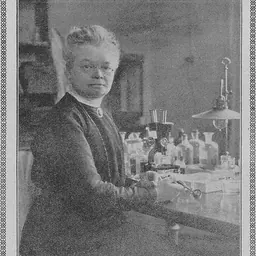
Ricarda Huch (; 18 July 1864 – 17 November 1947) was a pioneering German intellectual. Trained as a historian, and the author of many works of European history, she also wrote novels, poems, and a play. Asteroid 879 Ricarda is named in her honour.
Early life and education Huch was born in Braunschweig to Richard Huch (1830–1887) and Emilie, born Hähn (1842–1883), in 1864. The Huchs were a well off merchant family. Her brother Rudolf and cousins Friedrich and Felix were writers. While living with her family in Braunschweig, she corresponded with Ferdinand Tönnies.
Because German universities did not allow women to graduate, Huch left Braunschweig in 1887 and moved to Zurich to take the entrance examinations for the University of Zurich. She matriculated into a PhD program in history and received her doctorate in 1892 for a dissertation on "The neutrality of the Confederation during the Spanish War of Succession" (Die Neutralität der Eidgenossenschaft während des spanischen Erbfolgekrieges). While at the University of Zurich, she established lasting friendships with Marie Baum, Hedwig Bleuler-Waser and Marianne Plehn, who like her had come to Zurich to study.
After receiving her doctorate she found employment at the Zurich public library. In 1896 she taught at a girls' school in Bremen. Huch lamented the aspirituality and technocentrism of her own day and expressed the hope that after the rejection of Romanticism in the first half of the 19th century the intellectual achievements of Romanticism would be regenerated. Huch emphasised the role of women in early German Romanticism, pointing to the writings of Caroline Schelling, Dorothea von Schlegel, Karoline von Günderrode, Rahel Levin, Bettina von Arnim and Dorothea von Rodde-Schlözer.
Huch's historical research was challenged by her contemporaries. While her meticulous research was admired and her breadth of vision was honoured, she was criticised for poetic imagination. In her days historians would interpret the meaning of historic documents, while Huch focused on conjuring up images by describing contents, symbolism, colour and moods to evoke the world view of a historic period. Her contemporary Toni Wolff identified Huch as a medial historian who had the ability to “evoke historical situations and persons”. This caused bewilderment among her contemporaries, who were used to thinking of history as big events, military campaigns and great men. Instead Huch presented the historic facts and drew character studies of the individuals, with their failures and triumphs. In her historic studies she also charted the lives of ordinary people, such as monks, society ladies and children.
Huch and her husband moved to Trieste and then to Munich. In early 1900 the couple divorced, though Huch remained close to Ceconi. In the same year Huch married her cousin Richard Huch, who had divorced from her sister in 1907.
In 1916 she moved to Switzerland, but returned to Munich in 1918 just before the German Empire collapsed. During the war she had also published Natur und Geist in 1914 and Luthers Glaube in 1916. Just after the war she published Der Sinn der heiligen Schrift in 1919.
Publications during the Weimar Republic In the early years of the Weimarer Republik Huch published Entpersönlichung in 1921. In 1924 she published a study on the anarchist Michael Bakunin entitled Michael Bakunin und die Anarchie. Her study of the Prussian reformer Heinrich Friedrich Karl vom und zum Stein entitled Stein was published 1925. She was the first woman that was invited to join the Preußische Akademie der Künste (Prussian Academy of Arts). In 1930 her treatise on the German revolutions of 1848–49 was published under the title Alte und neue Götter (1848). Die Revolution des 19. Jahrhunderts in Deutschland. Huch responded, saying that it is natural for a German to feel German, but that she condemned the Nazis' strong-arm tactics, brutal centralization and intimidation of those with other opinions. Huch called the Nazis' tactics un-German, defended her right to freedom of expression and noted that she was not in agreement with the Nazi doctrine.
Huch remained in Berlin and researched early German history, starting with Charles the Great. In 1934 she published the first volume of her trilogy on medieval Germany social history, focusing on various medieval political, social and religious institutions. Römisches Reich Deutscher Nation was followed by Das Zeitalter der Glaubensspaltung in 1937. Huch idealized medieval German culture, and passed comment on leadership, justice and Jews in Germany. Her views were an open challenge to the Nazi doctrine on Germanic culture and its roots. Her son-in-law Böhm was forced out of the public service by the Nazis. In 1936 Huch together with her daughter, Böhm and their son, moved to Jena. Böhm was able to secure a teaching contract with Jena University, but in 1937 he and Huch were accused of sedition because the two had defended the intellectual capacities of Jews at a dinner party. While neither of the two were convicted, Böhm could not maintain his teaching position. During World War II Böhm moved to Freiburg and later to Frankfurt, while Huch and her daughter remained in Jena. and settled in Frankfurt. She began work on a book celebrating members of the German resistance to Nazism.
Huch was the honorary president of the 1947 German Writers' Congress in Frankfurt. She died at the age of 83 in November 1947, her book on the German resistance remained unfinished.
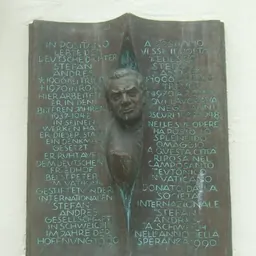
Huch was in her 70s when the Nazi seized power, and unlike authors such as Thomas Mann who first fled into "inner emigration" and then went into exile, she took a stand against the Nazi doctrine from the outset. Huch continued to live in Germany, made no attempt to conceal her convictions and published in Germany through Swiss publishers. In 1934 Mann wrote of his intellectual struggle against the powers that be "Getting through it and maintaining one's own personal dignity and liberty is everything." When Alfred Andersch assessed German literary output during the Nazi reign in 1947 he categorised Huch alongside Gerhart Hauptmann, Rudolf Alexander Schröder, Hans Carossa and Gertrud von Le Fort as older and established poets who had stayed in Germany and upheld a tradition of "bourgeois classicism". Andersch counted the poets Stefan Andres, Horst Lange, Hans Leip, Martin Raschke and Eugen Gottlob Winkler among the younger generation who stayed in Germany and contributed to the resistance against Nazi authorities with their literary work. After World War II Thomas Mann honoured Huch as "the first lady of German letters". Mein Tagebuch Weimar 1946 Urphänomene Zürich 1946 Der falsche Großvater Insel, Wiesbaden 1947 Der lautlose Aufstand. Bericht über die Widerstandsbewegung des deutschen Volkes 1933 - 1945 Edited by Günther Weisenborn, Rowohlt Verlag, Hamburg 1953
Don’t just read it —
keep it.
Full-length biographies made to live with: read them, listen on the way to work, watch them tonight.
- E-book
- Audio
- Video
Instant download · yours to keep · every purchase keeps this site free
Important facts
People in Ricarda Huch's life
Named in this biography and alive at the same time

Related people
Same field, nearest in time


Contemporaries
People whose lives overlapped Ricarda Huch's





Frequently asked questions
Who was Ricarda Huch?
German writer (1864–1947)
When was Ricarda Huch born?
Ricarda Huch was born on 18 July 1864 in Brunswick.
When did Ricarda Huch die?
Ricarda Huch died on 17 November 1947 in Schönberg.
What was Ricarda Huch's occupation?
Ricarda Huch was a writer, poet, librarian, historian, novelist and playwright.
What nationality was Ricarda Huch?
Ricarda Huch was German and Swiss.
Sources & further reading
Cite this page
APA: Biography.guide. (2026). Ricarda Huch. https://biography.guide/ricarda-huch/
MLA: "Ricarda Huch." Biography.guide, https://biography.guide/ricarda-huch/.
Chicago: "Ricarda Huch." Biography.guide. https://biography.guide/ricarda-huch/.
Data last updated: 2026-09-20 · Spot an error? Report a correction.
Page generated 2026-09-27 05:33 UTC