
About Sammy Gronemann
Lived 1875 – 1952 (aged 76). Sammy Gronemann was a German and Israeli poet lawyer, writer, playwright, jurist and lawyer.
Sammy (Samuel) Gronemann (21 March 1875 – 6 March 1952) was a German-Jewish lawyer, Zionist official, satirist, and playwright. Born in Strasburg, West Prussia (today Brodnica, Poland), the son of the chief rabbi of Hanover, he was trained first in Talmud and then in law, and practiced for years as an attorney in Berlin.
Gronemann was a leading contributor to the satirical Zionist magazine Der Schlemiel. He drew on his First World War service among the Jews of Eastern Europe to write the bestselling satirical novel Tohuwabohu (1920).
After fleeing Nazi Germany for Paris in 1933 and immigrating to Mandatory Palestine in 1936, he settled in Tel Aviv and turned to writing for the Hebrew stage. His comedy Der Weise und der Narr, in Nathan Alterman's translation, became King Solomon and Shalmai the Cobbler, described as one of the most successful plays in the history of the Israeli theater.
Early life and family
Gronemann was born on 21 March 1875 in Strasburg in West Prussia (today Brodnica, Poland), the son of Rabbi Selig Gronemann (1843–1918) and his wife Helene, née Breslau (1849–1924), who came from a Russian-Jewish family.
He spent the following year studying Talmud at the Klaus in Halberstadt, then in 1895 entered Esriel Hildesheimer's Rabbinical Seminary in Berlin.
In 1909 Gronemann co-founded the (Association for the Protection of German Writers) and served as its legal counsel until 1933. The encounter inspired his first and best-known novel, the satirical Tohuwabohu (1920), which sets the perspectives of a German Jew and an Eastern European Jew against one another. In his memoir-novel Hawdoloh und Zapfenstreich (1924) he portrayed Carlebach warmly as "a brilliant schoolmaster" who stood among his pupils "not like a stern preceptor, but like an older friend and comrade." He also recounted how Carlebach barred the singing of "Hatikvah" on school premises after a Hanukkah celebration, only to rise a year later and lead the assembly in the anthem himself, a turnabout Gronemann recalled with evident approval. and was turned into a celebrated musical at the Cameri Theatre in 1964, with songs by Alterman set to music by Sasha Argov. Kühne calls the work "the first milestone of comedy-drama in modern Hebrew theater", and it became one of the most successful plays in the history of the Israeli stage, though Gronemann himself, in Kühne's words, "disappeared almost completely behind the name of his translator". and his final work, The Queen of Sheba (Cameri, 1951), a sequel to King Solomon translated by Haim Hefer that recast the comic contrast as one between European and Oriental Jews.
His blend of Jewish and German comic traditions earned him the nicknames "the Shalom Aleichem of the Jeckes" and "the Aristophanes of the Zionist movement". and a 2024 special issue of the journal Naharaim was devoted to his life and work.
Works Prose Tohuwabohu (novel, 1920). English translation: Utter Chaos, trans. Penny Milbouer (Indiana University Press, 2016) Hawdoloh und Zapfenstreich: Erinnerungen an die ostjüdische Etappe 1916–18 (memoir-novel, 1924) Schalet: Beiträge zur Philosophie des „Wenn schon" (essays, 1927)
Plays Hamans Flucht ("Haman's Escape", published 1926) Jakob und Christian (1937) Der Weise und der Narr ("King Solomon and Shalmai the Cobbler", 1942) Der Prozess um des Esels Schatten ("The Lawsuit over the Donkey's Shadow", 1945) Heinrich Heine und sein Onkel ("The Heine Family", 1947) Die Königin von Saba ("The Queen of Sheba", 1951)
Memoirs Zikhronot shel Yeke (Hebrew, translated from German by Dov Sadan, Am Oved, 1946) Erinnerungen (Berlin: Philo, 2002) Erinnerungen an meine Jahre in Berlin (Berlin: Philo, 2004)
Don’t just read it —
keep it.
Full-length biographies made to live with: read them, listen on the way to work, watch them tonight.
- E-book
- Audio
- Video
Instant download · yours to keep · every purchase keeps this site free
Important facts
People in Sammy Gronemann's life
Named in this biography and alive at the same time
Related people
Same field, nearest in time
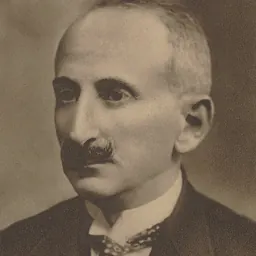



Contemporaries
People whose lives overlapped Sammy Gronemann's

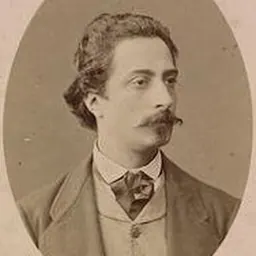


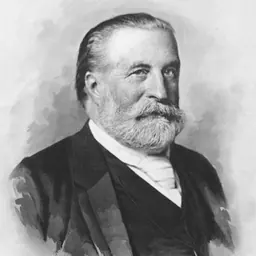
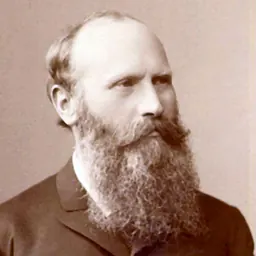
Frequently asked questions
Who was Sammy Gronemann?
German poet lawyer and writer (1875-1952)
When was Sammy Gronemann born?
Sammy Gronemann was born on 21 March 1875 in Brodnica.
When did Sammy Gronemann die?
Sammy Gronemann died on 6 March 1952 in Tel Aviv.
What was Sammy Gronemann's occupation?
Sammy Gronemann was a poet lawyer, writer, playwright, jurist and lawyer.
What nationality was Sammy Gronemann?
Sammy Gronemann was German and Israeli.
Sources & further reading
Cite this page
APA: Biography.guide. (2026). Sammy Gronemann. https://biography.guide/sammy-gronemann/
MLA: "Sammy Gronemann." Biography.guide, https://biography.guide/sammy-gronemann/.
Chicago: "Sammy Gronemann." Biography.guide. https://biography.guide/sammy-gronemann/.
Data last updated: 2026-09-20 · Spot an error? Report a correction.
Page generated 2026-09-27 05:27 UTC