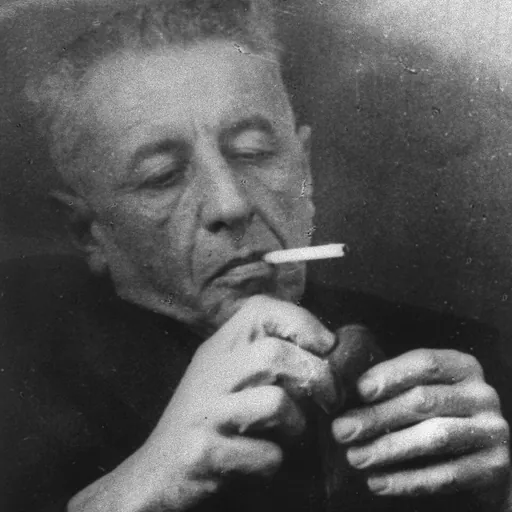
About Nathan Alterman
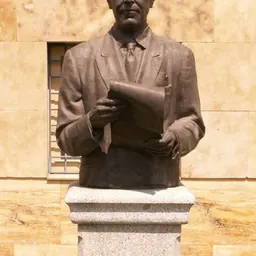
Lived 1910 – 1970 (aged 59). Nathan Alterman was a Russian and Israeli poet, writer, journalist, playwright, translator and songwriter.
Nathan Alterman (; August 14, 1910 – March 28, 1970) was a key figure in the Labor Zionist movement, though he held complex views on party leadership. His poetry is recognized for its sophisticated use of symbolic structure. He played a significant role in shaping public discourse, although he never held elected office.
Biography
Early life and education Nathan Alterman was born in Warsaw on August 14, 1910, when the city formed part of Congress Poland within the Russian Empire. Both of his parents were teachers; his father, Yitzhak, helped found Hebrew-language kindergarten education in Warsaw, and Alterman was given a Hebrew education from early childhood. The family left Warsaw at the outbreak of World War I and lived in Moscow and then Kishinev before settling in Tel Aviv in 1925, when Alterman was fifteen.
In Tel Aviv he attended the Herzliya Hebrew Gymnasium. He left for France in 1929, spending a year at the University of Paris and two further years at an agricultural college near Nancy, and qualified as an agricultural engineer in 1932; his first poem had appeared in print the year before. He is credited with introducing the marmande tomato to the country, where it remained a widely grown variety into the 1960s.
His decisive literary attachment in these years was to Avraham Shlonsky, a decade his senior, who had campaigned since the mid-1920s against the didactic and biblically inflected rhetoric of the preceding generation, a stance that set him against Hayim Nahman Bialik and the Hebrew literary establishment. When Shlonsky left the magazine Ketuvim in 1933 to found Turim ("Columns"), Alterman and Leah Goldberg followed him.
Literary career
Beginnings, 1933–1943
Alterman began writing for the stage soon after abandoning agronomy, supplying songs from 1933 to the Tel Aviv vaudeville theatre The Broom . Apart from his translations of European plays, most of his early theatrical work consisted of light musicals and cabaret sketches, a number of which made affectionate fun of the accents and manners of the recently arrived Yekke immigrants from Germany.
The war brought that turn about. On November 27, 1942, four days after the Jewish Agency publicly confirmed the systematic murder of European Jewry, Alterman published "Of All the Peoples" in Haaretz. Addressed to God, the poem inverts the liturgical formula of Jewish chosenness into an accusation.
Poetry Alterman's first collection, Kokhavim ba-Ḥuts (, "Stars Outside"), appeared in 1938 and established him as a major figure in modern Hebrew literature. Formed by the symbolist currents of French and Russian poetry and by the modernist circle around Shlonsky, he became the leading imagist poet of his generation; his idiom followed the rhythms of spoken Hebrew, and his verse constructed a private mythology poised between a primeval, elemental landscape and a mechanised, decadent and alluring city.
The best known of these poems is The Silver Platter (, Magash ha-Kesef), published in Davar in December 1947, weeks after fighting broke out following the United Nations partition vote. Prompted by Chaim Weizmann's remark that a Jewish state would not be handed to the Jewish people on a silver platter, it describes a young man and woman who approach a waiting nation and identify themselves as the platter on which the state has been delivered. The poem was canonised almost at once and has since become a fixture of Israeli Memorial Day ceremonies. In 1943 he also wrote the maqama The Swedish Tongue, praising Sweden's reception of Jewish refugees from Denmark.
Many of Alterman's poems were set to music and entered the popular Israeli songbook, among them "Song of the Valley" , a pioneer's lullaby typical of the Land of Israel genre of the 1930s and 1940s. and in the months that followed he became one of the founders, and the leading literary voice, of the Movement for Greater Israel, which called on the government to retain the captured territories and to settle them. He had been recruited to it by the writer Moshe Shamir. A second Tchernichovsky Prize followed in 1967. and the Israel Prize for literature in 1968. Streets are named after him in Tel Aviv, Ra'anana and Hod HaSharon, among other Israeli cities, and schools in Tel Aviv and Netanya carry his name. A plaque commemorating Alterman, Rachel Marcus and Tirtza Atar marks the family's home at 30 Nordau Boulevard in Tel Aviv, where they lived from 1955 until his death.
Books (Hebrew) Poetry Stars Outside . Yachdav Publishing, 1938; Machbarot Lesifrut Publishing, 1945; Hakibbutz Hameuchad Publishing House, 1995 Joy of the Poor . Machbarot Lesifrut Publishing, 1941 Plague Poems . Machbarot Lesifrut Publishing, 1944 The Seventh Column [vol. 1] . Am Oved Publishing, 1948; New editions: Hakibbutz Hameuchad Publishing House, 2003; 2004 The Seventh Column [vol. 2] . Davar, 1954 City of the Dove . Machbarot Lesifrut Publishing, 1957 Poems of Ten Brothers . Machbarot Lesifrut Publishing, 1961 Summer Celebration . Machbarot Lesifrut, 1965 Pythagoras' Trial . Machbarot Lesifrut, 1965 Moments . Hakibbutz Hameuchad Publishing House, 1974 The Silver Platter: Selected Poems . Ministry of Defense, 1974 The Front Stand . Hakibbutz Hameuchad Publishing House, Mosad Alterman, 1980 From: Stars Outside, Joy of the Poor, Plague Poems, City of the Dove . Hakibbutz Hameuchad Publishing House, 1980 Poems 1931-1935 . Hakibbutz Hameuchad Publishing House, 1984 In Praise of Frivolity . Hakibbutz Hameuchad Publishing House, 1997 Poems of Yore . Hakibbutz Hameuchad Publishing House, 1999 The Seventh Column : Israeli Art from the Benno Kalev's Collection . Hakibbutz Hameuchad Publishing House, 2000
Plays Kinneret, Kinneret . Hakibbutz Hameuchad Publishing House, 1962 Ghosts' Inn . Amikam, 1963 Esther the Queen . Hakibbutz Hameuchad Publishing House, 1966 Last Days of Ur . Edited with Introduction and Notes by Dwora Gilula, Hakibbutz Hameuchad Publishing House, 1990
Children-Picture Books The Tenth Chick . Machbarot Lesifrut Publishing, 1943; new editions - Hakibbutz Hameuchad Publishing House, 1973, 2005 The Singing Book of Friendship . Machbarot Lesifrut, 1958 Ardel the Wonder . Machbarot Lesifrut Publishing, 1962 The Puzzle Book . Hakibbutz Hameuchad Publishing House, 1971 To Children . Hakibbutz Hameuchad Publishing House, 1972 Og King of Bashan . Hakibbutz Hameuchad Publishing House, 1975, new edition 2011 Rhymes for children . Hakibbutz Hameuchad Publishing House, 1976 new edition 2002 What a Wonder . Hakibbutz Hameuchad Publishing House, 1983 A Tale of a Small Chirik . Hakibbutz Hameuchad Publishing House, 2003 A Tale of a Final Pe . Hakibbutz Hameuchad Publishing House, 2000 It All Happened at Hannuka . Hakibbutz Hameuchad Publishing House, 2001
Songs Love Poems . Hakibbutz Hameuchad Publishing House, 1998 Tel-Aviv Serenade . Hakibbutz Hameuchad Publishing House, 1999 You Should Ring Twice . Hakibbutz Hameuchad Publishing House, Israel Broadcasting Authority, 2002
Satire The Final Mask . Maariv, 1968
Non-Fiction Breaking the Circle . Hakibbutz Hameuchad Publishing House, 1971 Writings in Four Volumes . Hakibbutz Hameuchad Publishing House, 1962 The Triangular Thread . Hakibbutz Hameuchad Publishing House, 1971 The Alterman Notebooks [Vol A] . Hakibbutz Hameuchad Publishing House together with Katz Research Institute for Hebrew Literature, Tel-Aviv University, 1977 Little Tel Aviv . Hakibbutz Hameuchad Publishing House, 1979 The Alterman Notebooks [Vol B] . Hakibbutz Hameuchad Publishing House and Mosad Alterman, 1979 The Alterman Notebooks [Vol C] . Hakibbutz Hameuchad Publishing House and Mosad Alterman, 1981 Between the Poet and the Statesman . Hakibbutz Hameuchad Publishing House, 1981, ext. ed. Hakibbutz Hameuchad Publishing House, Mosad Alterman, 1986 The Alterman Notebooks [Vol D] . Hakibbutz Hameuchad Publishing House, 1986 Both Roads . Hakibbutz Hameuchad Publishing House, Mosad Alterman, 1989 Essays and Articles . Hakibbutz Hameuchad Publishing House, 2019
Don’t just read it —
keep it.
Full-length biographies made to live with: read them, listen on the way to work, watch them tonight.
- E-book
- Audio
- Video
Instant download · yours to keep · every purchase keeps this site free
Important facts
People in Nathan Alterman's life
Named in this biography and alive at the same time
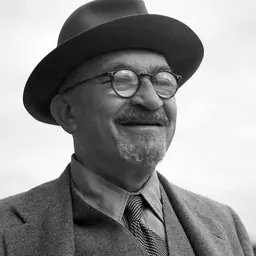
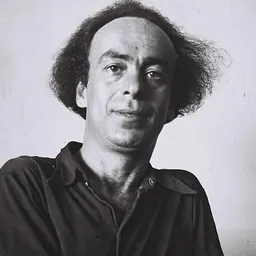
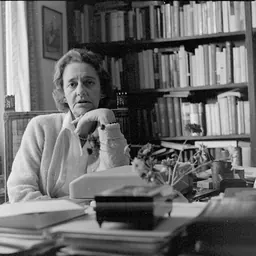



Related people
Same field, nearest in time


Contemporaries
People whose lives overlapped Nathan Alterman's






Frequently asked questions
Who was Nathan Alterman?
Israeli poet (1910–1970)
When was Nathan Alterman born?
Nathan Alterman was born on 14 August 1910 in Warsaw.
When did Nathan Alterman die?
Nathan Alterman died on 28 March 1970 in Tel Aviv.
What was Nathan Alterman's occupation?
Nathan Alterman was a poet, writer, journalist, playwright, translator and songwriter.
What nationality was Nathan Alterman?
Nathan Alterman was Russian and Israeli.
Sources & further reading
Cite this page
APA: Biography.guide. (2026). Nathan Alterman. https://biography.guide/nathan-alterman/
MLA: "Nathan Alterman." Biography.guide, https://biography.guide/nathan-alterman/.
Chicago: "Nathan Alterman." Biography.guide. https://biography.guide/nathan-alterman/.
Data last updated: 2026-09-23 · Spot an error? Report a correction.
Portrait: Wikimedia Commons · author & licence
Page generated 2026-09-27 05:06 UTC