
About Rudolf Diesel
Lived 1858 – 1913 (aged 55). Rudolf Diesel was a German inventor, entrepreneur, engineer, esperantist and entrepreneurship, known for Diesel engine.
Career One of Diesel's professors in Munich was the engineer and businessman Carl von Linde. Diesel was unable to graduate with his class in July 1879 because he fell ill with typhoid fever. While waiting for the next examination date, he gained practical engineering experience at the Sulzer Brothers Machine Works in Winterthur, Switzerland. Diesel graduated in January 1880 with highest academic honours and returned to Paris, where he assisted Linde with the design and construction of a modern refrigeration and ice plant. Diesel became the director of the plant a year afterwards.
In 1883, Diesel married Martha Flasche, and continued to work for Linde, gaining numerous patents in both Germany and France.
In early 1890, Diesel moved to Berlin with his wife and children, Rudolf Jr, Heddy, and Eugen, to assume management of Linde's corporate research and development department and to join several other corporate boards. Since he was not allowed to use for his own purposes the patents he developed while an employee of Linde's, he expanded beyond the field of refrigeration. He first worked with steam, his research into thermal efficiency and fuel efficiency leading him to build a steam engine using ammonia vapor. During tests, however, the engine exploded and almost killed him. His research into high-compression cylinder pressures tested the strength of iron and steel cylinder heads. One exploded during a test run. He spent many months in a hospital, followed by health and eyesight problems. It was during this year that Diesel began conceptualising the idea of a diesel engine.
Ever since attending lectures of von Linde, Diesel worked on designing an internal combustion engine that could approach the maximum theoretical thermal efficiency of the Carnot cycle. In 1892, after working on this idea for several years, he considered his theory to be completed. In the same year, Diesel was given the German patent DRP 67207. In 1893, he published a treatise entitled Theory and Construction of a Rational Heat-engine to Replace the Steam Engine and The Combustion Engines Known Today, which he had been working on since early 1892. This treatise formed the basis for his work on and development of the diesel engine. By summer 1893, Diesel had realised that his initial theory was erroneous, leading him to file another patent application for the corrected theory in 1893.
From 1893 to 1897, Heinrich von Buz, director of Maschinenfabrik Augsburg in Augsburg, provided Rudolf Diesel the opportunity to test and develop his ideas.
The first successful diesel engine Motor 250/400 was officially tested in 1897, featuring a 25 horsepower four-stroke, single vertical cylinder compression. Having just revolutionised the engine manufacturing industry, it became an immediate success, with royalties amassing great wealth for Diesel. The engine is currently on display at the German Technical Museum in Munich.
Besides Germany, Diesel obtained patents for his design in other countries, including the United States (1895,1898).
The primary fuel used in Diesel engines today is the eponymous diesel fuel, derived from crude oil. While developing his engine, Diesel tested a wide range of liquid fuels, primarily coal distillates and petroleum products. Diesel also considered using coal dust, and he demonstrated vegetable oil as fuel. In a book titled Diesel Engines for Land and Marine Work, Diesel wrote:
Shortly after Diesel's disappearance, his wife Martha opened a bag that her husband had given to her just before his ill-fated voyage, with directions that it should not be opened until the following week. She discovered 20,000 German marks in cash (US$120,000 today) and financial statements indicating that their bank accounts were virtually empty. In a diary Diesel brought with him on the ship, for the date 29 September 1913, a cross was drawn, possibly indicating death. Five months later, in March 1914, a rumor emerged that Diesel was in Canada and his wife, Martha, seemed to go missing in Germany. Martha ultimately died in Brandenburg on 16 April 1944, at age 85.
There are various theories to explain Diesel's death. Some, such as Diesel's biographers Grosser (1978) have argued that he died by suicide. Another line of thought suggests that he was murdered, given his refusal to grant the German forces the exclusive rights to using his invention; indeed, Diesel had boarded Dresden with the intent of meeting with representatives of the Royal Navy to discuss the possibility of powering British submarines by diesel engine. Another theory is that his apparent death was a ruse staged by the British government to cover his defection to the British cause, and that he then went to Canada, worked for the Vickers shipyard in Montreal and was responsible for a sudden acceleration in its ability to produce a successful Diesel engine for submarines. Given the limited evidence at hand, his disappearance and death remain unsolved.
In 1950, Magokichi Yamaoka, the founder of Yanmar, the diesel engine manufacturer in Japan, visited West Germany and learned that there was no tomb or monument for Diesel. Yamaoka and people associated with Diesel began to make preparations to honour him. In 1957, on the occasion of the 100th anniversary of Diesel's birth and the 60th anniversary of the diesel engine development, Yamaoka dedicated the Rudolf Diesel Memorial Garden (Rudolf-Diesel-Gedächtnishain) in Wittelsbacher Park in Augsburg, Bavaria, where Diesel had undertaken his early technical education and original engine development.
Later development of the Diesel engine
After Diesel's death, his engine underwent much development and became a very important replacement for the steam piston engine.
Diesel engines use a higher compression ratio than gasoline engines, leading to higher pressures during combustion in the engine cylinder and a long expansion stroke. That combination gives Diesel engines high thermal efficiency. The Diesel engine became widespread in applications such as stationary engines, agricultural machines and off-highway machinery in general, submarines, ships, and much later, locomotives, trucks, and in modern automobiles. However, the high compression ratios of the Diesel engine required a heavier construction than a gasoline engine, and so it found limited use in aviation.
Honors and recognition
Diesel was elected an honorary member of the American Society of Mechanical Engineers in 1912.
In 1953, the German Institute for Inventions (Deutsches Institut für Erfindungswesen) created the Rudolf-Diesel-Medaille to recognize inventions and the entrepreneurship.
Since 1955, the VdM diesel ring has been awarded annually by the Association of Motor Journalists to recognize contributions to motor vehicle safety.
Diesel was inducted into the National Inventors Hall of Fame in 1976 and into the Automotive Hall of Fame in 1978.
The asteroid 10093 Diesel in the main asteroid belt, discovered in 1990 by Eric Walter Elst at the European Southern Observatory, was named in his honor.
Don’t just read it —
keep it.
Full-length biographies made to live with: read them, listen on the way to work, watch them tonight.
- E-book
- Audio
- Video
Instant download · yours to keep · every purchase keeps this site free
Important facts
People in Rudolf Diesel's life
Named in this biography and alive at the same time

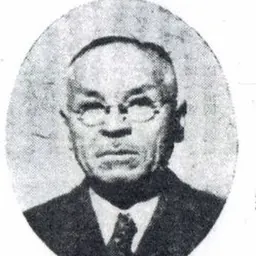
Related people
Same field, nearest in time

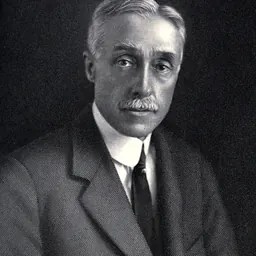
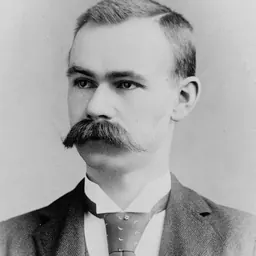

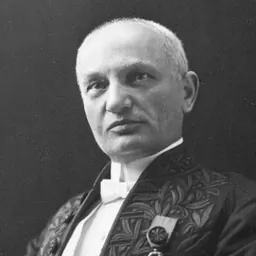
Contemporaries
People whose lives overlapped Rudolf Diesel's


Frequently asked questions
Who was Rudolf Diesel?
German inventor and mechanical engineer (1858–1913)
When was Rudolf Diesel born?
Rudolf Diesel was born on 18 March 1858 in Paris.
When did Rudolf Diesel die?
Rudolf Diesel died on 30 September 1913 in English Channel.
What was Rudolf Diesel's occupation?
Rudolf Diesel was an inventor, entrepreneur, engineer, esperantist and entrepreneurship.
What was Rudolf Diesel known for?
Rudolf Diesel was known for Diesel engine.
What nationality was Rudolf Diesel?
Rudolf Diesel was German.
Sources & further reading
Cite this page
APA: Biography.guide. (2026). Rudolf Diesel. https://biography.guide/rudolf-diesel/
MLA: "Rudolf Diesel." Biography.guide, https://biography.guide/rudolf-diesel/.
Chicago: "Rudolf Diesel." Biography.guide. https://biography.guide/rudolf-diesel/.
Data last updated: 2026-09-22 · Spot an error? Report a correction.
Page generated 2026-09-27 05:32 UTC