
Rudi Gernreich
American fashion designer and gay activist
About Rudi Gernreich
Lived 1922 – 1985 (aged 62). Rudi Gernreich was an American and Austrian designer, fashion designer and costume designer, known for Mattachine Society and Monokini.
Rudolf "Rudi" Gernreich who lived in Vienna, Austria. His father was a stocking manufacturer who had served in World War I and who died by suicide when Gernreich was eight years old. He also designed freelance but left Lester Horton in 1948 and became a fabric salesman for Hoffman Company. Gernreich moved into fashion design from fabric design.
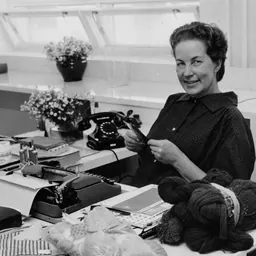
The fashion climate at that time was dictated by designers in Paris. In 1949 he briefly worked in New York at George Carmel but didn't like the position because he felt pressured to imitate Parisian fashion. He also designed costumes for Lester Horton until 1952. For most of the 1950s, he collaborated with Hungarian Holocaust survivor and immigrant Renée Firestone in Los Angeles, before she started her own line in 1960.
In 1955, he began designing swimwear for Westwood Knitting Mills in Los Angeles. They hired him in 1959 as the swimwear designer. Genesco Corporation also hired him as a shoe designer in 1959. He completed his seven-year contract with Walter Bass in 1960 and founded his firm G.R. Designs in Los Angeles. He changed his company's name to Rudi Gernreich Inc. in 1964. His designs were featured in what is generally regarded as the first fashion video, Basic Black: William Claxton w/Peggy Moffitt, in 1966.
In the early 1960s, Gernreich opened a Seventh Avenue showroom in New York City where he showed his popular designs for Harmon knitwear and his own more expensive line of experimental garments.
In 1966, Gernreich was named one of the "fashion revolutionaries" in New York by Women's Wear Daily, alongside Edie Sedgwick, Tiger Morse, Pierre Cardin, Paco Rabanne, Baby Jane Holzer, André Courrèges, Emanuel Ungaro, Yves Saint Laurent, and Mary Quant. Unisex costume design for Moonbase Alpha (Space: 1999) by Rudi Gernreich.He designed the Moonbase Alpha uniforms worn by the main characters of the 1970s British science-fiction television series Space: 1999, pushing the boundaries of the futuristic look in clothing over the course of three decades.
Fashion as social commentary Gernreich developed strong feelings about society's sexualization of the human body and disagreed with religious and social beliefs that the body was essentially shameful. He wanted to reduce the stigma of a naked body, to "cure our society of its sex hang up," as he put it. Gerneich stated, "To me, the only respect you can give to a woman is to make her a human being. A totally emancipated woman who is totally free."
Gernreich approached fashion as a social commentary. He said he wanted to create a "utility principle" that would "take our mind off how we look and concentrate on really important matters." Fashion writer Marylou Luther, who became a good friend of Gernreich, wrote that he had two motives in his designs: one was to create modern fashion "for the 20th century and beyond," and the other was as "a social commentator, who just happened to work in the medium of clothes." Gernreich purposefully used his designs to advance his socio-political views. Gernreich developed a reputation as an avant-garde designer who broke many design rules. As a former dancer, Gernreich was interested in liberating the body from the limitations of clothing. Most swimsuits at the time had stiff inner construction with boned linings. His designs used elasticized wool knits that clung to the woman's body.
In its December 1962 issue, Sports Illustrated remarked, "He has turned the dancer's leotard into a swimsuit that frees the body. In the process, he has ripped out the boning and wiring that made American swimsuits seagoing corsets". In 1964, he created the first topless swimsuit, which he called the "monokini". Gernreich was featured on the cover of Time in December 1967 with models Peggy Moffitt and Leon Bing. The magazine described him as "the most way-out, far-ahead designer in the U.S."
Cynthia Amnéus, Chief Curator and Curator of Fashion and Textiles at the Cincinnati Art Museum in Ohio, said "Rudi was one of the most important and visionary American fashion designers of the 21st century ... Rudi was doing very shocking and avant-garde things, like taking all the structure out of swimwear, and creating a trapeze dress in the 1950s way before Yves Saint Laurent did."
He was the sixth American designer to be elected to the Coty American Fashion Hall of Fame. He designed the first see-through chiffon blouse, fashioned clothes from leotards and tights, decorated them with zippers and dog leash clasps, and in 1970 introduced the idea of unisex clothing that was minimalist, utilitarian, and optional, including men's suits and hats for women. He showed his designs on a male and female model who were both shaved.
In 1974, in response to Los Angeles banning nude beaches, he designed and named the first thong bathing suit that exposed the buttocks for both men and women. That month he first envisioned a topless swimsuit that became the Monokini. The Monokini bottom was similar to a maillot swimsuit style but ended at mid-torso and was supported by two straps between the breasts and around the neck.
When Claxton's photograph of his wife Peggy Moffitt modeling the design was published in Women's Wear Daily on June 4, 1964, it generated a great deal of controversy in the United States and other countries. Moffitt said the design was a logical evolution of Gernreich's avant-garde ideas in swimwear design as much as a scandalous symbol of the permissive society. He saw the swimsuit as a protest against repressive society. He predicted that "bosom will be uncovered within five years". He saw baring of a woman's breasts as a form of freedom.
He initially did not intend to produce the design commercially, but Kirtland of Look urged him to make it available to the public. "I thought we'd sell only six or seven, but I decided to design it anyway." Moffitt later said that the Monokini "was a political statement. It wasn't meant to be worn in public."
In January, 1965, he told Gloria Steinem in an interview that despite the criticism he'd do it again.
A designer stands or falls on the totality of each year's collection, not just one item. At the moment, this topless business has done nothing but take away from my work, but in the end, I'm sure having my name known internationally will be a help. But that isn't why I'd do it again. I'd do it again because I think the topless, by overstating and exaggerating a new freedom of the body, will make the moderate, right degree of freedom more acceptable.
No Bra Gernreich preferred that his designs should be worn braless, and in October 1964, at the request the brassiere manufacturer Exquisite Form, Gernreich announced the "No Bra". The bra was made of sheer fabric without underwires or lining of any kind. Unlike contemporary bras, his design allowed breasts to assume their natural shape, rather than being molded into an aesthetic ideal. It had a single hook in the back.
The No Bra was a big departure from the sculpted, bullet-shaped bosom of the previous decade. It was quite similar to the original bra of the 1920s and like the first modern bra invented by Mary Phelps Jacob, two handkerchiefs attached to a band and tied around the chest. Gernreich's no-bra was little more than that. Both the 1920s and the 1960s celebrated the stick-like figure of adolescence, and with that meant small, flat breasts.
His minimalist bra revolutionized brassiere design, initiating a trend toward more natural shapes and soft, sheer fabrics.
The retail success of the No Bra was followed in 1965 with the next design, a "no-side" bra to accommodate dresses with deep armholes. It had a narrow stretch band around the torso that allowed women to wear open-sleeved garments without displaying a bra band. The sheer cups were cut part of the bias and part of the half-bias. He also produced a "No Front" maillot design with a deep, plunging front for slit-to-the-waist necklines, and a "No-Back" long-line version that was anchored using contoured stretch-waistband that allowed a woman to wear a backless dress.
Exhibitions Rudi exhibited his fashion at the Fashion Institute of Technology in New York in 1967, "Two Modern Artists of Dress: Elizabeth Hawes and Rudi Gernreich". A retrospective titled "Fashion Will Go Out of Fashion" was assembled in Kunstlerhaus Graz, Austria, in 2000.
Awards and recognition Gernreich received his first design award in 1956, a junior award from Sports Illustrated. He received the award again in 1963, 1966, and 1967. Marylou Luther, the Los Angeles Times fashion editor, wrote, "To most of the people in the fashion industry, he was considered the most inventive designer of these times."
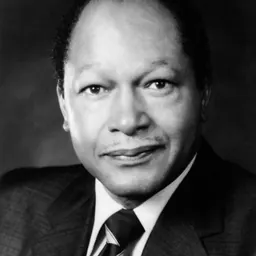
In 1985 Tom Bradley, the Mayor of the City of Los Angeles, proclaimed August 13 as 'Rudi Gernreich Day' in recognition of Gernreich's contributions to fashion and Los Angeles, declaring "His designs were social commentary and forecast on our times and the future lifestyles of our nation."
On April 2, 2012, Time magazine named him to its list of the "All-TIME 100 Fashion Icons". In 2000, the city of New York placed bronze plaques honoring American fashion designers, including Gernreich, along Seventh Avenue.
Later life In his later life, Gernreich devoted himself to gourmet soups. He is credited with a recipe for red pepper soup, a cold soup served in red pepper cases and garnished with caviar and lemon.
Personal life The Mattachine Society, 1951. Rudi Gernreich, in white shirt & dark jacket, is third from the right Gernreich became a U.S. citizen in 1943. He met Los Angeles-based Communist and gay rights activist Harry Hay in July 1950, and the two became lovers. Hay showed Gernreich The Call, a document outlining his plan for a gay support organization, and Gernreich told him, "You know that I'm an Austrian refugee. This is the most dangerous thing I have ever read. And, yes, I'm with you 100 percent." In 1951 Gernreich was arrested and convicted in a police homosexual entrapment case, Gernreich ended the relationship with Hay in 1952.
In 1953, Gernreich met Oreste Pucciani, future chairman of the UCLA French department, who was a key figure in bringing Jean-Paul Sartre to the attention of American educators. Oreste Pucciani was also a pivotal figure in the gay rights movement. The two men kept their relationship private as Gernreich believed public acknowledgment of his homosexuality would negatively affect his fashion business.
Gernreich never announced his sexual orientation. Moffit said, "He just thought his sexuality was obvious." Gernreich typically wore a toupee, Gucci loafers, and jumpsuits with industrial zippers and drove a white Bentley around West Hollywood, where he lived with Pucciani until he died. Gernreich was diagnosed with lung cancer in January 1985 and died on April 21, 1985, at age 62. Oreste Pucciani, Gernreich's partner for 31 years, endowed a trust in their name for the American Civil Liberties Union in 1988. Actor Michael Urie, who performed the role of Gernreich, received a Lucille Lortel Award for Outstanding Lead Actor.
After his death due to lung cancer, Moffitt retained the trademark on Gernreich's name. In 2003, she signed a contract to re-create his designs with Rei Kawakubo, an avant-garde Japanese designer under her Comme des Garcons label. Some designs were reissued under the Peggy Moffitt/Comme des Garçons label. In 2012, Women's Wear Daily reported that a German investor had committed to reissuing some of Gernreich's designs.
The New York Metropolitan Museum of Art contains more than 100 pieces of Gernreich's designs in its collection.
A knit coat dress was sold at auction for $1,245 in 2008 at Christie's. Doyle's holds the record for Gernreich, set in 2002: $8,500 for two minidresses with peekaboo vinyl inserts.
Don’t just read it —
keep it.
Full-length biographies made to live with: read them, listen on the way to work, watch them tonight.
- E-book
- Audio
- Video
Instant download · yours to keep · every purchase keeps this site free
Important facts
Family & relationships
People in Rudi Gernreich's life
Named in this biography and alive at the same time






Related people
Same field, nearest in time



Contemporaries
People whose lives overlapped Rudi Gernreich's



Frequently asked questions
Who was Rudi Gernreich?
American fashion designer and gay activist (1922-1985)
When was Rudi Gernreich born?
Rudi Gernreich was born on 8 August 1922 in Vienna.
When did Rudi Gernreich die?
Rudi Gernreich died on 21 April 1985 in Los Angeles.
What was Rudi Gernreich's occupation?
Rudi Gernreich was a designer, fashion designer and costume designer.
What was Rudi Gernreich known for?
Rudi Gernreich was known for Mattachine Society and Monokini.
What nationality was Rudi Gernreich?
Rudi Gernreich was American and Austrian.
Sources & further reading
Cite this page
APA: Biography.guide. (2026). Rudi Gernreich. https://biography.guide/rudi-gernreich/
MLA: "Rudi Gernreich." Biography.guide, https://biography.guide/rudi-gernreich/.
Chicago: "Rudi Gernreich." Biography.guide. https://biography.guide/rudi-gernreich/.
Data last updated: 2026-09-22 · Spot an error? Report a correction.
Portrait: Wikimedia Commons · author & licence
Page generated 2026-09-27 05:01 UTC