
About Ruben Um Nyobe
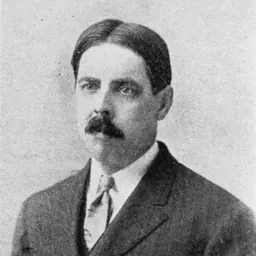
Lived 1913 – 1958 (aged 44–45). Ruben Um Nyobe was a Cameroonian politician, court clerk and trade unionist.
Ruben Um Nyobè (1913 – 13 September 1958) was an anti-colonialist and nationalist Cameroonian leader, slain by the French army on 13 September 1958, near his natal village of Boumnyebel, in the department of Nyong-et-Kellé in the maquis Bassa.
Early childhood Um Nyobè, known as the forgotten father of Cameroon, was born in 1913 in Song Mpeck, Kamerun. At the time, Kamerun was a German colony and was divided after World War I between France and the United Kingdom. Um Nyobè came from a family in an agricultural region of Bassa. His father was a traditional priest in their village, where they practiced animism as a form of religion. Um Nyobè, was deemed Christian by many who knew him and acquired his Christian name Ruben after he was baptized. Um Nyobè was educated in Presbyterian schools in the part of the country occupied by France and learned to speak French, Bassa, Bulu, and Do. At the age of 26, he completed his baccalaureate degree at a university in Edea. Shortly after completing his degree, he married his wife, Martha. After his university studies in 1944, he stayed in the city of Edea to pursue his passion in law.
He became a civil servant and became interested in politics at an early age. At the end of the 1930s, he became involved in the Jeunesse camerounaise Française (JeuCaFra), an organisation set up by the French administration to counter Nazi propaganda. After World War II he became involved with the Cercle d'études Marxistes - a Cameroonian Nationalist group launched in Yaoundé by the French teacher and trade unionist Gaston Donnat. The mission of the group was to fight with the same momentum against "Nazism, racism and colonialism". For Um Nyobé it was a turning point: "This is the first time I have sat at a white man's table: I consider it a great event in Cameroon. I will not forget it."
Trade Union Activity
Um Nyobè was initiated into the Confédération générale du travail (CGT), a union that fought against the partition of Cameroon into Anglophone and Francophone regions, in 1947. Due to the efforts of CGT, Um Nyobè and its members began spreading the message of independence and denouncing the Catholic religion which they believed justified and advocated for colonization and slavery. His efforts managed to unite diverse ethnic groups to join the resistance against the French. He was named "Mpodol Ion", which meant speaker of the nation or spokesman in the native language of the people of Bassa. His friends called him Mpodol, which meant "prophet", because they believed it was his biblical mandate to lead and speak as their prophet.
In September 1945, settlers opened fire in Douala on a strike demonstration that eventually turned into a riot. According to the colonial authorities, the official death toll was 8 (and 20 wounded), However this count has been disputed. The ensuing repression against the USCC and its leaders led a new generation of activists to take over the leadership with Um Nyobè becoming general secretary of the union in 1947. On an organizational level, he defended the strengthening of "base committees" to build a party acting from below and preferred to speak of a "movement" rather than a "party" for this reason. Opposed to armed struggle and violence, he encouraged his supporters to conduct only peaceful actions such as boycotts, strikes and demonstrations. Most UPC meetings ended with the Cameroonian national anthem and La Marseillaise, while Um Nyobé repeated that he did not confuse "the people of France with the French colonialists".
Um Nyobè was initially opposed to violence. In 1952, he stated that "the armed struggle was carried out once and for all by the Cameroonians who contributed greatly to the defeat of German fascism. The fundamental freedoms whose application and independence we claim and towards which we must resolutely march are no longer things to be conquered by armed struggle. It is precisely to prevent such a possibility that the United Nations Charter called for the right of peoples to self-determination. Nevertheless, it recognizes the right of peoples to armed struggle elsewhere on the planet, when circumstances so require". He also saluted the "heroic struggles" led by the Vietnamese of Việt Minh and the Algerians of the FLN.
Don’t just read it —
keep it.
Full-length biographies made to live with: read them, listen on the way to work, watch them tonight.
- E-book
- Audio
- Video
Instant download · yours to keep · every purchase keeps this site free
Important facts
Related people
Same field, nearest in time






Contemporaries
People whose lives overlapped Ruben Um Nyobe's


Frequently asked questions
Who was Ruben Um Nyobe?
Cameroonian anti-colonial activist (1913-1958)
When was Ruben Um Nyobe born?
Ruben Um Nyobe was born in 1913 in Éséka.
When did Ruben Um Nyobe die?
Ruben Um Nyobe died on 13 September 1958 in Libelingoï.
What was Ruben Um Nyobe's occupation?
Ruben Um Nyobe was a politician, court clerk and trade unionist.
What nationality was Ruben Um Nyobe?
Ruben Um Nyobe was Cameroonian.
Sources & further reading
Cite this page
APA: Biography.guide. (2026). Ruben Um Nyobe. https://biography.guide/ruben-um-nyobe/
MLA: "Ruben Um Nyobe." Biography.guide, https://biography.guide/ruben-um-nyobe/.
Chicago: "Ruben Um Nyobe." Biography.guide. https://biography.guide/ruben-um-nyobe/.
Data last updated: 2026-09-26 · Spot an error? Report a correction.
Page generated 2026-09-27 05:14 UTC