
About Rowland Hill, 1st Viscount Hill
Lived 1772 – 1842 (aged 70). Rowland Hill, 1st Viscount Hill was a British politician and military personnel.
General Rowland Hill, 1st Viscount Hill, (11 August 1772 – 10 December 1842) was a British Army officer and politician who served in the French Revolutionary and Napoleonic Wars. Hill became Commander-in-Chief of the Forces in 1828. Well-liked by the soldiers under his command, he was nicknamed "Daddy Hill".
Background and early career Hill was born on 11August 1772 in Prees, Shropshire. He was the second son and fourth child of Sir John Hill, 3rd Baronet, a landowner, and Mary, co-heir and daughter of John Chambré of Petton, Shropshire.
Educated at The King's School in Chester, Hill was commissioned into the 38th Foot in 1790. He was promoted to lieutenant on 27 January 1791. On 16 March 1791, after a period of leave, he was appointed to the 53rd Regiment of Foot. He was asked to raise an independent company and given the rank of captain on 30 March 1793.
He served at the Siege of Toulon in Autumn 1793 as aide-de-camp to General O'Hara from where he carried the dispatches to London. He then transferred to one of Major-General Cornelius Cuyler's independent companies on 16 November 1793. In 1794 he assisted Thomas Graham in raising the 90th Foot, for which he was promoted to major on 27 May 1794, and to lieutenant-colonel on 26 July 1794. He was promoted to colonel on 1 January 1800.
In 1801 he commanded the 90th Foot when they landed at Abukir Bay in Egypt as part of a force under Sir Ralph Abercromby; Hill was seriously wounded in the action when a musket ball hit his head.
Peninsular War During the Peninsular War, Hill commanded a brigade at the Battle of Roliça and also at the Battle of Vimeiro in 1808. Nevertheless, he led a reserve brigade forward in the dark. In the short clash that followed, Hill was briefly grabbed and nearly captured by a Frenchman, but his troops recovered the summit. This is the first occasion on which Hill supposedly swore.
Still leading the 2nd Division, during Marshal André Masséna's 1810 invasion of Portugal, Hill fought at the Battle of Bussaco. and on 22 February 1812 he was appointed a Knight Companion of the Order of the Bath. He was made a Knight Grand Cross of the Portuguese Order of the Tower and Sword on 4 May 1812.
In May 1812, after the capture of Badajoz, Hill led a second raid that destroyed a key bridge in the Battle of Almaraz.
After the British capture of Madrid, Hill had responsibility for an army of 30,000 men. Still in corps command, he fought in the Battle of the Pyrenees. At Vitoria and in Wellington's invasion of southern France, Hill's corps usually consisted of William Stewart's 2nd Division, the Portuguese Division (under John Hamilton, Francisco Silveira or Carlos Le Cor) and Pablo Morillo's Spanish Division. For his leadership in these battles, he was awarded a medal and two clasps on 7 October 1813. He led the Right Corps at the Battle of Nivelle on 10 November 1813.
On 13 December 1813, during the Battle of the Nive, Hill performed what may have been his finest work in his defence of St-Pierre d'Irube. With his 14,000 men and 10 guns isolated on the east bank of the Nive by a broken bridge, Hill held off the attacks of Marshal Jean-de-Dieu Soult's 30,000 soldiers and 22 guns. He fought with great skill and "was seen at every point of danger, and repeatedly led up rallied regiments in person to save what seemed like a lost battle ... He was even heard to swear." He was appointed Governor of Hull on 13 July 1814.
Nicknamed "Daddy Hill", he looked after his troops and was adored by his men.
He was also Tory Member of Parliament (MP) for Shrewsbury from 1812 to 1814, when he was raised to his peerage as Baron Hill of Almaraz and of Hawkestone in the county of Salop, although military duties made him unable to attend the House of Commons prior to his elevation to the Lords. The peerage brought with it a £2,000 pension. colonel of the 94th Regiment of Foot from 23 September 1809, colonel of the 72nd Regiment of Foot from 29 April 1815 and colonel of the Royal Regiment of Horse Guards from 19 November 1830.
Waterloo and later career
At the Battle of Waterloo Hill commanded the II Corps. and on 21 August 1815 he was made Knight Commander of the Order of Maria Theresa of Austria and Knight of the Order of St. George of Russia. On 27 August 1815 the Dutch King William I made him a Commander of the exclusive Military Order of William. At the coronation of George IV in 1821, Lord Hill bore the Standard of England in the procession from Westminster Hall to Westminster Abbey. From 1828 to 1842, he succeeded the Duke of Wellington as Commander-in-Chief of the Forces. and became Viscount Hill of Almaraz on 22 September 1842. The pack exists to this day and hunts the north of the county, including the grounds of his childhood home, Hawkstone Hall. laying the foundation stone of a major rebuild of the hospital in 1827.
He died at Hardwicke Grange, Hadnall, Shropshire on 10 December 1842.
Don’t just read it —
keep it.
Full-length biographies made to live with: read them, listen on the way to work, watch them tonight.
- E-book
- Audio
- Video
Instant download · yours to keep · every purchase keeps this site free
Important facts
People in Rowland Hill, 1st Viscount Hill's life
Named in this biography and alive at the same time
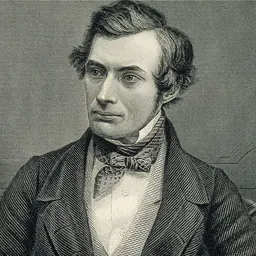

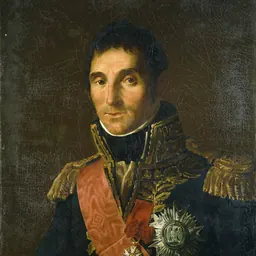
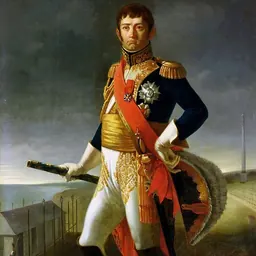


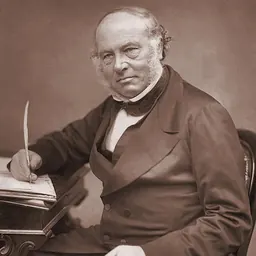
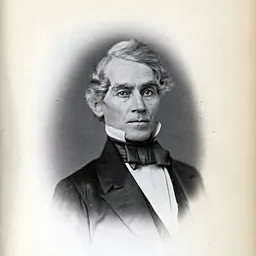
Related people
Same field, nearest in time

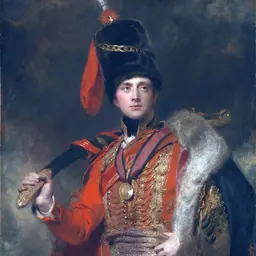


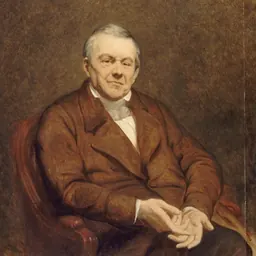
Contemporaries
People whose lives overlapped Rowland Hill, 1st Viscount Hill's




Frequently asked questions
Who was Rowland Hill, 1st Viscount Hill?
British Army general (1772-1842)
When was Rowland Hill, 1st Viscount Hill born?
Rowland Hill, 1st Viscount Hill was born on 11 August 1772 in Shropshire.
When did Rowland Hill, 1st Viscount Hill die?
Rowland Hill, 1st Viscount Hill died on 10 December 1842 in Shrewsbury.
What was Rowland Hill, 1st Viscount Hill's occupation?
Rowland Hill, 1st Viscount Hill was a politician and military personnel.
What nationality was Rowland Hill, 1st Viscount Hill?
Rowland Hill, 1st Viscount Hill was British.
Sources & further reading
· Wikipedia: Rowland Hill, 1st Viscount Hill
· DBpedia: Rowland Hill, 1st Viscount Hill
Cite this page
APA: Biography.guide. (2026). Rowland Hill, 1st Viscount Hill. https://biography.guide/rowland-hill-1st-viscount-hill/
MLA: "Rowland Hill, 1st Viscount Hill." Biography.guide, https://biography.guide/rowland-hill-1st-viscount-hill/.
Chicago: "Rowland Hill, 1st Viscount Hill." Biography.guide. https://biography.guide/rowland-hill-1st-viscount-hill/.
Data last updated: 2026-09-25 · Spot an error? Report a correction.
Page generated 2026-09-27 05:12 UTC