
About Rosario Garibaldi Bosco
Lived 1866 – 1936 (aged 70). Rosario Garibaldi Bosco was an Italian politician and writer, known for Fasci Siciliani.
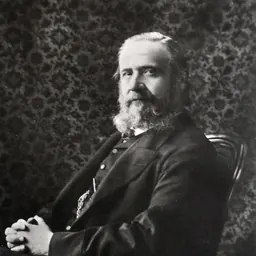
Rosario Garibaldi Bosco (Palermo, July 28, 1866 – Turin, December 2, 1936) was an Italian Republican-inspired socialist, politician and writer from Sicily. He was one of the leaders of the Fasci Siciliani (Sicilian Leagues), a popular movement of democratic and socialist inspiration in 1891-1894.
Early life Born in Palermo, the son of Nicola and Teresa Patorno, he graduated in accountancy in 1886. He married Concetta Seminara and became a political activist in radical and socialist circles inspired by Napoleone Colajanni, known as the father of Sicilian socialism.
As the secretary of worker associations, he collaborated with La Lega sociale (Social League) in 1882. At the end of 1883, he founded a local radical association and its radical organ L'Italia del popolo (Italy of the people), of which he became the responsible editor. After being employed as an accountant at a private company, at the end of 1884 the association moved toward anarchist ideas and the journal changed its name to Proletario (Proletarian) in June 1885. He was the keenest socialist among the Fasci leaders. In August 1892 he attended the Italian Socialist Party congress at Genoa and on his return obediently purged his fascio of its anarchist and other non-socialist members. In contrast, Giuseppe De Felice Giuffrida, the founder of the Catania Fascio, rejected such directives from the mainland, insisting on keeping the membership of his Catania Fascio open to all factions of the radical left. He shared with Colajanni a vision of a unified democratic front. On these and other important issues there was much friction between Catania and Palermo.
Following the repression by the government of Francesco Crispi, he was arrested on January 16, 1894 and was brought to trial. Acquitted on charges of armed conspiracy, he was nevertheless sentenced to 12 years for incitement to civil war. After two years he was released in March 1896 as the result of a pardon recognizing the excessive brutality of the repression. After his release, Bosco and the other Fasci leaders De Felice Giuffrida and Nicola Barbato were met by a large crowd of supporters in Rome, who released the horses form their carriage and dragged them to the hotel, cheering for socialism and denouncing Crispi.
Elected in Parliament On May 26, 1895, while still in prison for the Fasci revolt, he was elected to the Italian Chamber of Deputies for the district of Palermo in a local by-election. He was a candidate in protest against the repression of the Fasci Siciliani in many national electoral districts. His appointment was canceled because his age was less than that required by law.
In 1896 he founded the Socialist Federation of Palermo (Italian: Federazione socialista palermitana). Initially he joined the revolutionary current but passed over to more moderate positions. He wrote regularly for the news outlet of the organisation, Il Giornale dei lavoratori.
As a result of his more moderate politics that advocated alliances with bourgeois parties, Bosco became active in municipal politics in his home-town Palermo. In July 1900, 18 socialist deputies were elected in the Palermo city council. He became a councilor and vice-mayor in consecutive city administrations. The play, a monologue depicting a peasant woman whose husband was killed in the events at Caltavuturo, was first performed on February 2, 1893, in Palermo to raise money for the victims.
During a trip in Libya he contracted a kidney disease (nephritis) exacerbating his already weak physical condition due to his 27-month imprisonment in 1894-1896. In 1912, he briefly followed Leonida Bissolati, who was expelled from the Socialist Party because he did not oppose the war on Turkey for the conquest of Libya, and founded the Federazione socialista siciliana (Sicilian Socialist Federation). In 1915, he withdrew completely from public life. Enriched with the fashion store run by his partner - in 1912 he had separated from his first wife - and after opening two restaurants in 1925, he was expelled from the list of subversives. He died in Turin on December 2, 1936.
Writings Di chi la colpa? Gli operai di Palermo all'Italia, seconda edizione, Palermo, Tip. editrice "Tempo" Giovanni Bondi e Domenico Vena, 1887. I fasci dei lavoratori. Il loro programma ed i loro fini. Dedicato al comm. Sensales direttore della pubblica sicurezza in Italia, Palermo, Uff. della Giustizia sociale, 1893. La camera del lavoro ed i moderati, Palermo, U. Cervelli, 1901.
Don’t just read it —
keep it.
Full-length biographies made to live with: read them, listen on the way to work, watch them tonight.
- E-book
- Audio
- Video
Instant download · yours to keep · every purchase keeps this site free
Important facts
People in Rosario Garibaldi Bosco's life
Named in this biography and alive at the same time


Related people
Same field, nearest in time




Contemporaries
People whose lives overlapped Rosario Garibaldi Bosco's




Frequently asked questions
Who was Rosario Garibaldi Bosco?
Italian socialist (1866–1936)
When was Rosario Garibaldi Bosco born?
Rosario Garibaldi Bosco was born on 28 July 1866 in Palermo.
When did Rosario Garibaldi Bosco die?
Rosario Garibaldi Bosco died on 2 December 1936 in Turin.
What was Rosario Garibaldi Bosco's occupation?
Rosario Garibaldi Bosco was a politician and writer.
What was Rosario Garibaldi Bosco known for?
Rosario Garibaldi Bosco was known for Fasci Siciliani.
What nationality was Rosario Garibaldi Bosco?
Rosario Garibaldi Bosco was Italian.
Sources & further reading
· Wikipedia: Rosario Garibaldi Bosco
· DBpedia: Rosario Garibaldi Bosco
Cite this page
APA: Biography.guide. (2026). Rosario Garibaldi Bosco. https://biography.guide/rosario-garibaldi-bosco/
MLA: "Rosario Garibaldi Bosco." Biography.guide, https://biography.guide/rosario-garibaldi-bosco/.
Chicago: "Rosario Garibaldi Bosco." Biography.guide. https://biography.guide/rosario-garibaldi-bosco/.
Data last updated: 2026-09-22 · Spot an error? Report a correction.
Page generated 2026-09-27 05:34 UTC