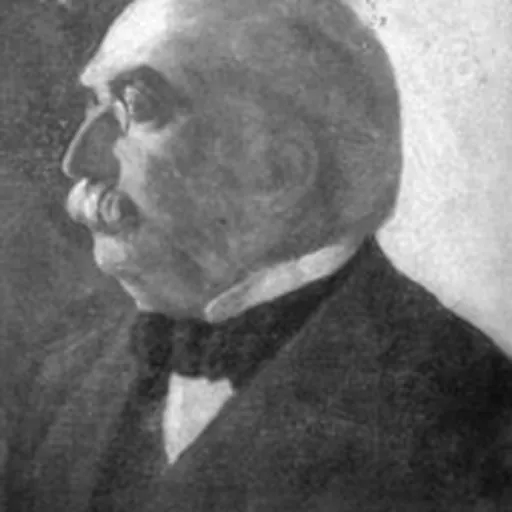
About Napoleone Colajanni
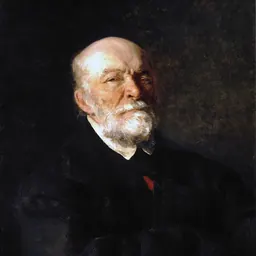
Lived 1847 – 1921 (aged 74). Napoleone Colajanni was an Italian writer, politician, criminologist, sociologist, journalist and statistician.
Napoleone Colajanni (27 April 1847 – 2 September 1921) was an Italian writer, journalist, criminologist, socialist, and politician. In the 1880s, he abandoned republicanism for socialism, and became Italy's leading theoretical writer on the issue for a time. He has been called the "father of Sicilian socialism". Due to the Italian Socialist Party's discourse of Marxist class struggle, he reverted in 1894 to his original republicanism and joined the Italian Republican Party. Colajanni was an ardent critic of the Lombrosian school in criminology. In 1890, he was elected in the national Chamber of Deputies and was re-elected in all subsequent parliaments until his death in September 1921.
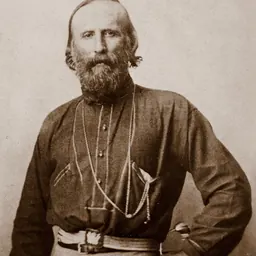
Redshirts At a young age, Colajanni was inspired by Giuseppe Garibaldi and attempted to join the Redshirts in the Expedition of the Thousand for the unification of Italy in 1860, escaping to Palermo at the age of 13, but without success. A relative recognised the young boy and brought him back home. Liberated after an amnesty, he returned to Sicily but volunteered again with Garibaldi's troops in the Third Italian War of Independence in 1866 and participated in the Battle of Bezzecca in Trentino, northern Italy, in July 1866. He returned to his home town, Castrogiovanni, where he practiced medicine and managed some sulfur mines owned by his mother. as well as Enrico Ferri on criminology.
Colajanni was the first to publish a book with criminal sociology in the title. He belonged to the Terza scuola (Third School) and argued that in order to curtail the level of crime in a society there should be a certain level of security with regard to sustainable living conditions, economic stability, and a more equal welfare distribution.
After the publication of his two-volume study La sociologia criminale (Criminal Sociology) in 1889, in which he emphasised the social factors on criminal behaviour, Colajanni was virulently attacked by Lombroso and his disciples. The work received a moderately positive response from the scientific community both in Italy and abroad. Lombroso did not allow any criticism by rival scientists and his alleged scientific supremacy. He unleashed a smear campaign and scientific crusade against Colajanni while blocking access to academic journals to prevent Colajanni's replies.
In his essay Per la razza maledetta (For the Cursed Race, published in 1898), Colajanni ridiculed the history of anthropometry and its related categories of the Lombrosian school and deconstructed their ethnic stereotypes. He argued that the high rates of criminality in Southern Italy, which were seen as evidence of alleged Southern racial inferiority, could simply be explained by social conditions and levels of education. He opposed the notion of racism and racial superiority as an ideological tool to legitimise dominance and exploitation, which would lead to the destruction of other races instead of its alleged progressive transformation. In a later work, Latini e anglo-sassoni: Razze superiori e razze inferiori (Latins and Anglo-Saxons: Inferior and Superior races, published in 1903), he expanded his critique on the concept of superior and inferior civilisations to the Anglo-Saxon nations.
Political activities In 1879, Colajanni had been appointed as a municipal councillor in Castrogiovanni. In 1882, he was a candidate in the general election in the constituency of Caltanissetta. While he was not elected, he obtained a significant following. Although poor health forced him to stay at Castrogiovanni, he continued to write political articles in periodicals of democratic orientation. In Parliament, he sat as a republican and showed socialist tendencies, becoming one of the de facto leaders of the republicans in Parliament. He sponsored initiatives like the parliamentary inquiry on colonial adventure in Italian Eritrea (1891) and the Banca Romana scandal (1892). The resulting inquiry caused the fall of the government of Giolitti in November 1893.
Fasci Siciliani Although he was never a member of the Italian Socialist Party (PSI), Colajanni was Sicily's leading political radical. He supported the Fasci Siciliani, a popular movement of democratic and socialist inspiration, which arose in Sicily in the years between 1891 and 1893. The demands of the movement were fair land rents, higher wages, lower local taxes, and distribution of misappropriated common land. He took the Fasci under his political protection, defending them in parliament and in the press.
Francesco Crispi, who took over after the fall of Giolitti in December 1893, promised important measures of land reform for the near future. Crispi was not blind to the misery and the need for social reform. Before 1891, he had been the patron of the Sicilian working-class and many of their associations had been named after him. Crispi's good intentions were soon drowned in the clamour for strong measures. In the three weeks of uncertainty before the government was formed, the rapid spread of violence drove many local authorities to disregard Giolitti's ban on the use of firearms. In December 1893, many peasants lost their lives in clashes with the police and army.
In order to stem the turmoil, Crispi offered Colajanni the Ministry of Agriculture, which he refused. When riots on the island got out of hand, Crispi asked Colajanni to undertake a mission of appeasement on Sicily. On 3 January 1894, only four days after Crispi had promised Colajanni there would be no state of siege, martial law was declared in the island. General was dispatched with 40,000 troops to restore order. After conferring with Morra, he issued a manifesto in which he urged the people to restore order. He argued that the government was engaged in bettering the working conditions and deserved their confidence, at least for a while. He called fools and traitors those breaking the peace.
Within a few days of the declaration of martial law and the violent suppression of the Fasci, Colajanni broke with Crispi and wrote the book Gli avvenimenti di Sicilia e le loro cause (The Events in Sicily and Their Causes) on the events in Sicily, which put the main blame on Crispi.
Opposition to the Mafia A recurring theme of Colajanni's political engagement was the struggle to overcome the economic contrast between North and South of Italy, through a reform of society but also of the state through federalism. His contribution the socio-political definition of the Southern Question was substantial, in particular with the volumes Settentrionali e meridionali (Northern and Southern, published in 1898) and Nel regno della mafia (In the Realm of the Mafia, published in 1900).
Colajanni wrote that the Italian government did everything to consolidate the Mafia and render it omnipotent. In Nel regno della mafia, he wrote: "To fight and destroy the reign of the Mafia, it is necessary that the Italian government ceases to be the king of the Mafia." He said that the government needed to clean up Sicily and institute a fair and practical administration.
Colajanni did not consider himself a materialist, as the social question was not only an economic issue but also an ethical one. He rejected the concept of class struggle. He did not deny that there was a struggle, but he saw it as the first stage of evolution, which was not be encouraged, but passed in favour of a greater spread of altruism. A position that proved irreconcilable with Marxism, which led him to adhere to the newborn PRI. He also opposed revolutionary syndicalism and severely criticized the 1904 Italian general strike.
Colajanni opposed the Italian invasion of Libya in 1912. Despite his anti-militarist ideas, he became an ardent supporter of the left-interventionist camp on the side of the Triple Entente at the outbreak of the First World War. He launched a vigorous campaign against Avanti!, the organ of the PSI, when Benito Mussolini was removed as chief editor, and openly criticized the PSI for what he considered Bolshevik sympathies.
Colajanni strongly opposed the Italian Communist Party that had left the PSI in January 1921, and felt certain sympathy for Italian fascism in its initial phase. Like many other intellectuals and politicians of all persuasions, he saw fascism as an extreme defence against the dangers of Bolshevism but condemned its recourse to violence. In August 1921, he applauded the agreement between socialists and fascists to put an end to the civil war. His death on 2 September 1921 saved him from a potentially embarrassing adhesion of fascism.
Main books Il socialismo e sociologia criminale (Catania: Tropea, 1884). La sociologia criminale (Catania: Tropea, 1889). Gli avvenimenti di Sicilia e le loro cause (Palermo: Remo Sandron, 1895). Settentrionali e meridionali: Agli Italiani del Mezzogiorno (Milan/Palermo/Rome: Sandron/Rivista popolare, 1898). Nel regno della mafia, dai Borboni ai Sabaudi. (Palermo: Remo Sandron, 1900). Latini e anglo-sassoni: Razze superiori e razze inferiori (Rome: Rivista Popolare, 1903).
Don’t just read it —
keep it.
Full-length biographies made to live with: read them, listen on the way to work, watch them tonight.
- E-book
- Audio
- Video
Instant download · yours to keep · every purchase keeps this site free
Important facts
People in Napoleone Colajanni's life
Named in this biography and alive at the same time


Related people
Same field, nearest in time

Contemporaries
People whose lives overlapped Napoleone Colajanni's




Frequently asked questions
Who was Napoleone Colajanni?
Italian criminologist (1847–1921)
When was Napoleone Colajanni born?
Napoleone Colajanni was born on 27 April 1847 in Enna.
When did Napoleone Colajanni die?
Napoleone Colajanni died on 2 September 1921 in Enna.
What was Napoleone Colajanni's occupation?
Napoleone Colajanni was a writer, politician, criminologist, sociologist, journalist and statistician.
What nationality was Napoleone Colajanni?
Napoleone Colajanni was Italian.
Sources & further reading
· Wikipedia: Napoleone Colajanni
· DBpedia: Napoleone Colajanni
Cite this page
APA: Biography.guide. (2026). Napoleone Colajanni. https://biography.guide/napoleone-colajanni/
MLA: "Napoleone Colajanni." Biography.guide, https://biography.guide/napoleone-colajanni/.
Chicago: "Napoleone Colajanni." Biography.guide. https://biography.guide/napoleone-colajanni/.
Data last updated: 2026-09-20 · Spot an error? Report a correction.
Portrait: Wikimedia Commons · author & licence
Page generated 2026-09-27 04:58 UTC