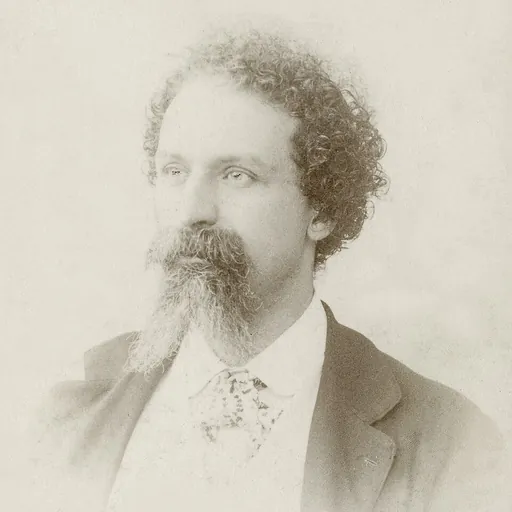
About Enrico Ferri
Lived 1856 – 1929 (aged 73). Enrico Ferri was an Italian journalist, politician, jurist, criminologist, sociologist and professor.
Enrico Ferri (; 25 February 1856 – 12 April 1929) was an Italian criminologist, socialist, and student of Cesare Lombroso, the founder of the Italian school of criminology. While Lombroso researched the purported physiological factors that motivated criminals, Ferri investigated social and economic aspects. He served as editor of the socialist daily Avanti! and in 1884 saw his book Criminal Sociology published. Later, his work served as the basis for Penal Code of Argentina. Although at first he rejected the Italian fascist dictator Benito Mussolini, Ferri later became one of Mussolini and his National Fascist Party's main external supporters.
Early life Ferri was born on 25 February 1856 in San Benedetto Po, in the modern-day Italian region of Lombardy, then part of the Austrian Empire as the Kingdom of Lombardy–Venetia. He worked as a lecturer first and later as a professor of criminal law, having spent time as a student of Lombroso. While Lombroso researched anthropological criminology, Ferri focused more on social and economic influences on the criminal and crime rates. Ferri's research led him to postulate theories calling for crime prevention methods to be the mainstay of law enforcement, as opposed to the punishment of criminals after their crimes had taken place. He became a founder of the positivist school, and he researched psychological and social positivism as opposed to the biological positivism of Lombroso.
Ferri argued that sentiments such as religion, love, honour, and loyalty did not contribute to criminal behaviour, as these ideas were too complicated to have a definite impact on a person's basic moral sense, from which Ferri believed criminal behaviour stemmed. Ferri argued that other sentiments, such as hate, cupidity, and vanity had greater influences as they held more control over a person's moral sense. Ferri summarized his theory by defining criminal psychology as a "defective resistance to criminal tendencies and temptations due to that ill-balanced impulsiveness which characterises children and savages". Ferri viewed religion and science as inversely proportional; thus, as one rose in strength, the other declined. Ferri observed that as Darwinism dealt a damaging blow to religion and the origins of the universe according to the Catholic Church (the Genesis creation myth), so socialism rose in comparison. Thus, Ferri argued that socialism was an extension of Darwinism and the theory of evolution. At the end of his life, he became one of the main supporters of Mussolini. He started to consider fascism as an expression of socialist ideals and that it was the "affirmation of the state against liberal individualism".
Literary works Studi dalla criminalità in Francia dal 1826 al 1878, 1881. Socialismo e criminalità, 1883. Sociologia criminale, 1884.
Socialismo e scienza positiva, 1894.
I socialisti nazionali e il governo fascista, 1923. Il Fascismo in Italia e l'opera di Benito Mussolini, 1928.
Don’t just read it —
keep it.
Full-length biographies made to live with: read them, listen on the way to work, watch them tonight.
- E-book
- Audio
- Video
Instant download · yours to keep · every purchase keeps this site free
Important facts
People in Enrico Ferri's life
Named in this biography and alive at the same time


Related people
Same field, nearest in time

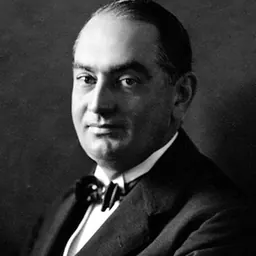
Contemporaries
People whose lives overlapped Enrico Ferri's
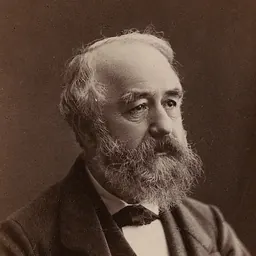
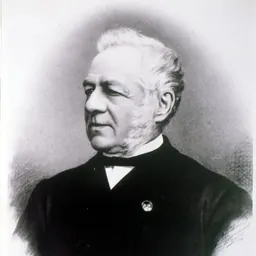
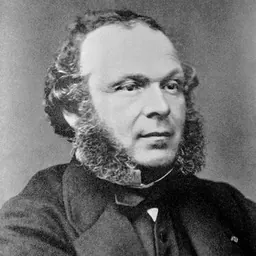


Frequently asked questions
Who was Enrico Ferri?
criminologist (1856-1929)
When was Enrico Ferri born?
Enrico Ferri was born on 25 February 1856 in San Benedetto Po.
When did Enrico Ferri die?
Enrico Ferri died on 12 April 1929 in Rome.
What was Enrico Ferri's occupation?
Enrico Ferri was a journalist, politician, jurist, criminologist, sociologist and professor.
What nationality was Enrico Ferri?
Enrico Ferri was Italian.
Sources & further reading
· DBpedia: Enrico Ferri (criminologist)
Cite this page
APA: Biography.guide. (2026). Enrico Ferri. https://biography.guide/enrico-ferri/
MLA: "Enrico Ferri." Biography.guide, https://biography.guide/enrico-ferri/.
Chicago: "Enrico Ferri." Biography.guide. https://biography.guide/enrico-ferri/.
Data last updated: 2026-09-23 · Spot an error? Report a correction.
Portrait: Wikimedia Commons · author & licence
Page generated 2026-09-27 05:06 UTC