
About Nicola Barbato
Lived 1856 – 1923 (aged 66). Nicola Barbato was an Italian politician and trade unionist, known for Fasci Siciliani.
Nicola Barbato (5 October 1856 – 23 May 1923) was a Sicilian medical doctor, socialist, and politician. He was one of the national leaders of the Fasci Siciliani dei Lavoratori (Sicilian Leagues) a popular movement of democratic and socialist inspiration in 1891–1894, and perhaps might have been the ablest among them according to the journalist Adolfo Rossi and Marxist historian Eric Hobsbawm.
Early life Barbato grew up in Piana dei Greci (now Piana degli Albanesi), a poor farming village in the Palermo hinterland marked by vast landed estates, exploitative tenancy arrangements and widespread poverty. After his father's death forced him to interrupt his studies to support his family, he later resumed them at the University of Palermo, where he embraced the then-fashionable evolutionary doctrines. He graduated in medicine and joined the socialist movement around 1878 and in the then prevailing positivist climate he devoted himself to study psychiatry. His work on the psychology of paranoia in the journal of the mental hospital of Palermo in 1890, was judged positively by Cesare Lombroso and Enrico Morselli. he rejected the Albanian cause, which "was favoured by the moderates and clerics", who actively sought to discourage churchgoers from joining the Fasci Siciliani.
Fasci Siciliani
Barbato was the classic country doctor who, by treating poor patients free of charge, had earned admiration and recognition, as well as unlimited trust. Barbato was the animator of the Fascio and, according to contemporary witnesses, he "became the real boss (il vero padrone) of the district", challenging the traditional land-owning elite.
Barbato was one of the most prominent leaders of the Fasci Siciliani and was known as "the workers' apostle", and was instrumental in setting up the Fasci in the neighbouring towns of San Giuseppe Jato, San Cipirello, Partinico, Borgetto and Belmonte Mezzagno.
The Pianese fascio was "among the most dangerous because of its propagandistic activity, its revolutionary proposals and the influence it exerts over the other fasci," according to Giuseppe Sensales, Prime Minister Giovanni Giolitti’s Director of Public Security.
“In front of you,” he said to the judges, “we provided the documents and evidence of our innocence. My friends thought it necessary to support their defence legally; I will not do so. Not because I have no confidence in you, but it is the law that does not concern me. So I do not defend myself. You have to sentence: we are the elements that destroy your sacred institutions. You have to sentence: it is logical, human. I will always pay tribute to your loyalty. But we say to our friends outside: do not ask for pardon, do not ask for amnesty. Socialist civilization should not begin with an act of cowardice. We demand a condemnation, we do not ask for mercy. Martyrs are more useful to the holy cause than any propaganda. Condemn us!” His famous self-defence in the Court has entered the socialist historiography. He was assigned by lot to the district of Cesena, leaving the fifth district of Milan to Filippo Turati, the grand old man of the socialist, who was elected to the Italian Chamber of Deputies for the first time. After his release, Barbato and the other Fasci leaders Giuseppe De Felice Giuffrida and Rosario Garibaldi Bosco were met by a large crowd of supporters in Rome, who released the horses form their carriage and dragged them to the hotel, cheering for socialism and denouncing Crispi. When Barbato returned to his home town Piana dei Greci, he was greeted by 5,000 people, more than half the population. At that point he was probably the most popular socialist leader in Sicily.
Prominent Socialist leader In 1897, he volunteered to fight against the Turks in the thirty-day Turkish-Greek war in the irregular legion of Giuseppe Garibaldi's son, Ricciotti Garibaldi, for the liberation of Crete. Former Fasci-leader and fellow defendant in the 1894 Palermo trial Giuseppe De Felice Giuffrida and the anarchist Amilcare Cipriani also volunteered. Returning to Italy in 1898, he was again sentenced to a year imprisonment for subversive activity. The organizational successes of the post-fasci socialist movement, the persistence of the cooperatives —as an example of a non-exploitative economy — and gains in local elections in Piana, led to Mafia attacks on socialist organizers and peasants. In Piana some two dozen socialists were victims of political murders from 1904 to 1920.
Barbato was able to lead the socialists to victory in the municipale elections in Piana in June 1914, Barbato himself expected to be the next victim and Pianese socialists served as bodyguards. Nevertheless, after the killing of the Socialist leader of Corleone, Bernardino Verro, in November 1915, he was seriously threatened by the Mafia. The national leadership of the Socialist party ordered him to leave Piana dei Greci for Milan in January 1916. He was again elected to Parliament in 1919, and died in Milan on 23 May 1923.
Don’t just read it —
keep it.
Full-length biographies made to live with: read them, listen on the way to work, watch them tonight.
- E-book
- Audio
- Video
Instant download · yours to keep · every purchase keeps this site free
Important facts
People in Nicola Barbato's life
Named in this biography and alive at the same time




Related people
Same field, nearest in time





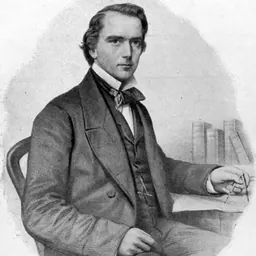
Contemporaries
People whose lives overlapped Nicola Barbato's
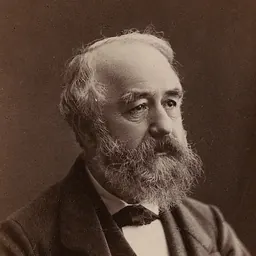

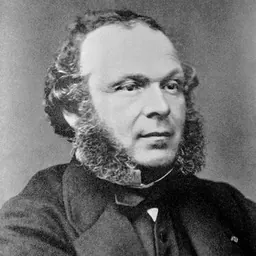

Frequently asked questions
Who was Nicola Barbato?
Italian socialist (1856–1923)
When was Nicola Barbato born?
Nicola Barbato was born on 5 October 1856 in Piana degli Albanesi.
When did Nicola Barbato die?
Nicola Barbato died on 23 May 1923 in Milan.
What was Nicola Barbato's occupation?
Nicola Barbato was a politician and trade unionist.
What was Nicola Barbato known for?
Nicola Barbato was known for Fasci Siciliani.
What nationality was Nicola Barbato?
Nicola Barbato was Italian.
Sources & further reading
Cite this page
APA: Biography.guide. (2026). Nicola Barbato. https://biography.guide/nicola-barbato/
MLA: "Nicola Barbato." Biography.guide, https://biography.guide/nicola-barbato/.
Chicago: "Nicola Barbato." Biography.guide. https://biography.guide/nicola-barbato/.
Data last updated: 2026-09-22 · Spot an error? Report a correction.
Page generated 2026-09-27 05:26 UTC