
About Ron Giovanelli
Lived 1915 – 1984 (aged 68–69). Ron Giovanelli was a physicist.
Ronald Gordon Giovanelli, DSc, FAA (/dʒoʊvɑ’nɛli/; 30 April 1915 — 27 January 1984) was an Australian solar researcher, astronomer and physicist, who contributed to the fields of astrophysics, solar physics, radiative transfer, and astronomical optics. His career spanned more than 40 years, commencing prior to World War II. Giovanelli was the recipient of the 1949 Edgeworth David Medal by the Royal Society of New South Wales for the discipline of astrophysics, which recognises distinguished contributions by scientists under the age of 35 in their respective fields. He was also elected into the Fellowship of the Australian Academy of Science in 1962 for his contributions in the field of physics.
Giovanelli served as Chief of the Physics Division of the Commonwealth Scientific and Industrial Research Organisation (CSIRO) from 1958 to 1976, during which he also became Chairman of the Australian National Committee from 1962–1965, President of the Astronomical Society of Australia from 1968 to 1971, and President of Commission 12 (Solar Radiation) of the International Astronomical Union from 1973 to 1976. He served as Chairman of the Australian National Committee for Solar-Terrestrial Physics in 1973, and from 1979–81.
Irwin Wilfred attended school in Grafton, and proceeded to attend Sydney Teacher's College. With this training, he became a mathematics teacher at Grafton High School. Irwin Wilfred earned respect and recognition as a teacher, and started serving as a headmaster at various schools in the country. With his father becoming a headmaster, Ronald attended a variety of schools in the towns of Milton, Trundle, and Forbes in New South Wales during his early years.
Career Giovanelli was appointed as a research fellow at the Commonwealth Solar Observatory (now known as Mount Stromlo Observatory) at Mount Stromlo, Canberra from 1937 to 1939, while he was completing his master's degree. His role as a research fellow at the observatory developed his interest in solar active regions and optical astronomy.
Giovanelli returned to Sydney in 1941 via Canada and the United States, where he visited the National Research Council of Canada in Ottawa, and the National Bureau of Standards (now known as the National Institute of Standards and Technology) in Washington, D.C.
Academia Giovanelli was involved in academia across several institutions. He was appointed as Honorary Associate of the Department of Applied Mathematics at The University of Sydney in 1959, where he was responsible for working with students of solar physics, and overseeing their PhD courses. He was a visiting professor at Collège de France in Paris in 1964 and again in 1982. Giovanelli worked as a professor of physics at Wollongong University College during the academic year 1968, which was considered a college of The University of New South Wales up until 1974. He was also a member of University of New South Wales' professorial board, and gave lectures on astronomy at the university twice a week.
From 1964-1965, Giovanelli served as a visiting scientist at the Fraunhofer-Institut (now known as the Leibniz Institute) located in Freiburg, West Germany. During this time, he had established and employed the Line-Centre-Magnetogram (LCM) strategy in order to distinguish and separate magnetic and non-magnetic constituents. In October 1983, a magnetic reconnection conference took place at the Los Alamos National Laboratory in New Mexico, USA, which was attended by more than a hundred scientists from over a dozen countries. According to the official records for this conference, it was during this event that Giovanelli was honoured for originating this concept, 37 years after his first published work, documenting the effect.
Giovanelli introduced the concept of magnetic reconnection as potentially being mechanism for particle acceleration in solar flares. He establishes the positive correlation between sunspots and chromospheric flares, providing evidence that the occurrence of a chromospheric flare becomes increasingly probable in areas where sunspots are larger. In these works, he also proposes a flare theory involving points of neutrality within magnetic fields.
Secrets of the Sun Towards his death, Giovanelli was working on a monograph entitled 'Secrets of the Sun', which discusses and explains in detail the subject matters of the sun's structure, solar flares, sunspots, and magnetic fields. The English version of 'Secrets of the Sun' was published posthumously in 1984, with the German edition 'Geheimnisvolle Sonne' being published in 1987. 'Secrets of the Sun' was designed as a book for laymen, written without highly technical terminology, scientific jargon or mathematical equations so that it would be comprehended by non-scientists and non-specialists.
Don’t just read it —
keep it.
Full-length biographies made to live with: read them, listen on the way to work, watch them tonight.
- E-book
- Audio
- Video
Instant download · yours to keep · every purchase keeps this site free
Important facts
People in Ron Giovanelli's life
Named in this biography and alive at the same time


Related people
Same field, nearest in time
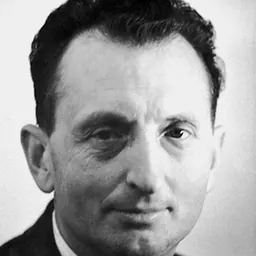
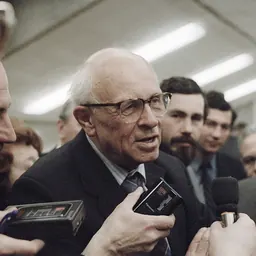


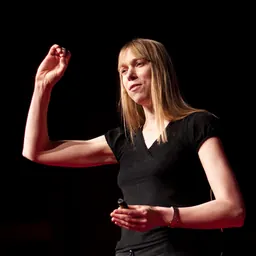
Contemporaries
People whose lives overlapped Ron Giovanelli's

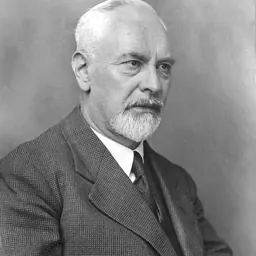



Frequently asked questions
Who was Ron Giovanelli?
(1915-1984) physicist and solar researcher
When was Ron Giovanelli born?
Ron Giovanelli was born on 30 April 1915 in Grafton.
When did Ron Giovanelli die?
Ron Giovanelli died in 1984 in Camperdown.
What was Ron Giovanelli's occupation?
Ron Giovanelli was a physicist.
Sources & further reading
Cite this page
APA: Biography.guide. (2026). Ron Giovanelli. https://biography.guide/ron-giovanelli/
MLA: "Ron Giovanelli." Biography.guide, https://biography.guide/ron-giovanelli/.
Chicago: "Ron Giovanelli." Biography.guide. https://biography.guide/ron-giovanelli/.
Data last updated: 2026-09-26 · Spot an error? Report a correction.
Page generated 2026-09-27 05:13 UTC