
About Roman Rudenko
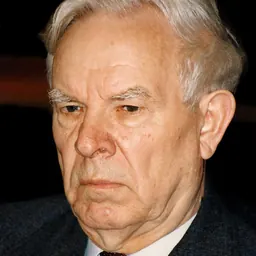
Lived 1907 – 1981 (aged 73). Roman Rudenko was a Russian jurist, politician, military personnel and public prosecutor general.
Roman Andreyevich Rudenko (, ; – 23 January 1981) was a Soviet lawyer and statesman.
Procurator-General of the Ukrainian Soviet Socialist Republic from 1944 to 1953, Rudenko became Procurator-General of the entire Soviet Union after 1953. He is well known internationally for acting as chief prosecutor for the USSR at the 1946 trial of the major Nazi war criminals in Nuremberg. He was also chief prosecutor at the "Trial of the Sixteen" (Polish Underground leaders) held in Moscow the year before. At the time he served at Nuremberg, Rudenko held the rank of Lieutenant-General within the USSR Procuracy.
In 1961, Rudenko was elected to the CPSU Central Committee. In 1972, he was awarded the Soviet honorary title of Hero of Socialist Labour.
Ukrainian SSR to 1953 Rudenko was one of the chief commandants of NKVD special camp Nr. 7, a former Nazi concentration camp, until its closure in 1950. Of the 60,000 prisoners incarcerated there under his supervision, at least 12,000 died due to malnutrition and disease.
In October 1951, as Procurator-General of the Ukrainian SSR, he personally led prosecution in the trial of OUN member Mykhailo Stakhur, who in October 1949 killed the writer Yaroslav Halan.
Soviet Union 1953–1981 After the arrest of Lavrentiy Beria in 1953, Rudenko was a judge at the closed trial at which Stalin's last secret police chief was sentenced to death.
In 1960, he acted as the chief prosecutor in U-2 pilot Francis Gary Powers' espionage trial.
As Procurator General of the Soviet Union, Rudenko played a major role in devising measures to deal with the growing dissident movement within the USSR.
In 1967, he and then KGB chairman Vladimir Semichastny submitted proposals as to how to deal with those defending the writers Yuli Daniel and Andrei Sinyavsky during and after their trial, without provoking a strong reaction abroad or within the country. This included mention of the "mental illness" suffered by several prominent dissidents. One measure, proposed jointly with Yuri Andropov in late 1972, was to reduce the number of arrests and convictions by reinforcing the issue of "prophylactic" warnings to individuals, cautioning them that their activities could lead to prosecution under Articles 70 and 1901 of the RSFSR Criminal Code.
Don’t just read it —
keep it.
Full-length biographies made to live with: read them, listen on the way to work, watch them tonight.
- E-book
- Audio
- Video
Instant download · yours to keep · every purchase keeps this site free
Important facts
People in Roman Rudenko's life
Named in this biography and alive at the same time




Related people
Same field, nearest in time
Contemporaries
People whose lives overlapped Roman Rudenko's


Frequently asked questions
Who was Roman Rudenko?
Soviet lawyer (1907-1981)
When was Roman Rudenko born?
Roman Rudenko was born on 30 July 1907 in Nosivka.
When did Roman Rudenko die?
Roman Rudenko died on 23 January 1981 in Moscow.
What was Roman Rudenko's occupation?
Roman Rudenko was a jurist, politician, military personnel and public prosecutor general.
What nationality was Roman Rudenko?
Roman Rudenko was Russian.
Sources & further reading
Cite this page
APA: Biography.guide. (2026). Roman Rudenko. https://biography.guide/roman-rudenko/
MLA: "Roman Rudenko." Biography.guide, https://biography.guide/roman-rudenko/.
Chicago: "Roman Rudenko." Biography.guide. https://biography.guide/roman-rudenko/.
Data last updated: 2026-09-20 · Spot an error? Report a correction.
Page generated 2026-09-27 05:24 UTC