
About Roger Pepys
Lived 1617 – 1688 (aged 71). Roger Pepys was a politician and lawyer.
Roger Pepys (3 May 1617 – 4 October 1688) was an English lawyer and politician who sat in the House of Commons from 1661 to 1678. He is chiefly remembered as Samuel Pepys's "Cousin Roger". He and his children appear regularly in Samuel's great Diary. Relations between the two men were always good.
Early life
Pepys was born at Heydon, Norfolk, the son of Talbot Pepys of Impington, Cambridgeshire and his wife Beatrice Castell, daughter of John Castell of Raveningham, Norfolk. He was educated at The Perse School, Cambridge under the headmastership of Abel Lovering (later the much-loved headmaster of Norwich School) and was admitted at Christ's College, Cambridge on 17 April 1635.
Career He was admitted at the Middle Temple on 4 November 1634 and was called to the bar in 1641. His cousin Samuel Pepys considered him to be too simple to be a useful lawyer, although his integrity was never in doubt. In the bitter and long drawn out inheritance dispute over the Brampton estate in Huntingdonshire, which Samuel inherited from his uncle Robert, Roger himself regretted that the ultimate settlement was far from favourable to Samuel, his client, although they agreed that it was better to settle the case then let it drag on. He became recorder of Cambridge in 1660 when his father gave up that position.
In 1661, Pepys was elected Member of Parliament for Cambridge in the Cavalier Parliament and sat until 1678. He was active in various bills in his early years in the house, particularly the plague bill in 1665. Though not a republican, he was something of a Puritan, and his cousin Samuel in his Diary records his low opinion of the "young bloods" who dominated the Cavalier Parliament. He was also critical of the Anglican bishops, especially Gilbert Sheldon. His criticisms of the Court became more and more vocal as the years passed: at the Cambridge Assizes in 1664 he was bound over by Sir John Kelyng for insulting the Lord Chief Justice, Sir Robert Hyde. However, he was never associated with any opposition movement: like all the "country gentlemen" he prided himself on being independent of any party or faction.
He objected to the precedence given to the vice-chancellor of Cambridge University over the mayor, and acted as teller for an amendment. He was chairman in regard to the bills for establishing the London Fire Court and against atheism and profanity. He stood at the general election in 1679 but was defeated. His cousin Samuel acknowledged that, whatever their differences, Roger had always loyally defended him from attacks on him in Parliament.
Don’t just read it —
keep it.
Full-length biographies made to live with: read them, listen on the way to work, watch them tonight.
- E-book
- Audio
- Video
Instant download · yours to keep · every purchase keeps this site free
Important facts
People in Roger Pepys's life
Named in this biography and alive at the same time


Related people
Same field, nearest in time

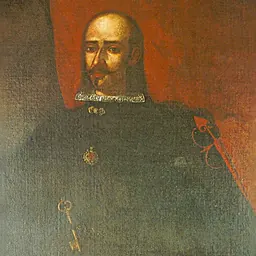
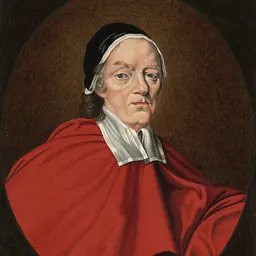
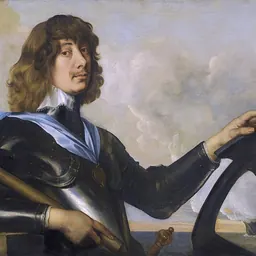
Contemporaries
People whose lives overlapped Roger Pepys's





Frequently asked questions
Who was Roger Pepys?
English politician
When was Roger Pepys born?
Roger Pepys was born on 3 May 1617.
When did Roger Pepys die?
Roger Pepys died on 4 October 1688.
What was Roger Pepys's occupation?
Roger Pepys was a politician and lawyer.
Sources & further reading
Cite this page
APA: Biography.guide. (2026). Roger Pepys. https://biography.guide/roger-pepys/
MLA: "Roger Pepys." Biography.guide, https://biography.guide/roger-pepys/.
Chicago: "Roger Pepys." Biography.guide. https://biography.guide/roger-pepys/.
Data last updated: 2026-09-20 · Spot an error? Report a correction.
Page generated 2026-09-27 05:18 UTC