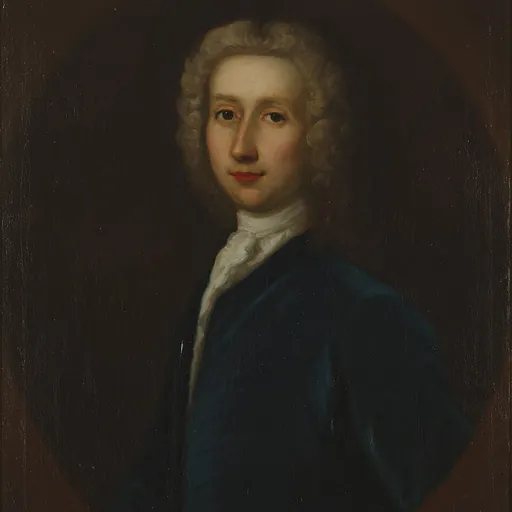
About Robert Whytt
Lived 1714 – 1766 (aged 51). Robert Whytt was a British physician and university teacher.
Robert Whytt (1714–1766) was a Scottish physician. His work, on unconscious reflexes, tubercular meningitis, urinary bladder stones, and hysteria, is remembered now most for his book on diseases of the nervous system. He served as President of the Royal College of Physicians of Edinburgh.
Life
The second son of Robert Whytt of Bennochy (near Kirkcaldy in Fife), advocate, and Jean, daughter of Antony Murray of Woodend, Perthshire, he was born in Edinburgh on 6 September 1714, six months after his father's death. Having graduated M.A. at the University of St Andrews in 1730, he went to Edinburgh to study medicine. Two years before this he had succeeded, on the death of his elder brother George, to the family estate.
Whytt devoted himself to the study of anatomy, under the first Monro. Going to London in 1734, Whytt became a pupil of William Cheselden, while he visited the wards of the London hospitals. After this he attended the lectures of Jacob B. Winslow in Paris, of Herman Boerhaave and Bernhard Siegfried Albinus at Leyden. He took the degree of M.D. at Reims on 2 April 1736. On 3 June 1737, a similar degree was conferred on him by the University of St Andrews, and on 21 June he became a licentiate of the Royal College of Physicians of Edinburgh. On 27 November 1738, he was elected to the fellowship, and began practice as a physician.
Central nervous system
Whytt's theories on the nervous system and its role in movement opposed many of the teachings that were in place in the 18th century. During that time, many physiologists still supported Descartes' theory of movement which hypothesized that muscle contraction was due to the activation of fluid in the nervous system called animal spirits. Furthermore, he rejected Haller's theory by claiming that movement must depend on interconnecting nerves that lead to the brain or spinal cord. In Whytt's version of the experiment, he inserted a hot wire through the spine of the decapitated frog and observed that when the spine of the frog was destroyed, no form of pricking or cutting of the frog's limb elicited a response. If the frog's spine stayed intact as it did in Hales' experiment, the limbs continued to respond to the pricking and cutting. In 1745, Whytt published An Equiry Into the Cause Which Promote the Circulation of Fluids in the Small Vessels of Animals where he states that the soul, also referred to as the sentient principle, and the body hold equal influence over movement and therefore may govern both voluntary and involuntary action. Whytt discovers the pupillary light reflex based on an autopsy of a child suffering from hydrocephalus whose pupils were noted to be unresponsive to changes in light. and was translated into German by Christian Ehrhardt Kapp in 1771 (Leipzig). A complete list of his papers is in Robert Watt's Bibliotheca Britannica.
Family He was twice married. His first wife, Helen, sister of James Robertson, governor of New York, died in 1741, leaving no children. In 1743 he married Louisa, daughter of James Balfour of Pilrig in Midlothian, who died in 1764. By his second wife Whytt had six surviving children. His grandson Lewis Balfour was the grandfather of Robert Louis Stevenson.
Whytt's son John, who changed his name to Whyte, became heir to the entailed estates of General Melville of Strathkinness, and took the name of Melville in addition to his own. He was grandfather of Captain George John Whyte-Melville.
Biography Carmichael, Leonard, Robert Whytt: A Contribution to the History of Physiological Psychology, London: US: Psychological Review Company. 1927 French, R. K., Robert Whytt, the Soul, and Medicine, London: The Wellcome Institute of the History of Medicine, 1969 Hodge, C. F., A Sketch of the History of Reflex Action: I. Beginnings and Development to the time of Charles Bell, US: University of Illinois Press, 1890 Rocca, Julius, William Cullen (1710–1790) and Robert Whytt (1714–1766) on the Nervous System, New York: Springer, 2007 Whytt, Robert, Of the Motions of the Pupil and Muscles of the Internal Ear, Edinburgh, Great Britain: Hamilton, Balfour, and Neill, 1751 Whytt, Robert, Of the Share Which the Mind has in Producing the Vital and Other Involuntary Motions of Animals, Edinburgh, Great Britain: Hamilton, Balfour, and Neill, 1751
Don’t just read it —
keep it.
Full-length biographies made to live with: read them, listen on the way to work, watch them tonight.
- E-book
- Audio
- Video
Instant download · yours to keep · every purchase keeps this site free
Important facts
People in Robert Whytt's life
Named in this biography and alive at the same time



Related people
Same field, nearest in time



Contemporaries
People whose lives overlapped Robert Whytt's



Frequently asked questions
Who was Robert Whytt?
British physician (1714-1766)
When was Robert Whytt born?
Robert Whytt was born on 6 September 1714 in Edinburgh.
When did Robert Whytt die?
Robert Whytt died on 15 April 1766 in Edinburgh.
What was Robert Whytt's occupation?
Robert Whytt was a physician and university teacher.
What nationality was Robert Whytt?
Robert Whytt was British.
Sources & further reading
Cite this page
APA: Biography.guide. (2026). Robert Whytt. https://biography.guide/robert-whytt/
MLA: "Robert Whytt." Biography.guide, https://biography.guide/robert-whytt/.
Chicago: "Robert Whytt." Biography.guide. https://biography.guide/robert-whytt/.
Data last updated: 2026-09-20 · Spot an error? Report a correction.
Page generated 2026-09-27 05:10 UTC