
About William Cullen
Lived 1710 – 1790 (aged 79). William Cullen was a British physician, chemist, farmer, university teacher, writer and psychiatrist, known for Edinburgh Medical School, Joseph Black and Scottish Enlightenment.
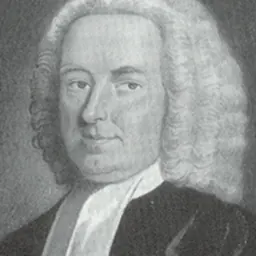
William Cullen (; 15 April 17105 February 1790) was a Scottish physician, chemist and agriculturalist from Hamilton, Scotland, who also served as a professor at the Edinburgh Medical School. Cullen was a central figure in the Scottish Enlightenment: He was David Hume's physician, and was friends with Joseph Black, Henry Home, Adam Ferguson, John Millar, and Adam Smith, among others.
He was president of the Royal College of Physicians and Surgeons of Glasgow (1746–47), president of the Royal College of Physicians of Edinburgh (1773–1775) and first physician to the king in Scotland (1773–1790). He also assisted in obtaining a royal charter for the Philosophical Society of Edinburgh, resulting in the formation of the Royal Society of Edinburgh in 1783.
Cullen was a beloved teacher, and many of his students became influential figures. He kept in contact with many of his students, including Benjamin Rush, a central figure in the founding of the United States of America; John Morgan, who founded the first medical school in the American colonies, the Medical School at the College of Philadelphia; William Withering, the discoverer of digitalis; Sir Gilbert Blane, medical reformer of the Royal Navy; and John Coakley Lettsom, the philanthropist and founder of the Medical Society of London.
Cullen's student and later rival John Brown developed the medical system known as Brunonianism, which conflicted with Cullen's. The competition between the two systems had knock-on effects in how patients were treated worldwide, especially in Italy and Germany, during the end of the eighteenth and beginning of the nineteenth century.
Cullen was also an author. He published a number of medical textbooks, mostly for the use of his students, though they were popular in Europe and the American colonies. His best known work was First Lines of the Practice of Physic, which was published in a series of editions between 1777 and 1784, and inventing the basis of modern refrigeration.
Early life Cullen was born in Hamilton. His father William was a lawyer retained by the Duke of Hamilton as factor, and his mother was Elizabeth Roberton of Whistlebury. He studied at the Old Grammar School of Hamilton (renamed in 1848 The Hamilton Academy), then, in 1726, began a General Studies arts course at the University of Glasgow. He began his medical training as apprentice to John Paisley, a Glasgow apothecary surgeon, then spent 1729 as surgeon on a merchant vessel trading between London and the Antilles in the West Indies.
After two years as assistant apothecary to Mr Murray of Henrietta Street, London, he returned to Scotland in 1732 to establish himself in general medical practice in the parish of Shotts, Lanarkshire. Also serving the town of Hamilton he had cured the Duke of Hamilton who thereafter became his patron.
In 1736 he began medical practice in Hamilton, where he rapidly acquired a high reputation. He also continued his study of the natural sciences, especially of chemistry. From 1737 to 1740 William Hunter was his resident pupil, and at one time they proposed to enter into partnership. In 1740 Cullen was awarded the degree of MD from Glasgow University. In 1741, he married and started his family. He became ordinary medical attendant to James Douglas, 5th Duke of Hamilton (1703–43), his family, and his livestock. In 1744, following the Duke's death, the Cullens moved to Glasgow.
In Glasgow he gave extramural lectures for the university, on physiology, botany, materia medica, and chemistry. His great abilities, enthusiasm, and use of practical demonstrations for instruction, made him a successful and highly popular teacher, attracting large classes. At the same time he also maintained a medical practice. In 1747, Cullen was awarded Britain's first independent lectureship in Chemistry and was elected President of the Faculty of Physicians and Surgeons of Glasgow. In 1748 while in Glasgow, Cullen invented the basis for modern refrigeration, although is not credited with a usable application. In 1748, an account had been published in The Edinburgh Physical and Literary Essays of an experiment in which Cullen used an air pump to create a partial vacuum over a container of diethyl ether, which then boiled, absorbing heat from the surroundings. This created a small amount of ice, but the process found no commercial application.
From 1757 he delivered lectures on clinical medicine in the Edinburgh Royal Infirmary. On the death of Charles Alston in 1760, Cullen at the request of the students undertook to finish his course of lectures on materia medica; he delivered an entirely new course, notes of which were published in an unauthorised edition in 1771, but which he re-wrote and issued as A Treatise on Materia Medica in 1789.
On the death of Robert Whytt, the professor of the institutes of medicine, in 1766, Cullen accepted the chair, at the same time resigning that of chemistry. In the same year, he had been an unsuccessful candidate for the professorship of the practice of physic (medicine), but subsequently an arrangement was made between him and John Gregory, the successful candidate, by which they both agreed to deliver alternate courses on the theory and practice of medicine. This arrangement continued until the sudden death of Gregory in 1773. Cullen was then appointed sole professor of the practice of physic, and he continued in this office until a few months before his death.
In Edinburgh, Cullen lived off South Grays Close on the Royal Mile close to the old Scottish mint. in Kirknewton, West Lothian.
In 1783 Cullen (together with his sons) was a co-founder of the Royal Society of Edinburgh. and the lectures given by Joseph Black and John Walker from the 1770s to 1790s.
By studying the symptoms of diseases, Cullen classified diseases into different classes. One class of diseases was called "neuroses."
Medical practice In the 18th century, there were three primary professions in medicine: physicians, surgeons, and apothecaries (the former name for pharmacists), although the barriers among them were starting to become blurred. William Cullen practiced as all three. Because medical practitioners were not as established as they are now, patients generally took advice from a myriad of sources, including personal experience, books, and several consultations. Furthermore, because the diagnostic tools were not as advanced, patient history was the primary and most important information for the physicians to diagnose their patients. Despite the lack of original work, some believed that Cullen's attempt to organize existing knowledge was actually a sign of his "practical sagacity" as a practitioner. Haller proposed that tissues, including muscles, were characterized by "irritability" (or contractility), while nerves were characterized by "sensibility" (or feeling). He was father to the judge Robert Cullen, Lord Cullen and to the physician Henry Cullen. Cullen's eldest son Robert became a Scottish judge in 1796 under the title of Lord Cullen later Baron Cullen, and was known for his powers of mimicry.
Publications Because of the wide popularity of Cullen's work, many of his publications were translated into a multitude of languages across Europe. Cullen's most popular and successful work was his medical textbook First Lines of the Practice of Physic, published in two volumes in 1777 and expanded with each edition until it reached four volumes in its final edition (1784).
His first book-length publication was Synopsis Nosologiae Methodicae (1769), Cullen's very influential nosology, or classification of diseases. His next publication was also a medical textbook, and it dealt with the Institutions of medicine, i.e. medical theory. Its full title was Institutions of Medicine. Part I. Physiology (1772) because it focused on physiology, which was traditionally only one part of the Institutions (pathology and therapeutics were also essential parts of medical theory). It went through two more editions (1777 & 1785).
Work on his magnum opus, First Lines of Practice of Physic, occupied much of his time in the 1770s and 1780s, but he did manage one final publication. This was his two volume A Treatise of the Materia Medica (1789), which was highly valued by other medical practitioners throughout Europe.
Thus, the following works, with their dates of publication (including multiple editions), comprise the majority of Cullen's oeuvre:
Synopsis Nosologiae Methodicae (1769; 1771; 1780; 1785) Lectures on the Materia medica. 2nd Ed. Dublin : Whitestone, 1781. Digital edition of the University and State Library Düsseldorf. Cours de Matière médicale. Paris, 1788. Digital edition of the University and State Library Düsseldorf. Institutions of Medicine. Part I. Physiology (1772; 1777; 1785) First Lines of the Practice of Physic (1777; 1778; 1781; 1784; 1793 (vol. 1; vol. 2)) A Treatise of the Materia Medica (1789) Traité de Matière médicale translated by Édouard François Marie Bosquillon. Published: vol. 1 – 3. Pavie : Sauveur, 1791. Digital edition of the University and State Library Düsseldorf. Trattato di Materia medica. Involved: Dalladecima, Angelo. 2. Ed. Erschienen: Bd. 1 – 6. Padova : Bettinelli, 1798. Digital edition of the University and State Library Düsseldorf.
Cullen also published a few, shorter works (e.g. "A Letter to Lord Cathcart" in 1776), which have not been included in this list.
Don’t just read it —
keep it.
Full-length biographies made to live with: read them, listen on the way to work, watch them tonight.
- E-book
- Audio
- Video
Instant download · yours to keep · every purchase keeps this site free
Important facts
People in William Cullen's life
Named in this biography and alive at the same time

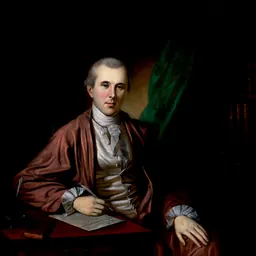
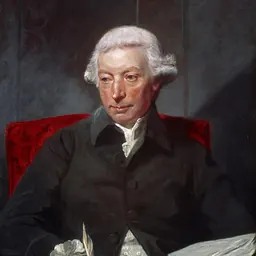


Related people
Same field, nearest in time
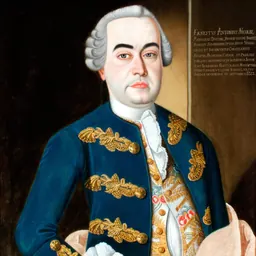
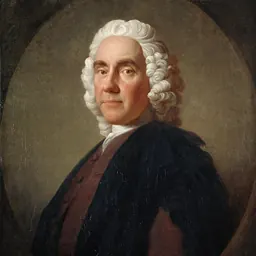


Contemporaries
People whose lives overlapped William Cullen's




Frequently asked questions
Who was William Cullen?
Scottish physician, chemist and agriculturalist; (1710-1790)
When was William Cullen born?
William Cullen was born on 15 April 1710 in Hamilton.
When did William Cullen die?
William Cullen died on 5 February 1790 in Edinburgh.
What was William Cullen's occupation?
William Cullen was a physician, chemist, farmer, university teacher, writer and psychiatrist.
What was William Cullen known for?
William Cullen was known for Edinburgh Medical School, Joseph Black and Scottish Enlightenment.
What nationality was William Cullen?
William Cullen was British.
Sources & further reading
Cite this page
APA: Biography.guide. (2026). William Cullen. https://biography.guide/william-cullen-physician/
MLA: "William Cullen." Biography.guide, https://biography.guide/william-cullen-physician/.
Chicago: "William Cullen." Biography.guide. https://biography.guide/william-cullen-physician/.
Data last updated: 2026-09-20 · Spot an error? Report a correction.
Page generated 2026-09-27 05:28 UTC