
About Robert W. Service
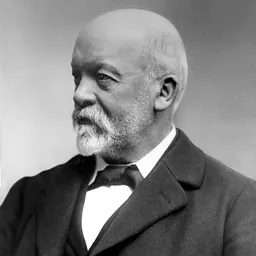
Lived 1874 – 1958 (aged 84). Robert W. Service was a Canadian war correspondent, poet, writer, novelist and autobiographer.
Life
Early life
Robert William Service was born in Preston, Lancashire, England,
When he was five, Service was sent to live in Kilwinning with his three maiden aunts and his paternal grandfather, the town's postmaster. At nine, Service re-joined his parents who had moved to Glasgow. He attended Glasgow's Hillhead High School. After leaving school, Service joined the Commercial Bank of Scotland which would later become the Royal Bank of Scotland. He was writing at this time and reportedly already "selling his verses". He was also reading poetry: Browning, Keats, Tennyson, and Thackeray. This sometimes required him to leech off his parents' Scottish neighbours and friends who had previously emigrated to Canada.
In 1899, when Service was a store clerk in Cowichan Bay, British Columbia, he mentioned to a customer that he wrote verses. The customer was Charles H. Gibbons, editor of the Victoria Daily Colonist, who invited Service to submit his work. By July 1900, six poems by "R.S." on the Boer Wars had appeared in the Colonist – including "The March of the Dead", which would later appear in his first book. (Service's brother, Alick, was a prisoner of the Boers at the time, fighting, specifically, in the Second Boer War. He had been captured on 15 November 1899, alongside Winston Churchill.)
In 1903, down on his luck, Service was hired by a Canadian Bank of Commerce branch in Victoria, British Columbia, using his Commercial Bank letter of reference. The bank "watched him, gave him a raise, and sent him to Kamloops in the middle of British Columbia. In Victoria, he lived over the bank with a hired piano, and dressed for dinner. In Kamloops, horse country, he played polo. In the fall of 1904, the bank sent him to their Whitehorse branch in Yukon. With the expense money, he bought himself a raccoon coat."
Throughout this period, Service continued writing and saving his verses: "more than a third of the poems in his first volume had been written before he moved north in 1904."
Yukon period
Whitehorse was a frontier town, less than ten years old. Located on the Yukon River at the White Horse Rapids, it had begun in 1897 as a campground for prospectors on their way to Dawson City to join the Klondike Gold Rush. The railway that Service rode in on, the White Pass and Yukon Route, had reached Whitehorse only in 1900.
Settling in, "Service dreamed and listened to the stories of the great gold rush." He also "took part in the extremely active Whitehorse social life. As was popular at the time he recited at concerts – things such as 'Casey at the Bat' and 'Gunga Din', but they were getting stale."
After having collected enough poems for a book, Service "sent the poems to his father, who had emigrated to Toronto, and asked him to find a printing house so they could make it into a booklet. He enclosed a cheque to cover the costs and intended to give these booklets away to his friends in Whitehorse" for Christmas. His father took the manuscript to William Briggs in Toronto, whose employees loved the book. "The foreman and printers recited the ballads while they worked. A salesman read the proofs out loud as they came off the typesetting machines." (equal to about $ today after inflation).
"When copies of the book reached Whitehorse, Robert's own minister took him aside to let him know how wicked were his stories. Service hung his head in shame... But, that summer, tourists from the south arrived in Whitehorse looking for the famous poet; and he autographed many of his books."
It is unclear what happened between Service and Constance MacLean as no known letters between them exist after Service's departure for Dawson City. In 1912 she "married Leroy Grant, a surveyor and railroad engineer based in Prince Rupert." They had twin girls, born in January 1917, but one died of scarlet fever in February 1918. Thirteen years younger than her husband, Germaine Service survived him by 31 years, dying aged 102 on 26 December 1989 in Monte Carlo, Monaco.
Service was 40 when World War I broke out; he attempted to enlist, but was turned down "due to varicose veins." Canadian Infantry, Killed in Action, France, August 1916."
With the end of the war, Service "settled down to being a rich man in Paris.... During the day he would promenade in the best suits, with a monocle. At night he went out in old clothes with the company of his doorman, a retired policeman, to visit the lowest dives of the city".
In 1930, Service returned to Kilwinning, to erect a memorial to his family in the town cemetery. For this reason his poetry was never translated into Russian in the USSR, and he was never mentioned in Soviet encyclopedias.
In 1939 Service's second trip to the Soviet Union "was interrupted by news of the Molotov–Ribbentrop Pact. Service fled across Poland, Latvia, Estonia and the Baltic to Stockholm. He wintered in Nice with his family, then fled France for Canada." Not long after, the Nazis invaded France, and "arrived at his home in Lancieux ... looking specifically for the poet who had mocked Hitler in newspaper verse."
During World War II, Service lived in California, "and Hollywood had him join with other celebrities in helping the morale of troops – visiting U.S. Army camps to recite his poems. He was also asked to play himself in the movie The Spoilers (1942), working alongside Marlene Dietrich, John Wayne and Randolph Scott. "He was thrilled to play a scene with Marlene Dietrich." He wrote prolifically during his last years, writing two volumes of autobiography, Ploughman of the Moon (1945) and Harper of Heaven (1948), as well as six books of verse, which were published from 1949 to 1955. He died in Lancieux and is buried in the local cemetery. A book he had written in 1956 was published posthumously.
In the spring of 1958, not long before Service died, Canadian broadcaster Pierre Berton recorded many hours of autobiographical television interviews for the Canadian Broadcasting Corporation, in Service's Monte Carlo flat. During these interviews, Service recited "The Shooting of Dan McGrew" and "The Cremation of Sam McGee".
Writing
Robert Service wrote what some consider the most commercially successful poetry of the century. Yet his most popular works "were considered doggerel by the literary set." During his lifetime, he was nicknamed "the Canadian Kipling." All those charges, and more, could be levelled against Service's best known and best loved works.
Certainly Service's verse was derivative of Kipling's. In "The Cremation of Sam McGee", for instance, he uses the form of Kipling's "The Ballad of East and West".
In his E. J. Pratt lecture "Silence In the Sea," critic Northrop Frye argued that Service's verse was not "serious poetry," but something else he called "popular poetry": "the idioms of popular and serious poetry remain inexorably distinct." Popular poems, he thought, "preserve a surface of explicit statement" – either being "proverbial, like Kipling's 'If' or Longfellow's 'Song of Life' or Burns's 'For A' That'," or dealing in "conventionally poetic themes, like the pastoral themes of James Whitcomb Riley, or the adventurous themes of Robert Service."
Service did not call his work poetry. "Verse, not poetry, is what I was after ... something the man in the street would take notice of and the sweet old lady would paste in her album; something the schoolboy would spout and the fellow in the pub would quote. Yet I never wrote to please anyone but myself; it just happened. I belonged to the simple folks whom I liked to please."
MacMechan did give grudging respect to Service's World War I poetry, conceding that his style went well with that subject, and that "his Rhymes of a Red Cross Man are an advance on his previous volumes. He has come into touch with the grimmest of realities; and while his radical faults have not been cured, his rude lines drive home the truth that he has seen."
Recognition
Robert W. Service has been honoured with schools named for him including Robert Service High School in Anchorage, Alaska, Robert Service Senior Public School (Middle/ Jr. High) in Toronto, Ontario, and Robert Service School in Dawson City.
He was honoured on a Canadian postage stamp in 1976. The Robert Service Way, a main road in Whitehorse, is named after him.
Additionally, the Bard & Banker public house in Victoria is dedicated to him, the building having at one time been a Canadian Bank of Commerce branch where Service was employed while residing in the city.
Service's first novel, The Trail of '98, was made into a movie by Metro-Goldwyn-Mayer, directed by Clarence Brown.
In 1968 Canadian-born country singer Hank Snow recorded recitations of eight of Service's longer poems for an album entitled, Tales of the Yukon. The album was released by RCA Victor. Snow and other musicians including Chet Atkins and Chubby Wise provided background music.
Folksinger Country Joe McDonald set some of Service's World War I poetry (plus "The March of the Dead" from his first book), to music for his 1971 studio album, War War War.
Folksinger Jim Ratts read some of Service's poetry for his 1993 studio album, "Buckwheat at Your Service: The Readings of Robert Service." Raven Records RVNCD9303.
The Canadian whisky Yukon Jack incorporated various excerpts of his writings in their ads in the 1970s, one of which was the first four lines of his poem “The Men Who Don't Fit In”.
The town of Lancieux, where he used to come every summer, organized several recognitions to the memory of Robert W. Service. One of the streets of Lancieux has been named Robert Service Street. On 13 July 1990, a commemorative tablet was unveiled at the Lancieux Office du Tourisme by the daughter of the poet, Iris Service. An evening of celebration was organized afterward with a dinner attended by many guests from Scotland and the Yukon. A few years later, on 18 May 2002, the school of Lancieux in Brittany took the name of "École Robert W. Service". Charlotte Service-Longépé, the great-granddaughter and the granddaughter of the poet, attended the dedication ceremony and made a speech. Since 2000, the towns of Lancieux and Whitehorse are sister cities, due to Robert W. Service's life and work in both places.
Radio humorist and raconteur Jean Shepherd recorded a collection of Robert Service's poems, Jean Shepherd Reads the Poems of Robert Service.
Margaret Rutherford recited most of "The Shooting of Dan McGrew" in the 1964 film Murder Most Foul.
"The Spell of the Yukon" features significantly in the film Eureka directed by Nicholas Roeg.
Dawson City cabin From 1909 to 1912, Robert Service lived in a small two-room cabin on Eighth Avenue, which he rented from Edna Clarke in Dawson City.
Irish-born actor Tom Byrne created The Robert Service Show, which was presented in the front yard of the cabin, starting in 1978. This was very popular with summer visitors and set the standard for Robert Service recitations. Byrne discontinued the show at the cabin in 1995, moving it to a Front Street storefront. Since 2004 the show has been held at the Westmark Hotel in Dawson City during the summer months. Byrne later retired, and died in 2019.
At the Service Cabin, local Dawson entertainers dressed in period costumes and employed by Parks Canada offer biographical information and recite Service's poetry for visitors.
Publications The Best of Robert Service (Hancock House Publishers)
Poetry Songs of a Sourdough (Toronto: William Briggs, 1907) Ballads of a Cheechako (Toronto: William Briggs, 1909) Harper of Heaven. A Record of Radiant Living (New York: Dodd, Mead, 1948) – autobiography Stockholm, Sweden
Don’t just read it —
keep it.
Full-length biographies made to live with: read them, listen on the way to work, watch them tonight.
- E-book
- Audio
- Video
Instant download · yours to keep · every purchase keeps this site free
Important facts
People in Robert W. Service's life
Named in this biography and alive at the same time





Related people
Same field, nearest in time


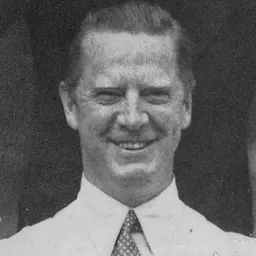
Contemporaries
People whose lives overlapped Robert W. Service's
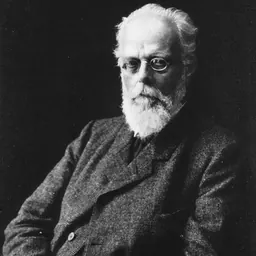
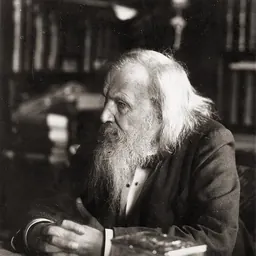
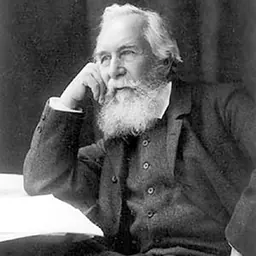


Frequently asked questions
Who was Robert W. Service?
Canadian poet and writer (1874-1958)
When was Robert W. Service born?
Robert W. Service was born on 16 January 1874 in Preston.
When did Robert W. Service die?
Robert W. Service died on 11 September 1958 in Lancieux.
What was Robert W. Service's occupation?
Robert W. Service was a war correspondent, poet, writer, novelist and autobiographer.
What nationality was Robert W. Service?
Robert W. Service was Canadian.
Sources & further reading
· Wikipedia: Robert W. Service
Cite this page
APA: Biography.guide. (2026). Robert W. Service. https://biography.guide/robert-w-service/
MLA: "Robert W. Service." Biography.guide, https://biography.guide/robert-w-service/.
Chicago: "Robert W. Service." Biography.guide. https://biography.guide/robert-w-service/.
Data last updated: 2026-09-20 · Spot an error? Report a correction.
Page generated 2026-09-27 05:22 UTC