
About Robert Scurlark Moore
Lived 1895 – 1978 (aged 82). Robert Scurlark Moore was a military personnel.
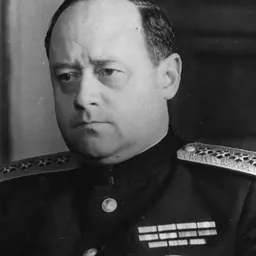
Robert Scurlark Moore (September 5, 1895 – January 27, 1978) was a major general in the United States Army Finance Corps who served as a military liaison officer to the Senate and House Appropriations Committees for nearly three decades. When the Army refused to make him a general officer, Congress twice used appropriations bills to promote him anyway.
Career Moore was born in Paris, Texas on September 8, 1895, to Robert Scurlark Moore and Estelle (Lanier) Moore, and grew up in Ada, Oklahoma. He received a teaching certificate from East Central State Normal School in 1916, and was working as a teacher when the United States entered World War I.
World War I Moore enlisted in the Army on June 1, 1917, and served overseas in France as a private and private first class with Company F of the 7th Engineers, eventually rising to battalion sergeant major in the 5th Division headquarters. He was wounded in action while attached to the 27th Division in the Somme offensive. On October 1, 1918, he accepted an infantry officer's commission as second lieutenant in the National Army, which was the temporary volunteer force that augmented the permanent Regular Army for the duration of the war. The volunteers were disbanded at the end of the war, and Moore was honorably discharged from the National Army on April 7, 1920.
Infantry officer After the war, Moore decided to make a career of the Army. He was detached in 1921 to take the Infantry School Basic Course. Upon graduating in 1922, he returned to the 29th Infantry, where he remained until 1924.
On March 1, 1924, Moore began pilot training at the Air Service Primary Flying School at Brooks Field, Texas, but his detail to the Air Service was terminated on June 11, 1924, only ten weeks into the six-month curriculum, and he did not graduate. Resuming his infantry career, Moore was assigned to the 13th Infantry in Boston, Massachusetts, first as commanding officer of a recruit center at the regimental headquarters at Fort Warren, and in 1925 becoming battalion and post adjutant for the 1st Battalion, 13th Infantry at Fort Strong.
Moore married the former Adrienne Marot in Dorchester, Boston, on Thanksgiving Day 1925, and the couple moved to New Jersey, where Moore was attending the Signal School at Fort Monmouth. He graduated the next year, and the newlyweds took several months leave to visit the bride's native France, before moving to Fort McPherson, Georgia, for what would be Moore's final infantry assignment, as a communications officer in the 22nd Infantry from 1927 to 1929. He graduated from the Finance School in 1930, He was finally promoted to captain on October 1, 1934, after 14 years as a first lieutenant. He was detailed to the General Staff Corps from July 12, 1943, to December 1, 1943.
Moore's fellow officers eventually came to believe that he belonged more to Congress than to the Army. According to General Herbert B. Powell, “He was older, unfit for field service, but worked hard and stayed on the job so long that he became a staff officer for the committee and not a representative of the Army. Every time we tried to relieve and replace him, the committee chairman would stop us…. The last time I saw him he was dressed in a blue uniform ballooning over his stomach, trying to get on an airplane and go to Europe with the [Armed Forces] subcommittee of the Senate Appropriations Committee.” As a member of that subcommittee, Senator Young warmly endorsed Moore's participation in such trips, saying, “I found him to be extremely knowledgeable on such occasions, not only in a broad defensewide understanding, but also in his detailed familiarity with individual installations. I grew to know him, respect him, and cherish him as a valued friend. He is one of the greatest personalities I have ever known.”
By then, even Secretary of Defense Robert S. McNamara could not dislodge Moore from his liaison role. Every year, the annual defense appropriations bill was coordinated through the Comptroller's office, with Moore being the Defense Department's point of contact with the House and Senate Appropriations Committees. However, all other defense-related legislation, including the authorization bills produced by the House and Senate Armed Services Committees, was handled by the Assistant to the Secretary of Defense for Legislative Affairs. McNamara repeatedly tried to consolidate legislative operations into a single office, but Congress always blocked him. “We were never able to do that,” said David E. McGiffert, McNamara's Legislative Affairs Assistant from 1962 to 1965, “because one of the two Appropriations Committees wanted Bobby Moore to remain as the liaison individual and wanted that individual to remain in the comptroller’s office because the committee was used to being able just to pick up the telephone and call Bobby, or somebody else in the comptroller’s office, on technical points, and they were fearful that any reorganization would sever, to some degree, that channel. And no matter how much we told them that that wasn’t the intention, they were unwilling to really believe that that wouldn’t happen, intended or not.” The result was that McGiffert could schedule McNamara's appearances before every Congressional committee except one. For Appropriations Committee hearings, “I’d always have to go to Bobby to find out when McNamara was supposed to go. A silly situation, which, as I say, we never fixed.”
Moore completed 50 years of military service on November 13, 1967, an event memorialized by Senators John C. Stennis and Milton Young on the floor of the Senate. "He has served every Secretary of Defense and every Comptroller of Defense since the creation of the Department of Defense,” said Stennis. “He has acted as liaison with the Congress longer than any other individual. And he has probably written more legislative proposals than any other military man in our history." Young added, “In this role, he has perhaps done more than any other individual in bringing about harmonious and understanding working relationships between the Congress and the Department of Defense.”
Moore retired permanently from the Defense Department in 1968, and was awarded the Distinguished Service Medal by Army Chief of Staff Harold K. Johnson.
Promotion by appropriations bill Moore was the only American military officer to be promoted twice in appropriations bills, from colonel to brigadier general in 1950, and from brigadier general to major general in 1954. and again in 1904 when an Army appropriations bill merged the Pensions and Records Office with the Adjutant General's Department to create a new organization headed by a Military Secretary with the rank of major general.
Congressional legislation is divided between two sets of committees: the legislative committees like the House and Senate Armed Services Committees that write the authorization bills that establish, continue, or modify agencies or programs; and the House and Senate Appropriations Committees that write the appropriations bills that fund them. In principle, the jurisdiction of the appropriations committees is limited strictly to funding measures, and all other legislation is reserved for the legislative committees. In practice, these lines have often been crossed, especially between 1899 and 1921, when the Military and Naval Affairs Committees were responsible for both authorization and appropriations for the Army and Navy, and could write a single measure to both fund and reorganize the War Department, which is how Ainsworth was promoted in an appropriations bill. However, after the Budget and Accounting Act of 1921 again separated authorization from appropriation, any action that could promote an officer in an appropriations bill was viewed as infringing on the territory of the legislative committees. Such trespasses were often overlooked due to overlapping membership between the legislative and appropriations committees, but in 1959 the Armed Services Committees began asserting their jurisdiction more strictly with respect to the Appropriations Committees, passing the first annual National Defense Authorization Act in 1961, and modern Congressional rules make it unlikely that an officer would again be promoted by the Appropriations Committees instead of the Armed Services Committees.
Brigadier general In the early 1950s, Army officer promotions were governed by the Officer Personnel Act of 1947. The Secretary of the Army could only nominate candidates for promotion if they had been selected by a board of higher ranking Army officers, mostly from the combat arms branches, who were unlikely to pick a Finance Corps colonel like Moore who had spent the entire last decade as a congressional liaison officer in Washington, D.C., including all of World War II.
Instead, the Supplemental Appropriations Act of 1951, signed into law on September 27, 1950, stated that “a commissioned officer on the active list of the Army not below the grade of colonel, assigned as special assistant to the Comptroller, Department of Defense, shall...be considered to hold the grade of brigadier general for all purposes and shall receive the pay and allowances of an officer of that grade.” Since Moore had been assigned as special assistant on September 20, the effect was to elevate him to brigadier general for as long as he held the job.
Moore was promoted to brigadier general on October 5, 1950, much to the dismay of the Army staff. "Well, we were fit to be tied," said Powell, "and finally we issued an order saying, 'This officer is invested with a rank of brigadier general, in accordance with section so and so of a certain Act of Congress.' So help me, one year later there was a one line entry at the last of the Appropriation Bill which promoted this officer to major general."
Only a couple of weeks later, on August 1, 1953, Congress proved Holloway's point by promoting Moore to major general in a provision of the Department of Defense Appropriation Act for 1954. Unlike his previous promotion, which was tied to his job, this law promoted Moore personally, stating that “the officer of the Army now assigned as special assistant to the Comptroller, Department or Defense, shall, effective May 1, 1954, be considered to hold the grade of major general for all purposes….” Powell railed, “This sort of thing is what we must guard against. We must follow the system set up and prescribed by law.” Faced with another Congressional end run, the Navy chose to promote Rickover the normal way by designating his position to carry the grade of vice admiral and submitting his promotion to be confirmed by the Senate.
Personal life Moore died at his home in Washington, D.C., on January 27, 1978, of a heart ailment, and was survived by his wife Adrienne and four sisters. His wife, Adrienne (Marot) Moore, a native of France, was awarded the Medal of French Gratitude in 1947 by the French government for her work with American Aid to France, a civilian relief organization. A younger brother, retired Army colonel Dennis Milton (“Dinty”) Moore, had survived the Bataan Death March and commanded the 15th Infantry in the Battle of Chosin Reservoir during the Korean War.
He was a 50-year Master Mason and a member of the Shriners Almas Temple in Washington, D.C. He was a member of the University Club of Washington, D.C, and the Army Navy Country Club in Arlington, Virginia.
Dates of rank Note that the date indicated is the date of rank. In some cases, the promotion was accepted at a later date.
Battalion sergeant majorNational Army7pxSecond lieutenantNational ArmySep. 25, 1918Regular ArmyJul. 1, Lieutenant colonelArmy of the United StatesSep. 15, 1941Regular ArmyDec. 11, ColonelArmy of the United StatesFeb. 1, 1942Regular ArmyMar. 11, Major generalArmy of the United StatesMay 1, 1954Retired listAug. 31, 1954
Awards and decorations
Army Distinguished Service MedalLegion of Merit (with oak leaf cluster)Purple Heart
Don’t just read it —
keep it.
Full-length biographies made to live with: read them, listen on the way to work, watch them tonight.
- E-book
- Audio
- Video
Instant download · yours to keep · every purchase keeps this site free
Important facts
People in Robert Scurlark Moore's life
Named in this biography and alive at the same time





Related people
Same field, nearest in time




Contemporaries
People whose lives overlapped Robert Scurlark Moore's




Frequently asked questions
Who was Robert Scurlark Moore?
United States Army general (1895-1978)
When was Robert Scurlark Moore born?
Robert Scurlark Moore was born on 5 September 1895 in Paris.
When did Robert Scurlark Moore die?
Robert Scurlark Moore died on 27 January 1978 in Washington, D.C..
What was Robert Scurlark Moore's occupation?
Robert Scurlark Moore was a military personnel.
Sources & further reading
· Wikipedia: Robert Scurlark Moore
· DBpedia: Robert Scurlark Moore
Cite this page
APA: Biography.guide. (2026). Robert Scurlark Moore. https://biography.guide/robert-scurlark-moore/
MLA: "Robert Scurlark Moore." Biography.guide, https://biography.guide/robert-scurlark-moore/.
Chicago: "Robert Scurlark Moore." Biography.guide. https://biography.guide/robert-scurlark-moore/.
Data last updated: 2026-09-20 · Spot an error? Report a correction.
Page generated 2026-09-27 05:20 UTC