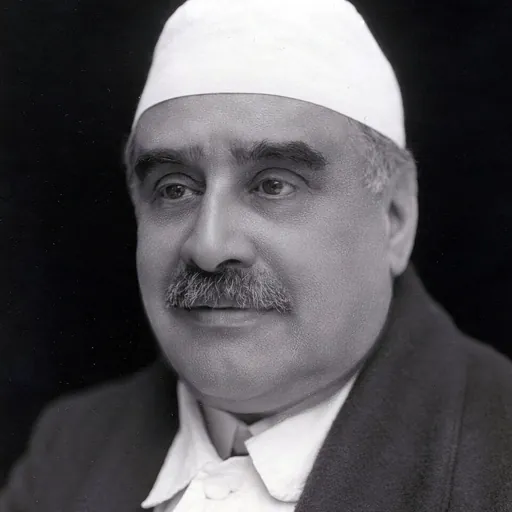
About Robert Proust
Lived 1873 – 1935 (aged 62). Robert Proust was a French surgeon, gynecologist and urologist.
Robert Emile Sigismond Léon Proust (24 May 1873 – 29 May 1935) was a French urologist and gynaecologist and the younger brother of the writer Marcel Proust.
Both brothers had an early education at the Lycée Condorcet, with Robert Proust going on to study medicine. An active supporter of his brother's writing career, and following Marcel's early death, he arranged for publication of the final three volumes of Marcel's novel À la recherche du temps perdu.
He published a landmark medical paper on perineal prostatectomy, "De la prostatectomie périnéale totale", following which his colleagues nicknamed his prostate procedure a "proustatectomie". In addition, his interest in gynaecology led to his publication of multiple editions of Chirurgie de l'appareil génital de la femme, a gynaecology textbook.
Amongst other accomplishments, Proust served as a military surgeon during the First World War where he devised a form of mobile operating theatre called the "auto-chir", which could be moved close to the front, and was promoted to Officer of the Legion of Honor in 1925.
Proust died 1935. The Hôpital Tenon in Paris named the "Pavillon Proust" in his honour.
Early life and family
Robert Proust was born in Paris on 24 May 1873 to Adrien Proust, an eminent physician in the field of public health who helped eliminate cholera from Europe, and his wife Jeanne Weil, a Jewish woman who was fifteen years younger than her husband.
He was educated with his brother Marcel, who was two years older than Robert, at the Lycée Condorcet. He subsequently attended the University of Paris where his performance was considered "outstanding". A frequent complication to prostatectomy was epididymitis. In 1904, Proust had recommended vasectomy at the time of prostatectomy.
In addition to general surgery and urology, Proust had a special interest in gynaecology and his book Chirurgie de l'appareil génital de la femme (The surgery of the female genital tract) (1904) had six editions by 1927. He studied male (andrology) and female (gynaecology) reproductive tracts, whilst he was Samuel Jean de Pozzi's assistant at Hôpital Broca between 1904 and 1914.
Death and legacy Proust died on 29 May 1935. Paris's Hôpital Tenon has been named the "Pavillon Proust" since 1971.
Selected publications "De la prostatectomie périnéale totale". 1900. Chirurgie de l'appareil génital de la femme. 1904. (six editions)
Don’t just read it —
keep it.
Full-length biographies made to live with: read them, listen on the way to work, watch them tonight.
- E-book
- Audio
- Video
Instant download · yours to keep · every purchase keeps this site free
Important facts
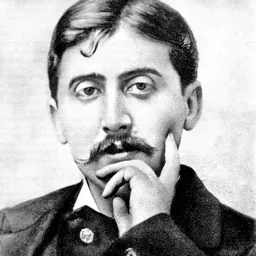
People in Robert Proust's life
Named in this biography and alive at the same time

Related people
Same field, nearest in time


Contemporaries
People whose lives overlapped Robert Proust's


Frequently asked questions
Who was Robert Proust?
Marcel Proust's brother (1873–1935)
When was Robert Proust born?
Robert Proust was born on 24 May 1873 in 16th arrondissement of Paris.
When did Robert Proust die?
Robert Proust died on 29 May 1935 in 8th arrondissement of Paris.
What was Robert Proust's occupation?
Robert Proust was a surgeon, gynecologist and urologist.
What nationality was Robert Proust?
Robert Proust was French.
Sources & further reading
Cite this page
APA: Biography.guide. (2026). Robert Proust. https://biography.guide/robert-proust/
MLA: "Robert Proust." Biography.guide, https://biography.guide/robert-proust/.
Chicago: "Robert Proust." Biography.guide. https://biography.guide/robert-proust/.
Data last updated: 2026-09-23 · Spot an error? Report a correction.
Portrait: Wikimedia Commons · author & licence
Page generated 2026-09-27 05:05 UTC