
About Robert Piguet
Lived 1898 – 1953 (aged 54). Robert Piguet was a Swiss perfumer, grand couturier and fashion designer.
Robert Piguet (; 1898 – 1953) was a Swiss fashion designer who was highly influential in the development of haute couture. The House of Piguet in Paris ran from 1933 to 1951, during which time Piguet was known as "The Prince of Fashion". He developed a passion for fabric and became interested in batik, He began making hand-painted scarves; by age 15, he was making blouses and, at age 18, he was able to host an exhibition at the Lausanne department store Bonnarde. His first job was sourcing fabric and designing shoes for the Swiss luxury fashion house Bally. When the war ended in 1918, he moved to Paris.
Career With funding from his family, Piguet secured a place at 41 rue de la Montagne, an expensive location just vacated by Callot Soeurs. He was targeting the same market—the wives of financiers, politicians and industrialists, who were the same sort of people he had grown up with. He cultivated them by inviting them to "Salons d'art moderne" (Modern Art Salons), twice-weekly afternoon teas where he would sell hand-painted and batik garments. Although he was only 22, he was suffering from exhaustion and spent some time resting in Italy and Africa before returning to Lausanne, where he designed costumes for local theatrical productions. Also in 1932, Redfern closed its Paris branch.
Piguet was now ready to open his own house. He had received an inheritance when his father died in 1929, and his brother George arranged for an investment from the Clavel family. His clothes were known for refinement, precision and the quality of their fabric. His daywear was particularly popular and women flocked to his salon for his thin silk suits in pale shades with white at the neck and cuffs. He became known as "the most Parisian of fashion designers". His salon drew clients from all over the world, notably most of the ladies of the Egyptian royal court, including Queen Farida and Princess Fawzia. He was also popular with the actresses of the day, including Edwige Feuillère, Gabrielle Dorziat, and Edith Piaf—it was Piguet who designed Piaf's famous black dresses, or what she called her "work overalls". Later, while other New Look designers went with large flared skirts, Piguet's little black dresses remained the same: unadorned crêpe de Chine, straight-cut and understated. It was Piguet who brought Dior into the world of haute couture, and Dior would later say: "Robert Piguet taught me that a garment is about fabric, colors, shapes, and the woman living inside it—and that fittings are what truly matter. He taught me the virtues of simplicity through which true elegance must come."
In 1939, Piguet held a successful show in London and was considering opening a salon there when war was declared. While many designers closed their businesses during the Occupation, Piguet thrived. During the war, his relationship with Bally continued; when Max Matter became Bally's creative director in 1941, he called on Piguet, who played a crucial role in the development of the company's creative department. After the war, he joined other couturiers in presenting the New Look, but his version focused on comfort and easy elegance. He also participated in the Théâtre de la Mode (1945), an traveling exhibition of miniature wire dolls styled in the latest haute couture.
In the early 1940s, Piguet began to collaborate with the perfumer Germaine Cellier. The result was four perfumes: Bandit (1942), Visa (1945), Fracas (1948) and Baghari (1950). All were like nothing women had experienced before, and all were best-sellers. Bandit, a highly sensual perfume which became the signature scent of Marlene Dietrich, remains one of the most famous leather fragrances in history—when it was introduced in the USA, the models carried toy guns and knives. Fracas, Piguet's most successful perfume, was the first significant tuberose scent of the 20th century and remains the benchmark by which tuberose scents are measured. Of Fracas, The New York Times wrote: "There are perfume legends, there are perfumer legends, and then there are perfumes that become obsessions. Fracas is all three." As his fragrances continued to be best-sellers after his death, Piguet's estate licensed his name to other parties. As of 2026, there are 13 fragrances produced under Piguet's name.
As the 1950s approached, it was clear that the future lay in ready-to-wear clothing. With Jean Gaumont-Lanvin, the House of Paquin, Jean Dessès, Madame Carven and Jacques Fath, Piguet founded Couturiers Associés (Associated Couturiers), a short-lived co-operative which allowed luxury ready-to-wear to be shown, on a group basis, in markets throughout Europe. By late 1950, however, Piguet's health was failing. After making sure that all of his staff members had job opportunities, he wrapped up his business and, on July 15, 1951, shut his doors and returned to Switzerland.
Personal life, death and legacy In 1924, Piguet married Mathilde Fortuna Henriquez, a wealthy aristocrat ten years his senior. They did not live together. Piguet was a reserved person who loathed parties; Mathilde was the opposite and, for the rest of his career, acted as his muse and publicist. It also established the Prix Robert Piguet, which is awarded to young Swiss designers, researchers and fashion students.
Gallery
Don’t just read it —
keep it.
Full-length biographies made to live with: read them, listen on the way to work, watch them tonight.
- E-book
- Audio
- Video
Instant download · yours to keep · every purchase keeps this site free
Important facts
People in Robert Piguet's life
Named in this biography and alive at the same time



Related people
Same field, nearest in time


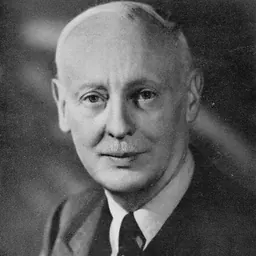

Contemporaries
People whose lives overlapped Robert Piguet's

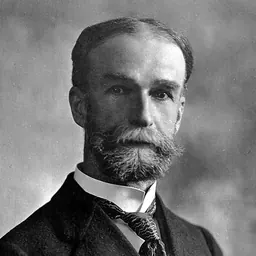
Frequently asked questions
Who was Robert Piguet?
fashion designer (1898-1953)
When was Robert Piguet born?
Robert Piguet was born on 6 May 1898 in Yverdon-les-Bains.
When did Robert Piguet die?
Robert Piguet died on 21 February 1953 in Lausanne.
What was Robert Piguet's occupation?
Robert Piguet was a perfumer, grand couturier and fashion designer.
What nationality was Robert Piguet?
Robert Piguet was Swiss.
Sources & further reading
Cite this page
APA: Biography.guide. (2026). Robert Piguet. https://biography.guide/robert-piguet/
MLA: "Robert Piguet." Biography.guide, https://biography.guide/robert-piguet/.
Chicago: "Robert Piguet." Biography.guide. https://biography.guide/robert-piguet/.
Data last updated: 2026-09-20 · Spot an error? Report a correction.
Page generated 2026-09-27 04:59 UTC